Doomberg flips the script on the energy transition by arguing that the very abundance of cheap natural gas is creating a new geopolitical choke point: the inability to build the turbines needed to burn it. While most analysts focus on the price of fuel, this piece zeroes in on the bottleneck of hardware, revealing a paradox where a glut of energy is triggering a shortage of the machines required to utilize it.
The Paradox of Plenty
The piece opens with a striking observation from Nassim Taleb that Doomberg treats as a market axiom: "I've seen gluts not followed by shortages, but I've never seen a shortage not followed by a glut." This framing sets the stage for a counter-intuitive thesis: the current frenzy to build power plants is a temporary distortion that will inevitably collapse under its own weight. Doomberg notes that in regions like the Permian Basin, natural gas is selling for the equivalent of "$0.25 per gallon of gasoline," a price point that is fundamentally reshaping the global economy.
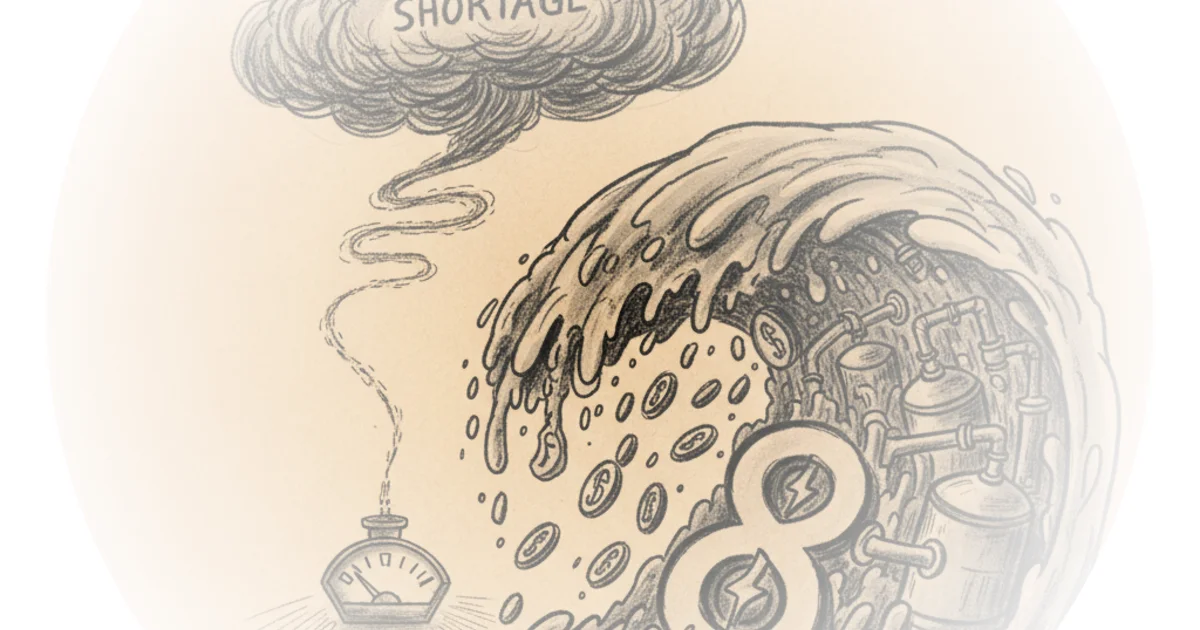
The author argues that this "vast bounty of nearly free energy" is not just a domestic curiosity but a strategic asset fueling the US side of the AI arms race. However, the immediate consequence is a logistical nightmare. Doomberg writes, "Three companies will need to supply most of the historic demand for new gas plants: GE Vernova, Siemens Energy, and Mitsubishi Power — who together serve over 75 percent of projects under construction." This concentration of supply creates a fragile oligopoly where a few manufacturers hold the keys to the entire energy transition.
The evidence of this strain is stark. Doomberg points out that "Mitsubishi states that turbines ordered today will not be delivered until 2028–2030," while Siemens reports a record backlog of €131 billion. This is not a minor delay; it is a structural wall. The commentary effectively highlights how "booming demand for turbines has led each of these companies to report extended delivery timelines," turning a commodity surplus into an infrastructure deficit.
When delivery backlogs exceed the expectations of developers and utilities, they can create unexpected delays and project cost overruns.
The Windfall and the Inevitable Correction
Doomberg's analysis of the financial winners is particularly sharp, noting that "Oligopolists whose products are suddenly in hot demand tend to enjoy windfall profits, and this situation is no different." The author uses the case of GE Vernova to illustrate this, describing how the company was spun off in early 2024, "Saddled as it was with the black hole of liabilities dragging down its wind energy business." The irony, as Doomberg puts it, is that "Alas, no bad deed goes unrewarded these days, and GEV's stock is up fivefold in the 18 months since its market debut."
This section of the argument is compelling because it connects corporate restructuring to macroeconomic forces. The author suggests that the parent company was likely "more than happy to see it go and likely tossed in the mature gas turbine business to paper over what was otherwise a classic financial triage operation." Yet, the market has rewarded this separation handsomely, betting on the scarcity of the remaining gas assets.
However, Doomberg warns that this scarcity is self-correcting. The core of the argument rests on the belief that "Shortages of products with inelastic demand profiles—and the ensuing price shocks—inevitably prompt robust market responses." The author posits that "fading occurrences of super-spikes in energy commodity prices" is a superior investment strategy to trying to predict the run-up. This is a bold claim that challenges the current market euphoria.
Critics might note that the timeline for new turbine manufacturing capacity to come online could be longer than Doomberg anticipates, given the complexities of supply chains and skilled labor shortages. If the backlog persists beyond 2030, the "glut" predicted by Taleb's law may be delayed, prolonging the period of high prices and project delays.
The Geopolitical Horizon
Looking beyond the immediate market mechanics, Doomberg argues that the current dislocation will ultimately strengthen the US position. The author contends that "the same dynamic will unfold in the gas-to-power industry, and on a timeline few are anticipating." If the supply constraints are resolved, the result will be a system where natural gas is "an even more superior fuel than it is today."
This leads to the piece's most provocative conclusion: that natural gas will play "more than just a bridging role in the ongoing AI revolution and further strengthening US geopolitical power." Doomberg suggests that the world is "shifting beneath the feet of turbine manufacturers," implying that the current bottleneck is a temporary phase in a longer story of American energy dominance.
If we are correct, what emerges from this current market dislocation will make natural gas an even more superior fuel than it is today.
The argument here is that the scarcity of turbines is actually a sign of a healthy, growing market that will eventually self-correct. Doomberg writes, "That gluts always follow shortages is as safe a market bet as any," framing the current crisis as a predictable market cycle rather than a permanent structural failure.
Bottom Line
Doomberg's strongest move is reframing the energy conversation from fuel prices to hardware capacity, exposing a critical vulnerability in the rush to power AI data centers. The argument's biggest vulnerability lies in its assumption that market forces will quickly resolve the manufacturing bottlenecks, potentially underestimating the years-long lead time required to scale industrial production. Readers should watch for whether the delivery timelines announced by GE, Siemens, and Mitsubishi hold firm or slip further, as that will determine if the predicted glut arrives on schedule.