Jenn Zuko makes a provocative claim that the chaotic, unscripted drama dominating our screens today is not a modern invention, but a direct lineage to 17th-century Italian street theater. By reframing reality television as the spiritual successor to commedia dell'arte, the piece offers a startling lens through which to view our current media landscape, suggesting that the archetypes driving our favorite shows are centuries old.
The Architecture of Improvisation
Zuko opens by dismantling the distinction between historical performance and modern entertainment. She writes, "It sort of originated in Italy, loosely based in the old raunchy Roman pantomime tradition, but it evolved and spread and blossomed into a total Western theatre phenomenon, that I argue we're all still actively practicing today, particularly since 2000 and the advent of Reality TV as a popular genre." This connection is bold, yet it holds up when one considers the structural similarities: both forms rely on a framework of known types rather than deep character arcs to generate immediate conflict. The author notes that while the genre was massive in the 1600s, its survival was aided by a "clandestine boom during Cromwell's crackdown on all things theatre," a historical resilience that mirrors how these character types have persisted despite shifting cultural tides.
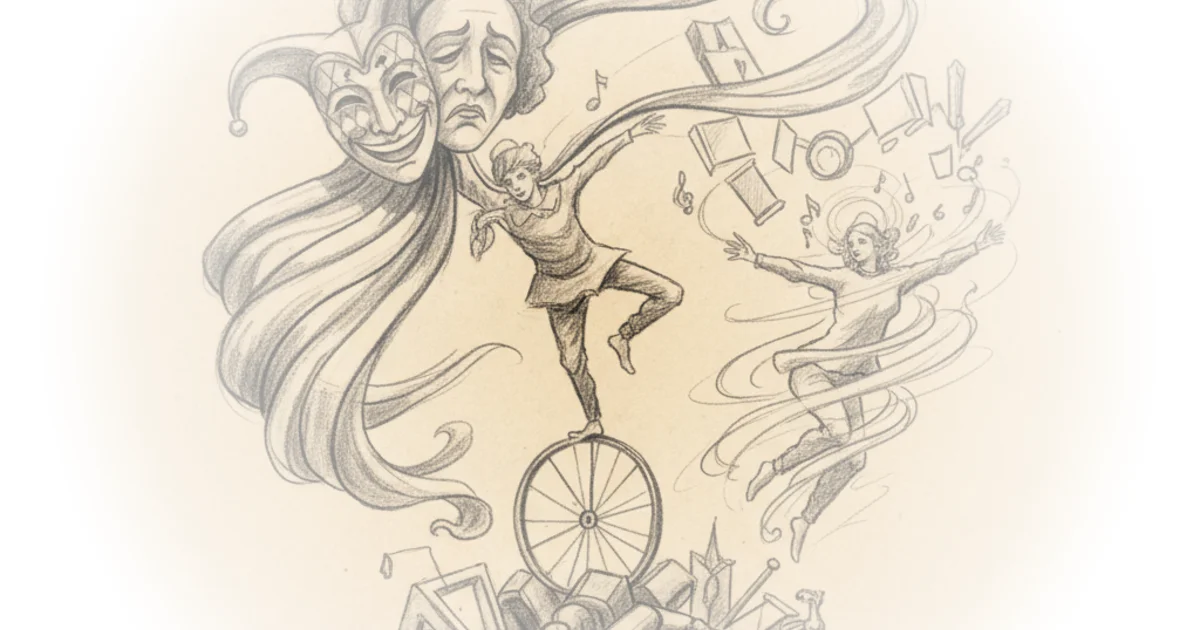
The core of Zuko's argument rests on the mechanics of the performance. She explains that "these plays weren't plays at all—the shows were all improvised, non-scripted, and unplanned." This is the crucial pivot point. In an era where audiences are often fatigued by rigid, formulaic storytelling, the appeal of commedia lay in its spontaneity. Zuko suggests that modern reality TV has filled this void, creating a space where the narrative is driven by the collision of personalities rather than a writer's room. A counterargument worth considering is that reality TV is heavily produced and edited, lacking the true improvisational freedom of the original form; however, the feeling of unscripted chaos remains the primary product for the viewer.
"Just like we do today when we pour ourselves a cold one and settle in to Season 357 of Survivor, an audience of commedia knows exactly what they're in for when suddenly Pantalone hobbles out onto the stage with Il Dottore in tow."
The Enduring Stock Character
The most compelling section of the piece is the breakdown of the "Stock Characters." Zuko argues that these figures are not just historical footnotes but living archetypes that audiences recognize instantly. She describes Pantalone as the "parsimonious patriarch... the asshole boss, the tyrannical father, the tight-fisted abusive old husband." This description strips away the period costume to reveal the timeless nature of the power dynamic. The author posits that the mask serves a functional purpose, allowing actors to "react believably to various improvised circumstances" because the character's reaction is pre-determined by their archetype.
Zuko highlights the evolution of the servant class, specifically Arlecchino (or Harlequin), noting that his famous multicolored outfit is "an evolution directly inherited from court jesters." This detail connects the physical comedy of the past to the slapstick of the present. The author points out that the term "slapstick" itself comes from a prop used by this character, a "hinged slat of wood that makes a loud CLACK sound when it hits an object." This etymological thread ties the physical violence of the stage directly to the physical comedy we consume today. Critics might argue that reducing complex human behavior to these broad caricatures can be reductive, but Zuko's point is that these caricatures are the very engine of the comedy, providing a shorthand that allows for rapid storytelling.
The piece also touches on the romantic and tragic elements, describing the Innamorata as the only characters often unmasked because they represent "young, innocent, not that crafty" love. In contrast, the Pierrot character is described as a "moony character... known by the French version of his name," whose "white face, black eyeliner, and enduring poetic sadness" may be a primary influence on "contemporary Goth fashion and culture." This observation adds a layer of cultural depth, suggesting that even our subcultures are borrowing from this ancient theatrical vocabulary.
The Modern Stage
Zuko concludes by challenging the reader to see these patterns in their own media consumption. She writes, "The way that the casts of reality shows like that get put together is literally this: creating a group of stock characters and letting them do what they do." This is a sharp critique of the modern entertainment industry, implying that the lack of originality in casting is not a failure of imagination, but a deliberate adherence to a centuries-old formula. She asserts that "the above motley crew is still out there, getting into the same mischief they have been for centuries past, and no doubt, centuries to come."
The author's admission that her knowledge comes from her own "noggin" rather than cited academic sources is a risk, yet it reinforces the oral tradition of the very subject she is discussing. As she puts it, "all this history is in my brain... I've been studying and practitioning theatre and in particular, clowning, for so long and with such intensity that I couldn't tell you what specific sources I might cite." While this lack of citations might frustrate a rigorous researcher, it serves the piece's tone, positioning the author as a practitioner rather than a distant academic. The argument holds that the survival of these characters proves their utility; they are not just history, they are the operating system of modern comedy.
Bottom Line
Zuko's piece succeeds in reframing the familiar chaos of reality television as a continuation of a rich, historical tradition, offering a fresh perspective on why certain character dynamics feel so instantly recognizable. The argument's strongest point is the identification of the "stock character" as the bridge between 17th-century Italy and 21st-century streaming, though it slightly glosses over the artificial manipulation inherent in modern production. Readers should watch for how these archetypes continue to mutate as new media formats emerge, proving that the commedia spirit is far from dead.
"The above motley crew is still out there, getting into the same mischief they have been for centuries past, and no doubt, centuries to come.""