TMMurray cuts through the exhausted stalemate of the pornography debate by asking a question that feels almost heretical in a polarized landscape: what if the industry isn't just a reflection of human nature, but the very engine reshaping it? This piece refuses the comfortable binary of 'censorship vs. free speech,' instead arguing that the ubiquity of pornographic imagery has collapsed the distinction between art and life, turning simulated degradation into a blueprint for real-world behavior. For a reader navigating a culture saturated with digital imagery, this is not just a media studies exercise; it is a critical inquiry into how we define consent, agency, and the very nature of our relationships.
The Illusion of Choice
The author begins by dismantling the predictable defenses of the industry, noting that the standard arguments have calcified into a "catatonic stagnation." TMMurray writes, "The fact that all variety of lurid content appeals to porn's myriad consumers is evidence of innate psycho-sexual drivers in the human subconscious." This is the core of the industry's shield: the claim that demand is biological and therefore unassailable. Murray challenges this by suggesting that what we perceive as "nature" is actually a cultural construct that has been so thoroughly saturated with these images that we can no longer see the manipulation.
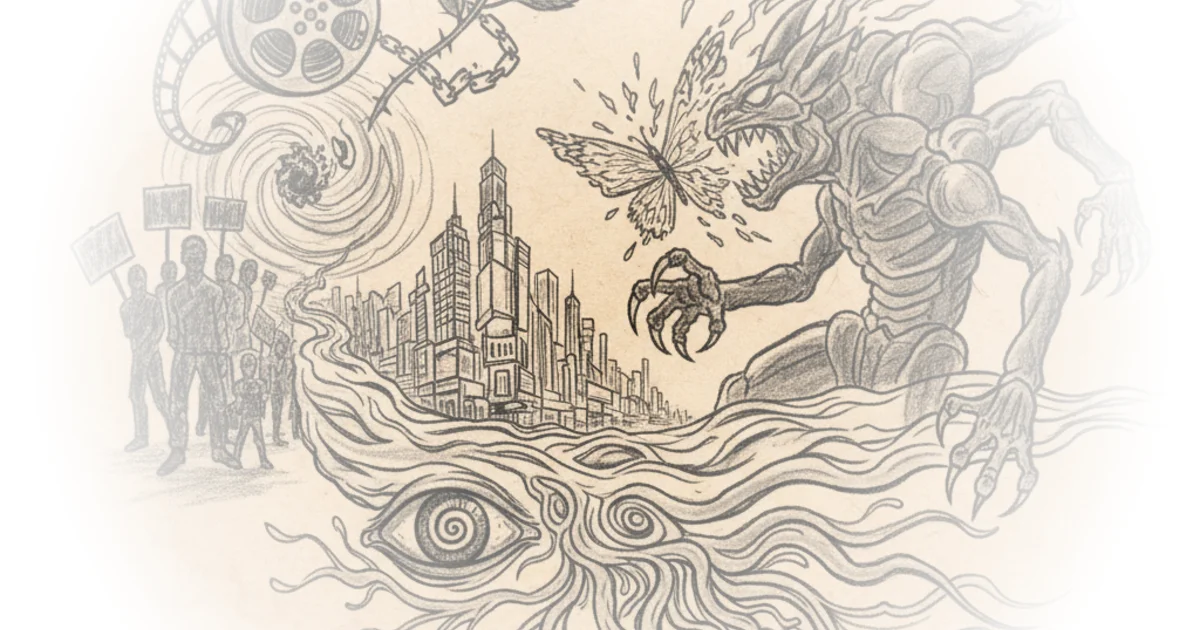
The argument gains traction when Murray draws a parallel to other media effects. Just as violent films led to age-based ratings rather than bans, the author suggests we must weigh the harms of consumption against the cost of eliminating choice. However, the piece pivots sharply here, arguing that pornography is unique because of its production realities. "Pornography is arguably more harmful than violent films because it sustains a criminal underworld that traffics humans into its production," TMMurray asserts. This comparison to the labor practices behind brands like Nike is potent; it forces the consumer to confront the supply chain of their gratification. Critics might argue that this conflates the vast majority of consensual adult production with the criminal fringe, but the author's point is that the industry's profitability creates a structural incentive for exploitation that cannot be ignored.
If the public are desensitized to this objectification of one category of humans (in a way that would be an outrage if it happened to, say, a racially defined category) then it is because the power dynamics that have seeped into the collective subconscious to such an extent that they seem only "natural".
The Collapse of Reality
The most provocative section of the commentary moves from the political to the psychological, invoking Jean Baudrillard's concept of simulacra. TMMurray argues that we have reached a point where "the 'real' is just whatever we happen to do, and since we are very often imitating the imagery, the media's representations have literally imploded into our behaviours." This is a chilling assessment of modern intimacy. The author points out that women are undergoing surgery to match pornographic ideals and that real sexual acts are being performed to mimic on-screen scenarios that often involve humiliation.
To illustrate the severity of this normalization, Murray employs a stark thought experiment: substitute race for gender in the description of pornographic content. "If there were a genre of media that disproportionately featured racist tropes as integral, you would be less comfortable, indeed less tolerant, of its ubiquitous production and consumption," the author writes. This rhetorical move is effective because it exposes the double standard in how we process harm. We would not accept a media genre that systematically dehumanized Black people as "just life"; yet, Murray argues, we have accepted the same dynamic for women because the imagery is so pervasive it feels inevitable.
The piece also tackles the recent release of the Epstein files, noting that the "massively redacted" documents have expanded the Overton Window regarding the normalization of abuse. TMMurray suggests that if we accept the argument that child abuse and exploitation are simply products of "innate human nature," then any attempt to protect the vulnerable is futile. This reframing challenges the Foucauldian view that sexual prohibitions are merely tools of state control. Instead, the author posits that pornography itself is a "patriarchal machine" that disciplines female agency and reinforces dependency. "Pornography normalizes misogyny to such a degree that most people can no longer recognise its influence on culture at all—porn is just life," Murray concludes, a sentence that serves as both a diagnosis and a warning.
The Cost of Objectification
The final thrust of the argument is ethical. TMMurray contends that pornography reduces human beings to objects, creating a "subject–object relationship" that diminishes wellbeing for both the performer and the consumer. The author writes, "She is a 'thing' that is put into the service of another. Her agency is irrelevant, her subjective experience nullified." This is not merely a critique of the content but of the relational dynamic it fosters. The piece suggests that the consumer, trapped in "infantile fantasies of omnipotence," loses the capacity for the reciprocal intimacy that defines mature human connection.
While the author acknowledges the feminist struggle to define a "real" sexuality independent of pornographic influence, the conclusion is that the culture has moved too far for a simple return to innocence. The argument rests on the idea that ethics cannot be based on self-interest. "Altruism, like porn, is a matter of choice," TMMurray writes, implying that the choice to view others as ends in themselves is the only path to genuine humanity. This is a demanding standard, one that requires readers to question not just what they consume, but how that consumption has rewired their expectations of others.
Bottom Line
TMMurray's strongest contribution is the reframing of pornography from a matter of personal taste to a systemic cultural force that actively erodes the boundary between simulation and reality. The piece's greatest vulnerability lies in its broad generalization of industry practices, which risks alienating those who distinguish sharply between regulated adult entertainment and criminal trafficking. However, the core insight—that we have become so desensitized to the objectification of women that we mistake it for nature—is a necessary provocation for any serious discussion about media, power, and human dignity.