Dan Perry cuts through the fog of diplomatic brinksmanship by staging a raw, unfiltered confrontation between the rhetoric of the White House and the reality on the ground in Tehran. Rather than merely reporting on the expiration of a ceasefire, he dissects the moral asymmetry of the conflict, forcing a choice between the regime's claims of sovereignty and the regime's history of oppression. This is not a standard geopolitical update; it is a challenge to the listener to look past the "rights" of a theocracy and focus on the rights of the people it subjugates.
The Theater of Brinksmanship
Perry frames the current standoff not as a genuine negotiation but as a high-stakes performance of power. He is skeptical of the administration's public posturing, noting that "Trump obviously wants the Iranians to feel they're under pressure to not only resume the talks but agree to his demands." Perry argues that the threat of renewed bombing is a tactic to induce fear, yet he warns listeners not to mistake bluster for a fixed policy. He writes, "Few things would surprise me less than to discover Trump has extended the ceasefire because the Iranians have thrown him a bone."
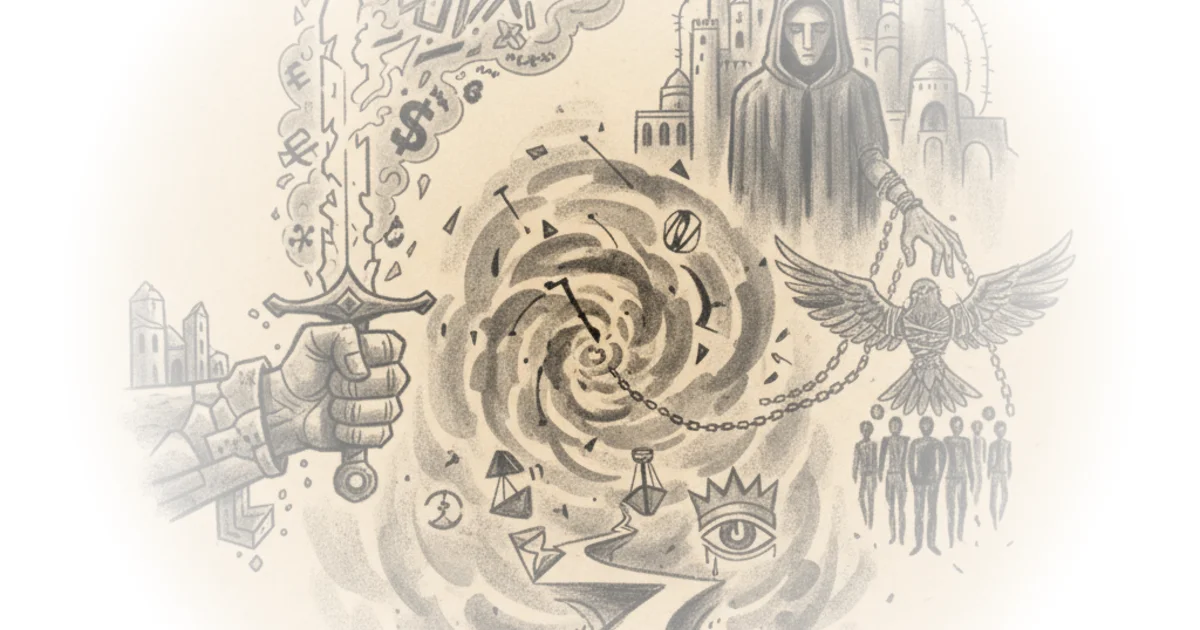
This skepticism is vital. In a landscape where official statements often shift by the hour, Perry's refusal to take the administration's threats at face value provides a necessary grounding. However, this approach risks underestimating the genuine volatility of the situation. Critics might argue that dismissing the administration's threats as mere "bluster" could lead to a dangerous underestimation of the willingness to escalate, especially given the history of sudden military pivots in the region.
"Trump is almost as big a liar as the Iranian regime. One cannot [take] him at face value; tomorrow he could be lavishing praise on the new Grand Poobah Qalibaf, or extending the cease-fire anyway, or threatening armageddon."
The Illusion of Rights
The core of Perry's argument dismantles the Iranian delegation's claim to "rights" in the nuclear and missile sectors. When the analyst from Tehran, Mohammad Khatibi, insists on Iran's right to enrich uranium and maintain a missile program, Perry pushes back with a stark moral distinction. He writes, "We're not talking about Iran as a country, or Iran as a people that have a lot of rights... We're talking about the Iranian regime, which is a criminal mafia."
Perry's framing is aggressive but precise. He separates the nation from its rulers, a distinction often lost in diplomatic shorthand. He argues that the "rights" Khatibi cites are actually tools for destabilization. "The right to build long-range ballistic missiles that are offensive in nature — they may think they have that right, but they've been firing on civilians all over the Gulf and in Israel for months, and that's not something that the world can easily accept."
This distinction echoes historical moments where the international community struggled to separate a state's sovereignty from its aggressive actions. Much like the global response to the Soviet satellite Kosmos 954, which fell to Earth in 1978 spreading radioactive debris, the focus here is on the tangible danger posed by the state's actions rather than its theoretical sovereignty. Perry contends that the regime has no right to turn the Strait of Hormuz into a "tollbooth" or an "ayatollbooth," effectively weaponizing international waterways.
The Human Cost of Silence
Perhaps the most poignant section of Perry's commentary addresses the inability of dissenters to speak freely. He acknowledges the constraints placed on Khatibi, noting, "He clearly would be hanged for saying the wrong thing; is he really a part of a criminal regime — or somehow a courageous man trying to avoid landmines while secretly hoping for better days?" Perry uses this to highlight the fundamental inequality in the debate: one side speaks from a democracy where leaders can be voted out, while the other speaks from a police state where leaders can only be removed by force or death.
Perry brings the conversation back to the human cost, specifically referencing the potential execution of eight women. He writes, "When he notes news that I suspect is true, but I can't prove that Iran is planning to hang these eight women, and he presents that as an argument for action... that tells me that he hasn't yet forgotten about the rights of the people of Iran." This shifts the narrative from abstract nuclear enrichment to immediate, visceral human suffering.
"The regime does not have a right to kill tens of thousands of protesters, and to be running for almost a half century an odious police state and a horrible theocracy."
Perry's willingness to call the regime a "criminal mafia" and a "police state" is a departure from the neutral language often preferred in international relations. It forces the reader to confront the nature of the adversary. However, this framing also invites the counterargument that demonizing the entire regime may harden the stance of hardliners within Iran, making diplomatic off-ramps even more difficult to find. The parallel to Mahmoud Ahmadinejad's 2006 letter to George W. Bush serves as a reminder that when regimes feel cornered or demonized, they often double down on ideological purity rather than seeking compromise.
The Bottom Line
Perry's commentary succeeds by refusing to let the "rights" of a theocratic regime obscure the reality of its crimes against its own people. The strongest part of his argument is the rigorous separation of the Iranian people from their rulers, a distinction that is often blurred in geopolitical analysis. His biggest vulnerability lies in the inherent unpredictability of the administration's actions; while Perry correctly identifies the bluster, the potential for miscalculation remains high. The reader should watch not just for the next missile launch, but for whether the administration's pressure can ever translate into genuine leverage for the Iranian people who are currently trapped in the crossfire.