What makes Stephen West's coverage of Albert Camus's The Plague particularly compelling is how he frames it as part of a deliberate artistic project rather than abstract philosophy. West argues that Camus intentionally refused to write in the traditional philosophical style, preferring instead to paint "images of the human condition." This framing transforms what could be a standard literary analysis into an exploration of why Camus made such radical choices.
The Artist Over the Philosopher
Stephen West makes a crucial distinction early in this piece: Albert Camus thought of himself as an artist and not a philosopher. This isn't a minor detail—it's central to understanding his entire project. West writes that "Camu thought of himself as an artist and not a philosopher" and that "he didn't want to be a philosopher." The reason this matters is because Camus saw philosophical systems as dangerous. He believed those systems "miss something deeply important about the human condition" and create "a dangerous precedent for people to live their lives believing that philosophy can somehow provide some neat justification for things that go on in the world."
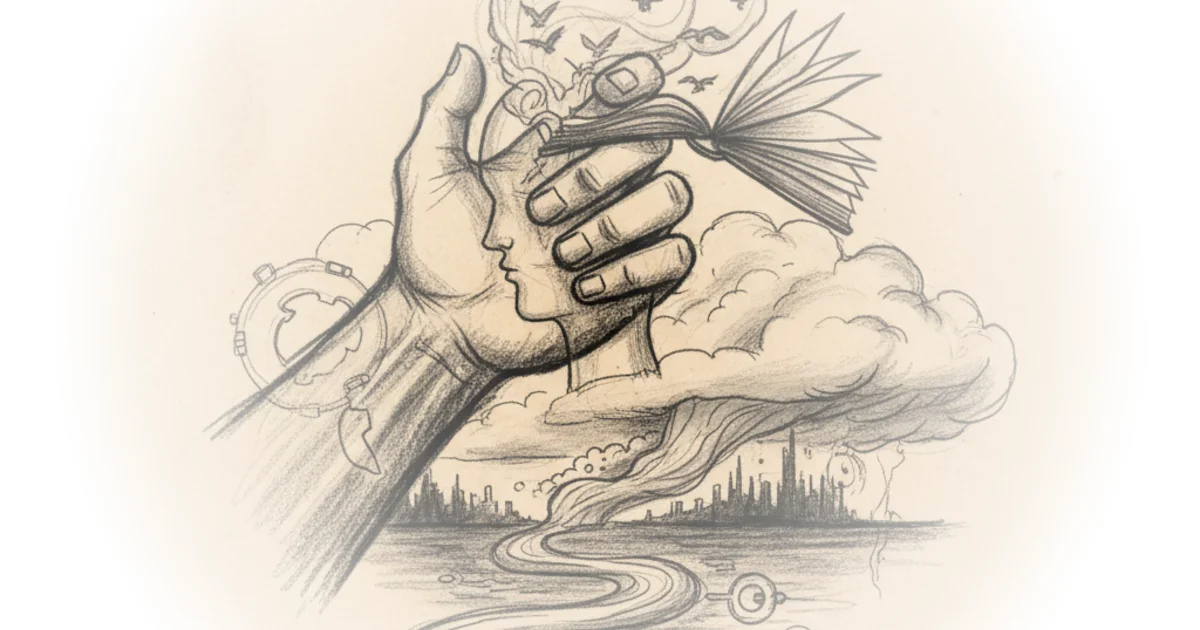
This is where West's analysis gets genuinely interesting. He's not just summarizing Camus—he's explaining why this refusal matters. The author quotes Camus directly: "What is a novel but just a philosophy expressed in images?" This single line becomes the key to understanding everything else.
West argues that by communicating through images instead of propositions, Camus created work that resists reduction into "some kind of delusional system of universals." The commentary here is doing something important—it shows what this actually means in practice. Rather than writing abstract arguments about existence, Camus painted memorable images like Sisyphus pushing his boulder.
The Misunderstood Myth of Sisyphus
The section on the Myth of Sisyphus is where West's analysis becomes most valuable, because he corrects a widespread misunderstanding. He writes that "there's a really overrated line I think from the myth of Sophus that basically everyone knows" — referring to "we should imagine Sisyphus happy." Most readers assume this means our lives are essentially suffering, but West clarifies this isn't what Camus was saying at all.
The image of Sisyphus is "partly a metaphor for a specific piece of how our lives may feel," specifically for encountering the absurd. But it's equally important that "Sisypheus is also an image here that's being used by Kimu to illustrate what our lives are not." West is making a sophisticated point: the myth serves as both a mirror and a contrast. We need to recognize "how much we are not like Sisyphus" because our lives include "many good moments that are available to us as human beings."
Life is partially suffering, but life is also partially joy, love, belonging, beauty, excitement.
This becomes the core of what Camus was exploring—not despair, but the possibility of affirming life exactly as it is. West captures this through his paraphrase: "the reality of our life is we do have many good moments that are available to us as human beings." The goal isn't transcendence from suffering but acceptance of immanence.
From Individual to Community
The shift in Camus's work between cycles becomes clearer when West explains it. He writes that "All the books, plays or essays that we know about from Camu" were organized by Camus himself into "five different stages or series or cycles." This is a revealing detail—Camus was consciously organizing his own career.
West identifies that Cycle One includes The Stranger, the essay "the myth of Sisyphus," and the play Caligula. Then for Cycle Two, "the plague was the first major book he thought was a part of cycle 2." The significance is that this represents "a major shift in focus" where Camus moves from "these earlier works that focus mostly on the individual and a personal encounter with the absurd to cycle two focusing on facing the absurd at the level of community or our relationships to other people."
This framing helps explain why The Plague matters—not just as a story about disease, but as an image of collective response to absurdity. West notes this is "fantastic" for exploring "revolt against the absurd at the level of our commitments to other people."
Characters as Reactions to the Absurd
West does excellent analytical work when he categorizes the characters in The Plague as different responses to confronting the absurd. He writes that "you can think about the characters in this book in their different responses to the plague as more of these images presented by Kimu where each of them represent some common reaction to when we're forced to confront the absurd in our lives."
Father Paneloo represents what West calls "a metaphysical form of denial." His sermon is worth hearing: "This plague," he says, "is divine retribution from God. God has sent this plague to punish the people of this town for all their sinning." West describes this as a story "that's loaded with metaphysics to explain away the absurd events of the world" — one that reinforces existing views and requires no actual reflection.
Then there's Card, who represents another common reaction: using the absurd "to further ingratiate himself." He's someone who "encounters the absurd and then only thinks of themselves."
Dr. Ryu's Arc
The analysis of Dr. Bernard Ryu becomes the centerpiece because West uses him as a case study for how one moves from denial to revolt.
West describes his initial response: "his first instinct when he encounters the absurd is to do what many of us do in our own lives. We retreat into a kind of problem-solving mode where we make the mistake of thinking that we can get away from it." This was "a kind of scientific cocoon he makes for himself trying to come up with a cure."
But soon "he realizes that this plague is not going anywhere. There's no magic serum that's going to come along and cure everyone." His transformation is significant: his goal changes "from a denial of the absurd to a stance of revolt against it." West writes that Dr. Ryu "starts to feel that to be a lucid, authentic person that's not in denial of what's actually going on around him. The only response that really makes sense in this moment is solidarity with his fellow people."
This is the heart of what West is explaining: "his choice is to just keep on going about his life, caring for all the people who are suffering from the plague around him." Dr. Ryu "chooses to just put his head down and keep on living in spite of all the senseless death that's starting to take over the town."
Solidarity with his fellow people — meaning in a very quiet, measured way.
Critics might note that West's analysis could explore more deeply how Camus's own historical context—living under Nazi occupation—shaped these images. The symbolism of plague clearly connects to both literal occupation and philosophical absurdity, but the connection between those two meanings deserves more development than this piece provides.
Bottom Line
Stephen West's strongest contribution here is framing The Plague as part of a deliberate artistic project rather than abstract philosophy. His analysis of Sisyphus corrects widespread misunderstanding, and his reading of character archetypes offers genuine interpretive value. The vulnerability lies in the rushed treatment of why the shift from individual to community matters—it's mentioned but not fully explored. West's piece works best when it slows down to examine what solidarity actually looks like in the face of absurdity: not transcendence or escape, but quiet, measured commitment to others.