While much of the public debate fixates on political blame games or the sudden surge of artificial intelligence data centers, this piece from Energy Bad Boys cuts through the noise to point a finger at a more mundane, yet expensive reality: the utility rate case itself. The editors argue that the dramatic spike in electricity prices isn't a mystery of market forces, but the direct, documented result of capital spending on the 'energy transition' that regulators have been approving at record rates. For the busy listener, the takeaway is stark: we are paying for a radical grid overhaul while demand was flat, leaving the system vulnerable just as load is finally starting to climb.
The Paper Trail of Price Hikes
The article's most compelling move is its refusal to speculate. Instead, it leans heavily on the public filings of regulated utilities, treating the rate cases as the smoking gun. Energy Bad Boys reports, "Rate increase requests from utility companies have exploded since 2020, jumping from $3.6 billion to $11.3 billion in one year, an increase of over 200 percent." This statistic anchors the entire argument, shifting the conversation from abstract policy to concrete billable items.
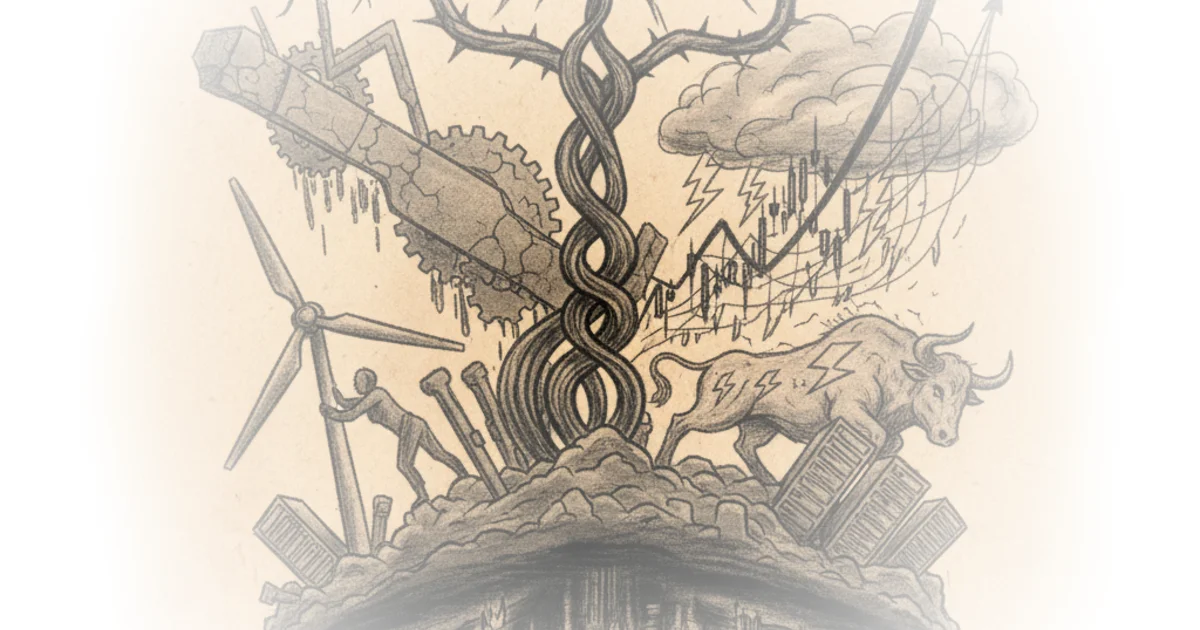
The piece connects this spending surge directly to the consumer's wallet, noting that the correlation is undeniable. "From 2016 to 2020, electricity prices increased modestly... Since 2020, prices have increased to 13.54 cents per kWh—an increase of 28 percent in five years." The editors suggest that the timing is too perfect to be coincidental, arguing that the rate hikes and the price spikes are two sides of the same coin. This framing is effective because it bypasses the usual ideological shouting match and focuses on the mechanical link between utility investment requests and the final bill.
Critics might argue that focusing solely on rate cases ignores the broader context of wholesale market volatility or fuel costs, but the editors push back hard on that distinction. They assert, "Wholesale prices don't reflect the full cost of retail prices," a point that is often lost in national headlines but is critical for understanding why a customer's bill rises even when commodity prices dip.
We are guilty of spending our rainy-day fund in sunny weather.
This metaphor, borrowed from debt discussions and applied here to the grid, perfectly captures the editors' central thesis: massive capital was deployed to replace reliable thermal generation with intermittent sources during a period of low demand, wasting resources that could have been saved for the current surge in load.
The Mandate to Spend
Digging deeper into the specific filings, the article highlights how state mandates are forcing utilities to spend billions on specific technologies. The editors note that these aren't voluntary investments but compliance costs driven by legislation like New York's climate goals or Virginia's Clean Economy Act. Energy Bad Boys reports that Consolidated Edison is "investing more than $21 billion over three years to build infrastructure like transmission, substation, and distribution facilities" specifically to "advance New York State and New York City's climate goals."
The commentary suggests that this creates a perverse incentive structure where utilities are rewarded for spending on the transition, regardless of immediate reliability outcomes. The piece points out that Dominion Energy, while complying with the Virginia Clean Economy Act, has "retired over 2,500 MW of mostly coal-fired power plants—and additions haven't kept up with retiring capacity." This detail is crucial; it echoes the historical concept of 'merit order,' where the cheapest sources are used first, but here, policy is forcing the retirement of baseload power before the new capacity is fully ready to take the load.
The editors argue that this rush is creating genuine reliability risks. They cite the North American Electric Reliability Corporation (NERC) warning that the PJM grid is at "elevated risk of supply shortfalls" as early as 2026. This is not a theoretical concern but a projected reality based on the current pace of retirements versus new builds. The piece asks a difficult question: "Today, the Company needs as much generation capacity as it can get," yet the policy direction is to replace the most reliable sources with the least predictable ones.
Electrification as a Cost Driver
Beyond generation, the article scrutinizes the push for electrification of heating and transportation. The editors point out that utilities are now charging customers to build the infrastructure for electric vehicles and heat pumps, even in regions where rates are already among the highest in the nation. PG&E, for instance, is requesting funding for "electrification of gas customers and retirement of gas infrastructure" despite having the fourth-highest rates in the country.
Energy Bad Boys reports that Con Ed is "anticipating demand for heat electrification to grow" and is building infrastructure to support it. The editors frame this as a premature and expensive burden on the consumer. "Rather than theorize about what is causing electricity prices to increase, we should pay close attention to the reasons for these rate increases," they urge. The argument is that the grid is being forced to absorb the costs of a societal shift toward electrification before the technology or the grid itself is ready to handle it efficiently.
A counterargument worth considering is that the transition to clean energy is a long-term necessity and that short-term price pain is the cost of avoiding climate catastrophe. However, the editors maintain that the timing and pace of these expenditures are the real culprits, arguing that the spending is happening "during a time of little to no energy demand growth," which made the investment inefficient. They suggest that if this spending had been timed to meet the current demand surge, the price impact might have been less severe.
Bottom Line
The strongest part of this argument is its reliance on the utilities' own words; by letting the rate case filings speak for themselves, the piece makes it difficult to dismiss the link between 'clean energy' mandates and rising bills. Its biggest vulnerability, however, is the assumption that the alternative—retaining thermal generation without a transition plan—would have been cheaper in the long run, a claim that ignores the externalized costs of carbon and the eventual obsolescence of fossil infrastructure. Readers should watch for the 2026-2027 reliability warnings from NERC to see if the predicted supply shortfalls materialize, which would either validate the editors' concerns about premature retirements or force a rapid, expensive pivot back to reliable power.