Justin E. H. Smith delivers a provocative diagnosis of the digital literary landscape: the flood of automated writing isn't just noise; it is the inevitable, messy birth of mass authorship. While many lament the "slopification" of the internet, he argues we are witnessing a historical pivot as significant as the invention of the printing press, where the barrier to expression has finally collapsed for everyone, regardless of skill.
The Paradox of Automated Expression
Smith reframes the current crisis on platforms like Substack not as a failure of quality, but as a triumph of access. He observes that "the simple fact is that the work we put into The Hinternet will no longer be worth it after another few months of attrition," yet he refuses to blame his own craft for this decline. Instead, he points to a fundamental shift in the environment: "It is hard to sell tickets to your garden, no matter how meticulously manicured, when you're living in kudzu-infested country." This metaphor perfectly captures the frustration of traditional writers who feel drowned out by the sheer volume of machine-generated content.
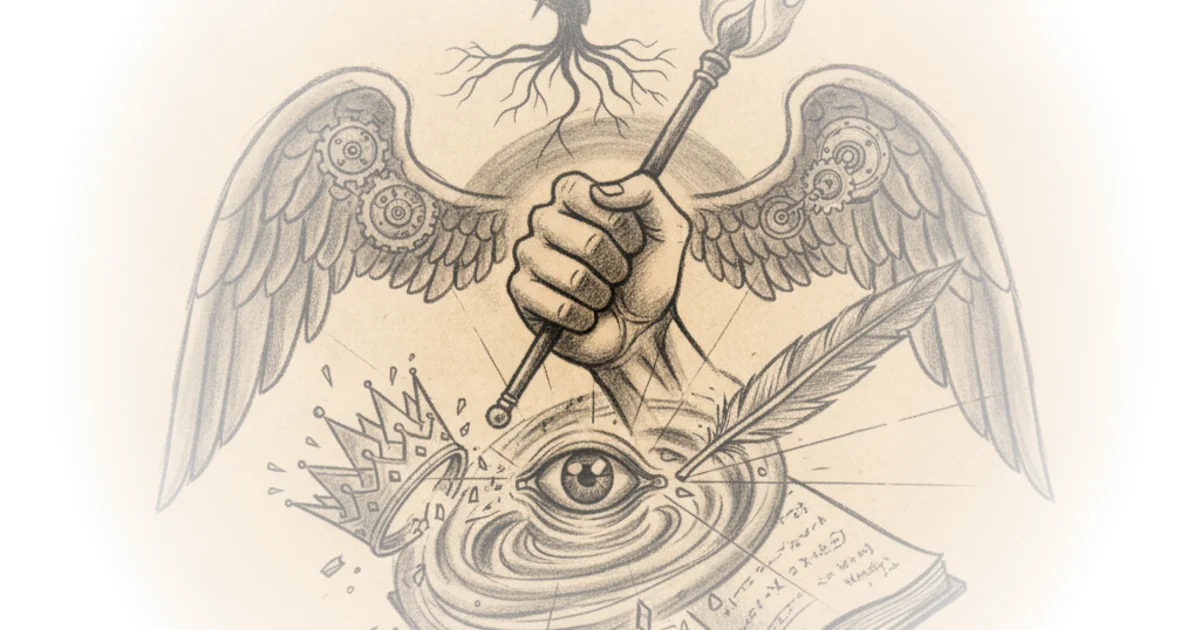
However, Smith's most compelling insight lies in his refusal to dismiss this new content as merely cynical or low-effort. He suggests that much of this automated output comes from sincere individuals who previously lacked a voice. "We are reminded of a Wall Street Journal article from 2018 about the elderly people in India who were so overjoyed to be able to take to social media... that they ended up repeatedly crashing the country's energy infrastructure." By drawing this parallel, Smith elevates the discussion from a complaint about AI quality to an analysis of human aspiration. He notes that for many, "Finally I have a way to express the good cheer and optimism that I feel inside me!" is a profound statement, even if delivered by a bot.
"Just as automated printing became the catalyst for aspiration to universal readership over the past centuries, so now automated text-generation might best be understood as having brought about, finally, the conditions for the massification of authorship."
This argument is bold and historically grounded. It challenges the elitist notion that only human-crafted prose has value. Yet, critics might note that equating AI generation with the democratizing force of the printing press overlooks a key difference: the printing press amplified human thought, whereas current AI often simulates it without understanding. Smith acknowledges this tension, admitting that those who view writing as a "spiritual practice" are naturally resistant to having their venues invaded by "mechanical prostheses."
The Economics of Attention and Absurdity
The piece shifts from cultural theory to the stark economics of survival. With subscription models faltering—Smith notes that a recent fundraising drive brought in only one new subscriber—the publication is exploring radical alternatives. He proposes moving away from direct reader support toward "creative and as it were 'stealth' advertising campaigns." The goal, he writes, is not just product placement but the total integration of a sponsor into the narrative fabric: "We would simply go straight to work on their understanding of reality itself — and your product would come, we expect, over time, to serve as one of the great pillars of that reality."
This proposal is framed through the lens of pop-art absurdism, recalling Larry King's legendary endorsements of "Garlique." Smith argues that in an era where readers are bombarded with content, only the most memorable, bizarre, or deeply embedded messages will stick. He suggests that integrating a product into a "complicated long-developing metafiction" could alter reader perception more effectively than traditional ads.
"Those who wish, or indeed those who must, will continue to find outlets for the more rarefied and hard-won expression of the condition of their souls... But they're going to have to adapt."
This admission is both a resignation and a call to action. It suggests that the old model of the independent intellectual outlet relying on small donations from a niche audience may be unsustainable in a world dominated by algorithmic content. While Smith's approach to advertising is witty, it raises questions about the integrity of the "rarefied" expression he champions. If the medium itself becomes an advertisement for a sponsor's reality, does the message survive? A counterargument worth considering is that this level of integration might alienate the very audience seeking refuge from commercial saturation.
The Future of Humanism
Despite the economic anxieties and the rise of AI, Smith remains committed to the humanist project. He announces a summit titled "Generative Humanity: Writing, Art, and Humanism in the Age of AI," featuring scholars like Blaise Agüera y Arcas and D. Graham Burnett. The event aims to navigate the conflict between "managerial humanities"—which he associates with university bureaucracies—and a more grounded, tradition-based inquiry.
Smith's commentary on this shift is sharp: he sees the rise of AI as a challenge that forces humanists to re-evaluate what makes their work unique. He references Ian Marcus Corbin's new book, To Arrive Where We Started, which argues for grounding inquiry in tradition against the tide of modern managerialism. This connection reinforces Smith's broader point: in an age of infinite, automated content, the value of human writing lies not just in its output, but in its rootedness and intentionality.
"We think this great historical transformation is actually rather interesting — even as it is harming us."
This sentiment captures the complex emotional landscape Smith navigates: a simultaneous appreciation for the democratization of expression and a sorrow for the devaluation of craft. It is a stance that requires intellectual humility, acknowledging that while the "hoi polloi" may be crashing their venues with mechanical writing, they are doing so out of a genuine desire to participate in the human conversation.
Bottom Line
Justin E. H. Smith offers a necessary corrective to the panic surrounding AI-generated content, reframing it as a historical inevitability that expands authorship rather than diminishing it. His strongest argument is the historical parallel between automated printing and automated text generation, suggesting we are in a messy, transitional phase of cultural evolution. However, his proposed solution—embedding advertising so deeply into metafiction that it alters reality itself—is a risky gamble that could undermine the very humanist values he seeks to protect.