Derek Muller makes an argument that's been strangely absent from scientific discourse: the real problem with science communication isn't bad actors — it's the incentive structure baked into how science gets funded, publicized, and consumed.
The Wormhole That Wasn't
Muller opens with a case most readers won't know. "The problem was of course that no wormhole had been created," he writes, describing the frenzy around Nature's cover story about a quantum computer creating a holographic wormhole. The media coverage promised something extraordinary — headlines declaring scientists had built a wormhole, that it was traversible, that you could actually go through it. What actually happened is that a quantum computer did some calculations that "can be done with my iPhone." This is the piece's strongest move: showing how a modest mathematical representation gets sold as literal physical reality.
"In the same sense in which I could say look my children has built a rocket that goes to the moon — so wow what kind of child you have — yeah here it is and I show you a little sketch on a piece of paper when there is a drawing of a rocket going to the moon."
The comparison is brutal but precise. A quantum computer doing calculations related to wormhole mathematics isn't the same as creating an actual traversable wormhole, just as a child's drawing of a rocket isn't actually a functioning spacecraft.
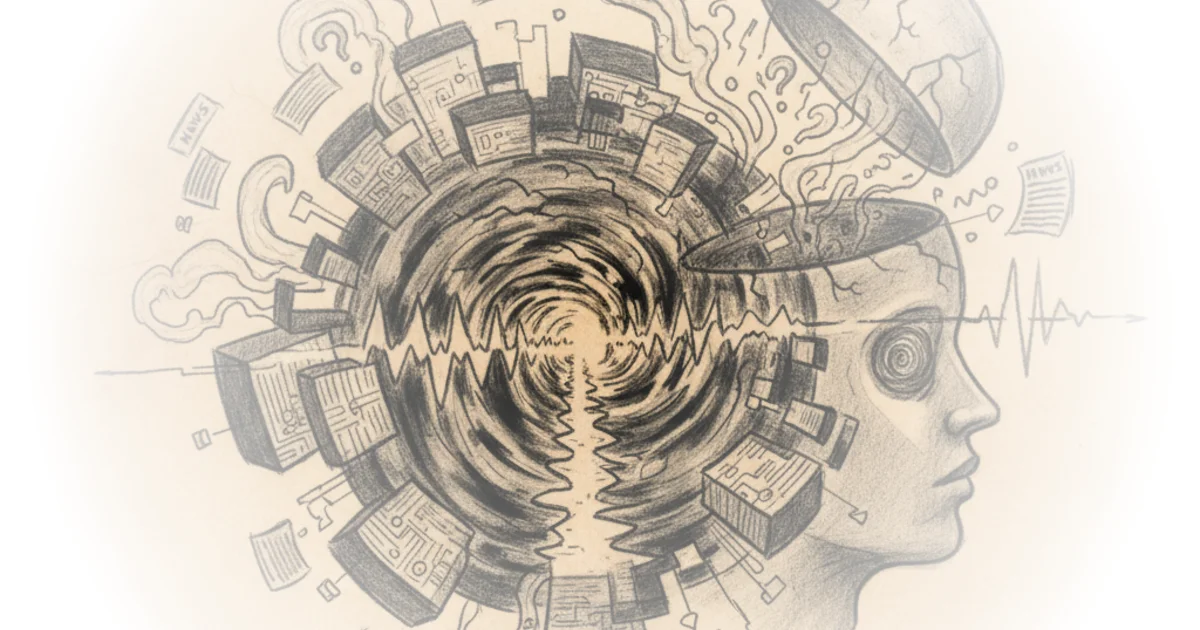
The Incentives Driving Overhyping
Muller identifies what he sees as the root cause: "Scientists need to secure funding for their research and increasingly that depends on attracting public attention to their work." Universities want to promote themselves. Journalists want clicks. Press releases simplify and overstate. The result is a game of telephone where bold claims travel faster than correction.
"In social science it's been shown that studies that later failed to be replicated receive on average 153 more citations than studies that can be replicated."
This statistic is staggering, and it cuts across disciplines. The same dynamics apply in physical sciences — the dramatic claim gets attention; the quiet refutation doesn't.
What Gets Lost
Muller makes a crucial point about how science is covered versus how it's actually done. "At the end of the news you get 10 minutes of sports where they will talk about the fact that somebody kicked a ball around in a field and it's got that particular importance," he observes. "But to get a science story it has to be Earth shattering kind of thing." The pressure for blockbuster findings distorts public understanding of how science actually works — incremental, careful, and often wrong.
"The entire enterprise is moving forward... we definitely know more tomorrow than we do today but that's not the way that it gets picked up by the media."
Critics might note that this framing undersells the actual achievements of legitimate science. The BICEP2 case wasn't just media overhyping — it was a systematic error in the scientific process itself, where initial claims were treated as confirmed before replication. Similarly, some fusion breakthroughs are genuinely impressive engineering even if they don't solve our energy problems tomorrow. The piece occasionally conflates legitimate discoveries with discredited ones.
A counterargument worth considering: perhaps the solution isn't to stop hyping but to hype more accurately — to build media literacy about how science progresses rather than waiting for corrections that never get the same attention as the original claims.
Bottom Line
Muller's core argument is compelling: the incentive structure around science communication systematically rewards bold claims over careful ones, sensational headlines over nuanced findings. His biggest vulnerability is strategic — he acknowledges the problem but offers mostly individual vigilance as a solution. The structural forces driving overhyping — funding cycles, university PR machines, viral media economics — remain largely untouched by individual caution. The piece succeeds at diagnosis; the treatment is still waiting for replication.