Paul Cooper doesn't just recount the history of the Greenland Norse; he reconstructs the chilling atmosphere of a civilization that chose to freeze rather than adapt. The most striking element of this coverage is its refusal to treat the collapse as a simple environmental failure, instead framing it as a profound cultural tragedy where identity became a death sentence.
The Edge of the World
Cooper opens with a haunting vignette from 1540, decades after the settlements vanished, where Norwegian sailors discover a lone, dead Norseman dressed in Inuit clothing. "They turned the man over and saw with surprise that he had red hair and pale skin. He was a Norseman just like them." This image serves as the episode's emotional anchor, illustrating the desperate, final attempts at survival that history books often gloss over. Cooper uses this moment to pivot from a simple exploration narrative to a deeper inquiry into societal rigidity.
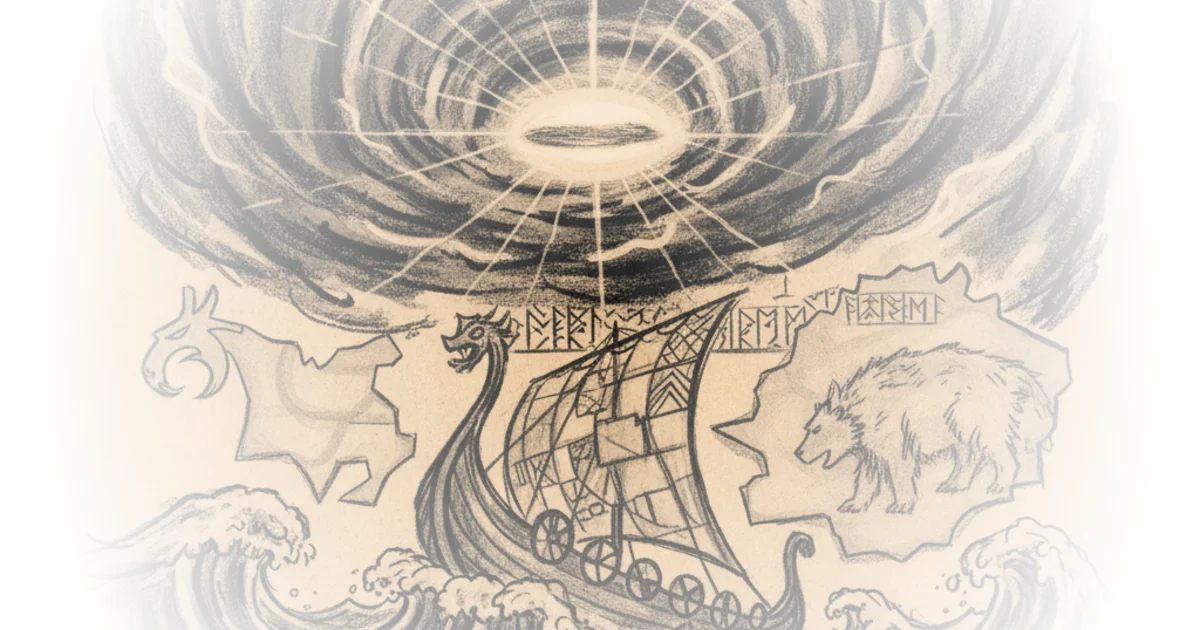
The author establishes the Norse reputation not just as raiders, but as "marvelous writers of epic poetry and perhaps some of the hardiest explorers in human history." This framing is crucial; it sets the stage for a tragedy where the very traits that built the society—pride, tradition, and a specific definition of European identity—ultimately prevented their adaptation. Cooper argues that these settlers didn't just survive; they thrived in an "impossible landscape," building manor houses and importing wine while hunting walrus and capturing live polar bears. The contrast between their high European aspirations and the brutal reality of the Arctic is the engine of Cooper's narrative.
"In this impossible landscape they grew and thrived and then after centuries of survival at the edge of the world their civilization collapsed."
The Architecture of Exile
The narrative then traces the lineage of this doomed ambition back to Erik the Red. Cooper paints a vivid picture of the geopolitical pressures in Norway and Iceland that forced expansion. He describes Erik not as a hero, but as a man defined by "inherited something of his father's temper and even more of his bad luck." This biographical approach grounds the grand historical sweep in human frailty. Cooper notes that after killing a neighbor, Erik was banished, leading him to sail into the unknown: "his voyage would change the map of the world forever."
What makes Cooper's analysis compelling here is his attention to the marketing of the settlement. He details how Erik, upon returning from exile, had to convince settlers to risk the journey to a land that was "barely more than a sliver of green on the edge of a barren ice sheet." The author suggests that the name "Greenland" was a deliberate, perhaps cynical, piece of branding to overcome the terrifying reality of the destination. This highlights a recurring theme: the Norse were masters of perception, but perhaps victims of their own self-deception.
Critics might note that Cooper leans heavily on the Icelandic sagas, which were written down centuries after the events and designed for entertainment rather than historical accuracy. While he acknowledges these are "pieces of epic poetry passed on by word of mouth," the reliance on them risks romanticizing the brutality of the settlement and the specific motivations of the colonists.
The Silence of the Ice
As the episode progresses, Cooper shifts from the thrill of discovery to the mystery of disappearance. He emphasizes the sheer scale of the ice sheet, noting that "some of it over a million years old," creating a sense of geological indifference to human struggle. The core of the argument is that the Norse built a society that was culturally and economically incompatible with the changing climate. They refused to adopt Inuit technologies, such as the kayak or the toggling harpoon, preferring to cling to European farming methods that were failing in the cooling temperatures.
Cooper writes, "The story begins right there on the snowy slopes and steaming vents of Iceland," but the ending is the true focus: a civilization that chose to starve rather than change its ways. The author's choice to focus on the "mysterious collapse" rather than a definitive cause allows for a more nuanced discussion of how cultural identity can become a trap. He suggests that the Norse of Greenland were trapped by their own definition of what it meant to be European in a land that demanded they become something else.
"They built a society on the farthest edge of their world and survived for centuries among some of the harshest conditions ever faced by man... and then after centuries of survival at the edge of the world their civilization collapsed."
Bottom Line
Paul Cooper's greatest strength is his ability to humanize a statistical anomaly, turning the disappearance of the Greenland Norse into a gripping character study of cultural inflexibility. The piece's vulnerability lies in its heavy reliance on saga mythology, which may obscure the grim economic realities of the collapse. For the modern reader, the most urgent takeaway is the warning that survival often requires the willingness to abandon the very traditions that define a society.
"In this impossible landscape they grew and thrived and then after centuries of survival at the edge of the world their civilization collapsed."