Nicolas Delon challenges a pervasive modern assumption: that expert consensus on art is merely a relic of elitism to be discarded. Instead, he argues that when the most brilliant musical minds across two centuries converge on a single figure, we are witnessing something more than fashion—we are seeing a pattern of genuine, enduring greatness. This piece is notable not for rediscovering Mozart, but for rigorously defending the idea that aesthetic testimony, when it comes from those who create the art itself, carries a unique and reliable weight.
The Weight of Peer Judgment
Delon begins by dismantling the popular instinct to distrust experts. He writes, "Not everything great composers have said is worth taking at face value. But when patterns emerge, it's worth paying attention." This framing is crucial because it shifts the debate from blind obedience to critical observation. The author suggests that while individual critics of the past were often wrong—Beethoven and Brahms received terrible reviews from their contemporaries—the composers themselves possessed a sharper, more intuitive radar for quality.
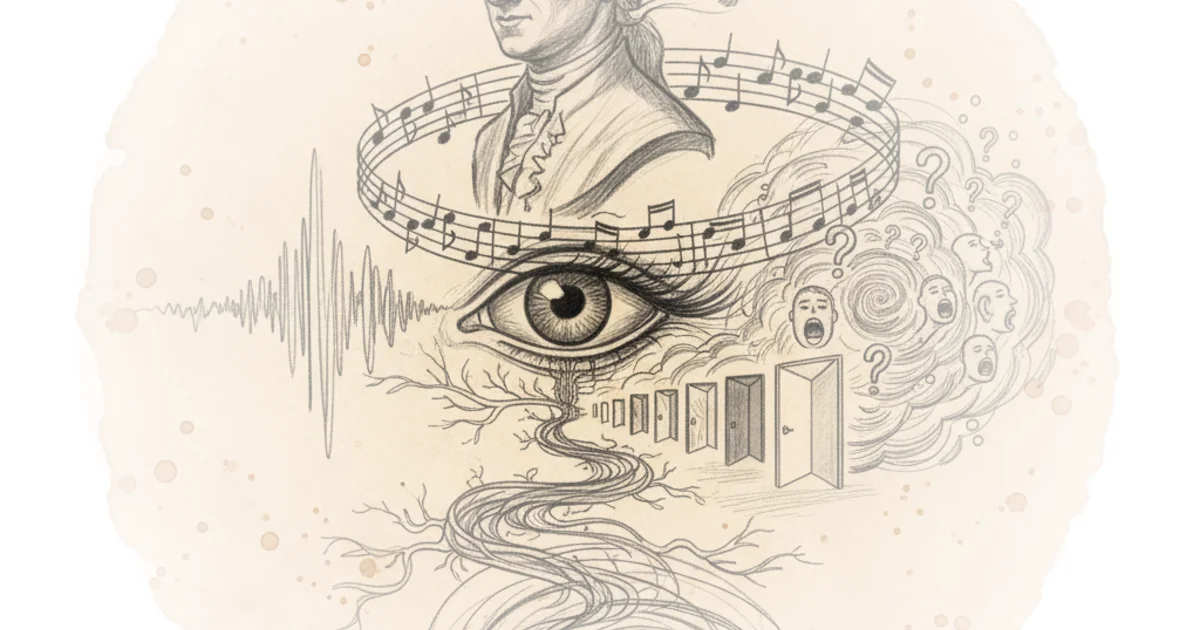
The argument gains traction when Delon highlights the specific preferences of giants like Chopin. He notes that while Chopin admired the German tradition, he found Beethoven's "gigantic conceptions" too violent, preferring instead the "fascinating charm and lovely melodies of Mozart's compositions." This is a striking reversal of the usual narrative that places Beethoven as the undisputed peak of the era. Delon uses this to illustrate that even the most revolutionary artists often find their deepest resonance in the classical balance of Mozart.
"If many of the greats are closer to ideal critics than many actual critics, and their judgments have converged and remained stable over time, they may be onto something. And that something, I claim, is Mozart's supreme, enduring greatness."
Critics might argue that this relies too heavily on anecdotal evidence and the romanticized notion of the "deathbed confession." However, Delon mitigates this by acknowledging that some quotes are apocryphal, urging readers to take the collection with a "grain of salt" while still recognizing the overwhelming consistency of the sentiment.
The Spiritual Dimension of Greatness
The piece takes a profound turn when examining Pyotr Ilyich Tchaikovsky's diary. Delon presents a passage where Tchaikovsky distinguishes between the awe he felt for Beethoven and the love he felt for Mozart. He writes, "If Beethoven occupies in my heart a place analogous to God, Lord of Sabaoth, then Mozart I love as a musical Christ." This is not merely a preference for melody; it is a theological distinction regarding the nature of the music itself.
Delon uses this to argue that Mozart's greatness lies in a specific kind of humanity. Tchaikovsky describes Mozart as "angelical and child-like in his purity," suggesting that the music reflects a suffering and ideal human side that resonates on a spiritual level. Delon points out that Tchaikovsky arranged and adapted Mozart's work extensively, treating the source material with a reverence that went beyond mere influence. The author notes that Tchaikovsky believed "there is nothing sacrilegious in such a comparison," elevating the discussion from technical analysis to existential impact.
This section effectively counters the idea that classical music is cold or purely intellectual. By focusing on the emotional and spiritual connection these composers felt, Delon shows that Mozart's appeal is visceral. The evidence is compelling: if a composer like Tchaikovsky, known for his own intense emotionalism, found in Mozart a "culminating point which beauty has reached," then the claim of Mozart's supremacy is not just an opinion, but a lived experience for the masters.
The Uncomfortable Truths of Taste
The commentary becomes even more provocative when discussing Johannes Brahms and Benjamin Britten. Delon highlights that while Brahms lived in the shadow of Beethoven, he privately admired Mozart's use of dissonance more, stating, "Dissonance, true dissonance as Mozart used it, is not to be found in Beethoven." This challenges the standard musicological hierarchy that places Beethoven as the master of dramatic tension.
The inclusion of Benjamin Britten adds a layer of sharp, controversial critique. Delon recounts Britten's infamous dismissal of Brahms as "the worst" and his claim that Mozart is "the greatest composer that has ever lived." Delon acknowledges Britten's reputation for "strongly held and unpopular opinions," yet suggests that his judgment on Mozart remains unassailable. The author writes, "The puzzle is how he could be wrong about Brahms and Beethoven while being right about Mozart!"
"What I think those composers are hearing in Mozart instead, and what makes them great composers in their own right, is an intrinsic desire to make great music just because they could."
Here, Delon offers his own synthesis. He argues that the connection between these disparate composers and Mozart is not about imitation. They did not sound like Mozart. Instead, they recognized in him a pure, unadulterated drive for excellence that transcends style. This is a powerful insight: greatness is not about copying the past, but about recognizing the standard to which one aspires.
Bottom Line
Delon's strongest move is reframing the consensus on Mozart not as a historical accident or a marketing ploy, but as a verified truth confirmed by the only people qualified to judge: the creators themselves. The argument's vulnerability lies in its reliance on the subjective intensity of these admirers, yet the sheer volume and consistency of their testimony make it a formidable case. Readers should watch for how this perspective shifts the way we listen—not as passive consumers of a canon, but as participants in a conversation that has lasted two hundred years.