In a landscape often saturated with fragmented takes, Mona Mona's November 14, 2025 roundup offers a rare synthesis of existential dread and structural critique, connecting the dots between algorithmic colonization, the trauma of autoimmune disease, and the geopolitical firestorms of the current era. This is not merely a list of links; it is a curated argument that the most pressing philosophical questions of our time are no longer abstract, but are being lived out in the collapse of mental health, the weaponization of finance, and the erosion of shared truth.
The Architecture of Suffering
Mona Mona begins by grounding the reader in the visceral reality of modern existence, arguing that our internal struggles are inextricably linked to external systems. The curation highlights a piece on "Capitalism and Mental Health," which diagnoses the era through the lens of Mark Fisher, suggesting that our psychological distress is a rational response to an irrational economic order. Mona Mona writes, "The effects of capitalism on mental health as diagnosed by Mark Fisher," framing the epidemic not as a personal failing but as a systemic symptom. This framing is crucial because it shifts the burden of cure from the individual therapist to the structural architect.
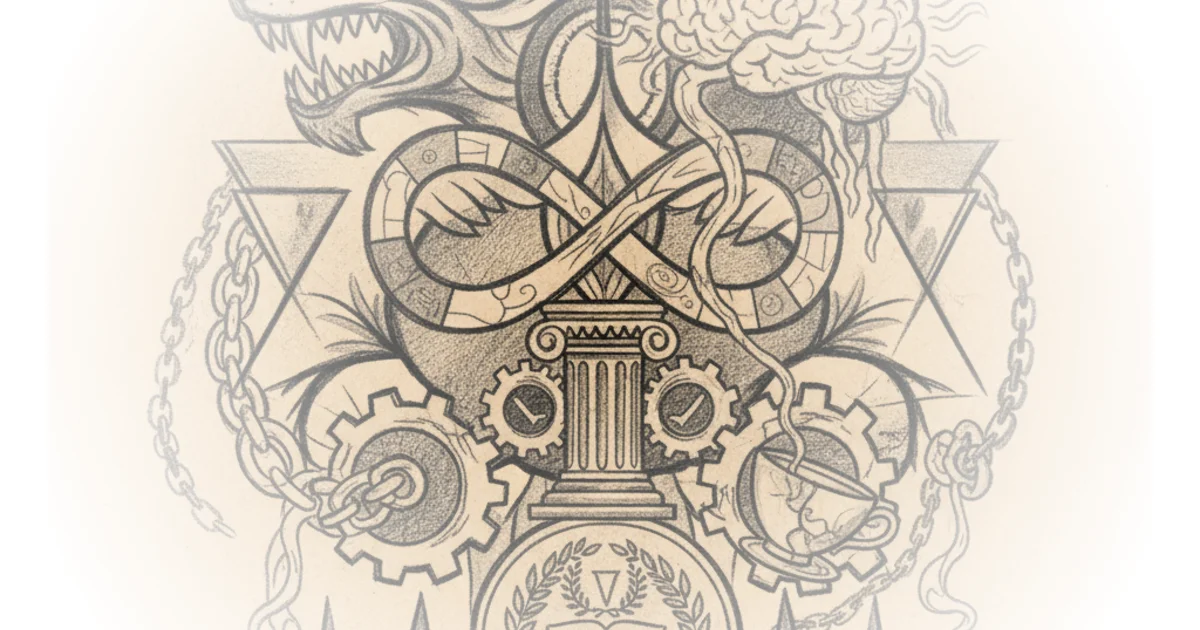
The roundup deepens this by exploring how the self is fractured by these pressures. In a poignant selection titled "What happens when the person you're grieving is you," the author suggests that personal growth requires a kind of death. Mona Mona notes, "Becoming ourselves means saying goodbye to the selves we've outgrown." This observation cuts through the self-help noise, offering a darker, more honest view of identity formation. It implies that the "breakdown" many are experiencing is not a deviation from the path, but the path itself.
Between the breakdown and the breakthrough, we're all just looking for the keys to life.
However, this focus on internal transformation risks overlooking the material barriers that prevent such growth for the most vulnerable. Critics might note that while philosophical reframing is powerful, it cannot substitute for the economic security required to actually process trauma. Mona Mona attempts to bridge this gap by including a piece on "How capitalism gave me an autoimmune disease," which explicitly links embodied trauma to economic conditions, suggesting that the body itself becomes a site of political resistance and collapse.
The Algorithmic and the Apocalyptic
The commentary then pivots to the technological and theological forces reshaping our collective future. Mona Mona identifies a dangerous convergence in the article "The Trillion-Dollar Vassal," which connects the administration's foreign policy, the war in Gaza, and the massive sovereign wealth funds of nations like Norway. The text describes a scenario where "Trump 2.0, Israel's Gaza war, and Norway's two-trillion-dollar sovereign wealth fund converged in a firestorm of finance, geopolitics, and genocide." By centering the term "genocide" alongside "finance," the curation refuses to let the human cost of geopolitical maneuvering be sanitized by economic jargon.
This structural violence is mirrored in the digital realm. The roundup features "The Structural Violence of Risk Management Behind the AI Infrastructure Bubble," which argues that financial institutions are sustaining the artificial intelligence boom by "exporting risks to everyone else." Mona Mona highlights the danger of this dynamic, noting that the "AI infrastructure bubble" is built on a foundation of hidden costs borne by the public. This is a vital correction to the techno-optimist narrative that dominates the industry.
Furthermore, the curation challenges the spiritual vacuum filled by apocalyptic thinking. In "Jesus and the Doomsday Clock," the author explores "How Apocalyptic Christianity Became America's New Theology of Power." Mona Mona writes, "How Apocalyptic Christianity Became America's New Theology of Power," suggesting that religious fatalism has been repurposed to justify political aggression. This is a sharp critique of how fear is weaponized to maintain the status quo. Yet, the roundup also offers a counter-narrative in "Maybe we need a Butlerian Jihad after all," which warns that "AI won't bring your dead loved ones back," pushing back against the technological fetishism that seeks to solve human mortality with code.
Reclaiming the Human Principle
Amidst the critique of systems, the piece offers a path toward reclamation. Mona Mona includes "Privacy as Jihad," framing digital privacy not as a convenience but as a "discipline to protect the human principle from algorithmic colonization." This reframing elevates the act of protecting one's data to a moral imperative. Similarly, the inclusion of "Red Thunder, Black Borders" celebrates the "Optic Power of Navajo Textiles," grounding the discussion in Indigenous sovereignty and the "Native American Heritage Month" context.
The curation also questions the nature of love and connection in a fractured world. In "Is romantic love oppressive?" the author explores whether "attachment love that holds us back" is the true barrier to intimacy. Mona Mona writes, "Or is it rather attachment love that holds us back?" This question forces a re-evaluation of our most cherished relationships, suggesting that our current models of love may be ill-equipped for the challenges of the modern age.
Privacy is not just a right; it is a discipline to protect the human principle from algorithmic colonization.
While the roundup is comprehensive, it occasionally skims the surface of complex geopolitical issues, such as the specific mechanisms of the "ownership society" mentioned in "Stocks Aren't Salvation." A deeper dive into the political consequences of financialization would strengthen the argument. Nevertheless, the selection of "Epistemic Infrastructure: Building Shared Truth in an Era of Disaggregation" signals an awareness that without a shared reality, no structural change is possible.
Bottom Line
Mona Mona's roundup succeeds by refusing to separate the personal from the political, the spiritual from the economic, or the local from the global. Its strongest asset is the unflinching connection it draws between the collapse of the self and the collapse of the system. The biggest vulnerability lies in the sheer breadth of the topics, which sometimes prevents a deep dive into the specific policy solutions needed to address the crises outlined. Readers should watch for how these philosophical frameworks translate into actionable movements in the coming months, particularly regarding the regulation of AI and the accountability of sovereign wealth funds in conflict zones.