More Perfect Union cuts through the sensationalist noise of "Vegas is dead" headlines to reveal a more unsettling truth: the city isn't dying, it is being deliberately redesigned to exclude the middle class. While media outlets fixate on a 7.5% drop in visitor numbers, the author argues this is not a failure of the destination, but a successful pivot toward an elite-only economy that mirrors the broader fracturing of the American consumer landscape. This is a crucial distinction for anyone trying to understand the current state of the service economy, as it shifts the blame from a lack of demand to a calculated strategy of exclusion.
The Illusion of Decline
The piece begins by dismantling the narrative that Las Vegas is facing a crisis. More Perfect Union writes, "That has been the media coverage... Vegas is dying, guys." The author points out that while visitation has dipped, the reaction from casino CEOs is not panic, but skepticism of the doom-mongering. This framing is effective because it forces the reader to look past the surface-level statistics of foot traffic and examine the quality of the remaining revenue. The drop in visitors is real, but the drop in value is not. In fact, the author notes that gaming revenue continues to climb even as the number of gamblers shrinks, a paradox that only makes sense if you understand who is left on the floor.
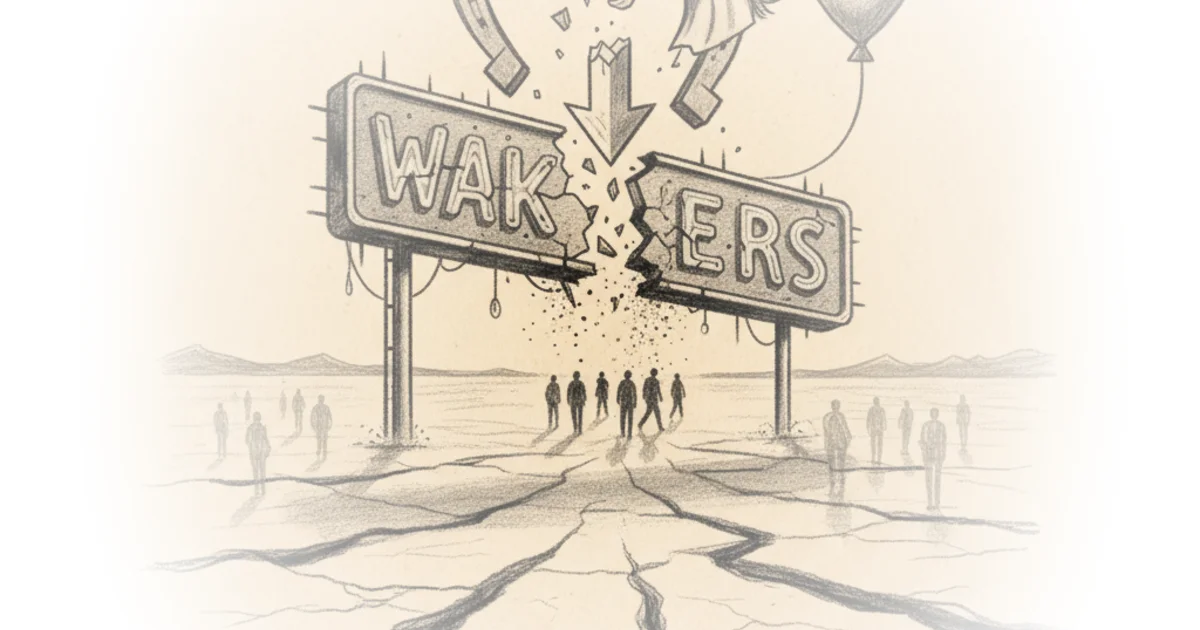
The commentary highlights a specific historical parallel to ground this shift. Much like the 2008 financial crisis, which exposed the fragility of an economy built on debt and speculation, the current Vegas slump reveals the limits of an economy built solely on the spending of the wealthy. The author notes, "Vegas is a good kind of bellweather of economic trends. So, if Vegas is in bad shape, it could be a warning that the economy we're building is a lot more fragile than it looks." This observation is sharp; it suggests that the city's transformation is not an anomaly but a canary in the coal mine for a "K-shaped" recovery where the rich get richer while the rest are priced out.
"The people that run this town, it's just about the least you can do to make the most money. And some people will pay that."
Critics might argue that businesses are simply responding to market forces and that consumers have the choice to go elsewhere. However, the author counters this by detailing how the major players, specifically MGM and Caesars, have created a monopoly on the experience. With these two corporations owning 60 to 70% of the Strip, they set the pricing standards that everyone else follows. The strategy is no longer about volume; it is about extracting maximum value from a shrinking, affluent demographic.
The Architecture of Exclusion
The most damning evidence presented is the systematic removal of the "middle-class" experience. More Perfect Union writes, "From the moment you show up, they hit you. Resort fees, parking fees, service fees, pool fees." The author illustrates this with the example of a $14 bottle of water and the predatory pricing of mini-bars, where opening the door triggers a $75 charge. This is not just bad customer service; it is a deliberate barrier to entry. The piece argues that the era of the "cheap Vegas" is over, replaced by a model that treats the average tourist as a nuisance rather than a customer.
The author contrasts this with the "mob days," not to romanticize organized crime, but to highlight a different business philosophy. "Back in the mob days, the goal was simple. Get as many people through the door as possible, keep them happy, and keep them playing." That model relied on volume and low margins, supported by free attractions like the Treasure Island pirate battle or the Rio's volcano. Today, those attractions are gone, replaced by high-stakes gambling and luxury events. The shift is stark: "It's in our best interest to chase the folks who have the most money to spend."
This pivot is personified by the introduction of the Formula 1 Grand Prix. The author describes the event as a "hindrance on being able to get around this town," noting that locals are physically blocked from viewing the race they live next to. More Perfect Union writes, "They put film across the bridges so the locals couldn't walk up and watch the race." This is a powerful image of a city turning its back on its own residents and the general public to serve a transient, ultra-wealthy elite. The event lasts three days but disrupts the city for months, prioritizing the convenience of private jet owners over the daily lives of the people who work the Strip.
"Poor people are much more fun than rich people."
The human cost of this strategy is vividly captured in the story of an elderly couple whose bucket list moment—seeing the Bellagio fountains—was ruined because grandstands blocked their view. The author notes, "They made a decision to cater to a very small number of affluent people, sacrificing the convenience and mental health of everyone else." This anecdote serves as a microcosm for the broader economic trend: the rich get the experience they pay for, while everyone else is left with a hollowed-out version of the city.
The K-Shaped Reality
The piece connects the Vegas phenomenon to the broader "K-shaped economy," where the richest 10% of Americans drive almost half of all consumer spending. More Perfect Union writes, "This K-shaped economy where the wealthy keep spending." The author argues that this is not unique to Las Vegas but is a reflection of a national shift in wealth distribution. As household debt hits record highs and consumer confidence falls, the middle class is simply unable to sustain the kind of spending that once fueled the city.
The argument is bolstered by the testimony of local workers, from Uber drivers to wedding officiants, who are feeling the pinch. One wedding business owner notes a drop from "six or seven weddings a day to I'm hoping for six or seven a week." This is not a minor fluctuation; it is a structural collapse of the mid-tier market. The author concludes that while the city's balance sheets may look healthy, the social fabric is unraveling. "It's not that you're not welcome. It's just like maybe this isn't for you. You might not be our target customer."
Critics might suggest that this is a natural evolution of the city, a necessary adaptation to a changing world. But the author pushes back, questioning the long-term sustainability of an economy built on such a narrow base. "I don't think it's realistic that you have this elite group paying all the bills." The piece implies that a city cannot survive on the whims of a few billionaires forever, especially when the very people who keep the lights on and the streets clean are being priced out of the experience.
Bottom Line
More Perfect Union's strongest move is reframing the "death of Vegas" not as a failure of the destination, but as a success of a predatory business model that prioritizes extraction over engagement. The piece's biggest vulnerability is its reliance on anecdotal evidence from locals, which, while powerful, could be complemented by more hard data on the long-term retention rates of high-rollers versus the churn of the mass market. Ultimately, the reader should watch for whether this "elite-only" strategy can sustain itself as the broader economy continues to strain, or if the city will eventually face a reckoning when the wealthy stop coming. The verdict is clear: Vegas isn't dead, but it is no longer for us.