Hamilton Nolan delivers a scathing yet strangely hopeful critique of elite punditry, arguing that the path to saving democracy lies not in better messaging, but in the mundane, unglamorous work of labor organizing. While the piece targets the intellectual limitations of New York Times columnist David Brooks, its real value lies in exposing a dangerous delusion shared by many liberals: the belief that winning the news cycle is synonymous with winning the political struggle.
The Illusion of Narrative Power
Nolan opens by dismantling the credibility of Brooks, describing him as a man "who spends one hundred percent of his time shuttling between the New York Times building and the Aspen Ideas Festival" yet claims to explain the American condition. The author argues that Brooks's disconnect from reality leads him to attribute the rise of authoritarianism to obscure intellectual lineages rather than material conditions. As Nolan writes, "Watching Brooks waste many thousands of words trying to explain the rise of a racist reality show host who has never read a book as a product of 'the writings of people such as Albert Jay Nock, James Burnham, Sam Francis, Pat Buchanan, and Christopher Lasch' is amusing and all, sure." This framing is effective because it highlights how the elite class often retreats into abstract theory when faced with the raw, economic anger of the working class.
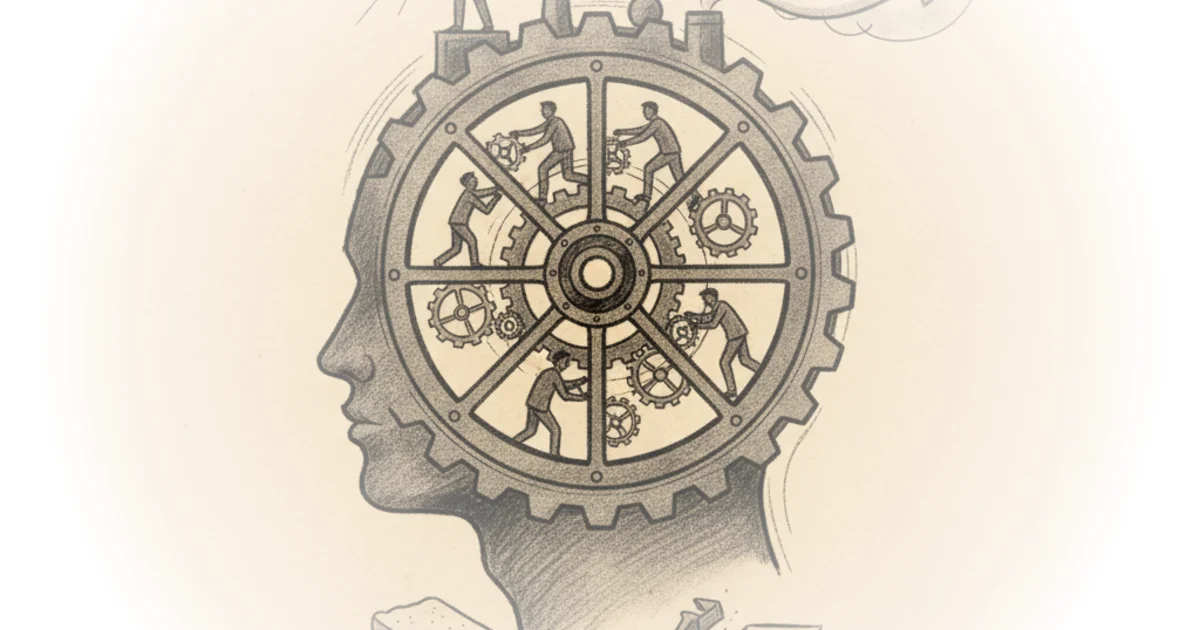
The core of Nolan's argument is that Brooks's proposed solution—a "mass movement" driven by a "more accurate and compelling narrative"—is fundamentally flawed. Nolan suggests that Brooks views political change as a battle of ideas rather than a battle of power. "The tendency, endemic among pundits, to see changes in society as nothing more than the outcome of a battle between competing thinkpieces leads Brooks to waste much space filtering his desire for a movement through the lens of messaging," Nolan observes. This critique lands hard because it identifies a specific blind spot in liberal thought: the belief that if only the headlines were sharper, the public would suddenly reject demagoguery.
The solution to fascism, you see, lies in winning the news cycle.
Critics might argue that narrative and culture do play a significant role in shaping political outcomes, and that dismissing them entirely risks ignoring how values influence policy. However, Nolan's point is not that stories don't matter, but that they are insufficient without the structural power to enforce them.
The Prosaic Reality of Organizing
Nolan shifts the focus from the abstract to the concrete, contrasting the "intellectual security blanket" of pundits with the gritty reality of union halls. He points out that Brooks's formula for change—"Cultural and intellectual change comes first... Social movements come second. Political change comes last."—is a self-serving narrative that places the pundit at the center of history. Nolan counters this by reminding readers that the decline of the labor movement, which once covered a third of American workers, is a more potent explanation for current political vulnerabilities than any book club reading list.
The author emphasizes that the labor movement rose not through clever slogans, but through "decades worth of bloody battles in the streets" and the simple concept of worker solidarity. "The power of the labor movement grew strong enough to create America's golden age of shared prosperity, and has since been ground down by the forces of investor capitalism to such a degree that we find ourselves once again plunged into a morass of plutocracy," Nolan writes. This historical context is crucial; it reframes the current crisis not as a failure of ideas, but as a failure of organization.
Nolan's most striking observation is that the real work of democracy is boring. "Mass movements sound dramatic. But they are not built dramatically. They are built through many, many mundane actions," he notes. He lists the unsexy tasks: "Talking to people. Making a list. Knocking on doors. Planning a meeting. Going to the meeting. Setting up for the meeting. Participating in the meeting. Cleaning up after the meeting." This enumeration serves as a powerful corrective to the romanticized view of revolution, grounding the reader in the reality that saving institutions requires patience and administrative labor.
The real heroes of mass movements are… the masses. Not the guy who gets in the spotlight to announce his unique plan to save us all.
The Verdict on Elite Leadership
The piece concludes with a direct challenge to the intellectual class: stop trying to lead and start learning to follow. Nolan argues that the best thing pundits like Brooks can do is "learn how to follow, not lead," and join existing movements rather than trying to invent new ones from their armchairs. He suggests that the "derision must be leavened with grace" because the fight against authoritarianism requires unity, even with unlikely allies who are out of their depth.
While Nolan's dismissal of cultural argumentation might seem too absolute to some, his central thesis—that material power must precede cultural victory—is a necessary reminder in an era obsessed with media strategy. The piece succeeds by stripping away the pretension of the commentary class and pointing toward the only mechanism that has historically shifted the balance of power: collective action.
Bottom Line
Hamilton Nolan's strongest argument is the exposure of the "narrative fallacy," the belief that winning the argument in the media is the same as winning the political struggle. His biggest vulnerability is a slight overcorrection against the power of ideas, though his emphasis on the labor movement provides a robust historical counterweight. Readers should watch for how this shift from "messaging" to "organizing" plays out in upcoming electoral cycles, as the gap between elite discourse and working-class reality continues to widen.