Richard Hanania's latest dispatch defies the standard newsletter format, weaving a provocative thesis on the dangers of populism with unexpected detours into Bronze Age zoology and the brutal economics of prediction markets. Rather than offering a safe recap of current events, Hanania challenges the reader to confront the uncomfortable reality that the movements claiming to represent "the people" often deliver outcomes worse than the elites they seek to displace.
The Case Against Populism
The central thrust of Hanania's argument is a direct rebuttal to the romanticization of mass democracy. He frames his upcoming book, Kakistocracy, not as a partisan attack, but as a data-grounded warning. "Populism is the political story of our time, and I seek to provide the most comprehensive account of why this thing exists and why it is currently having a moment across the world," Hanania writes. His goal is to unsettle both sides of the political spectrum, arguing that the right is often driven by "unpleasant motivations" while the left clings to a flawed faith in egalitarianism.
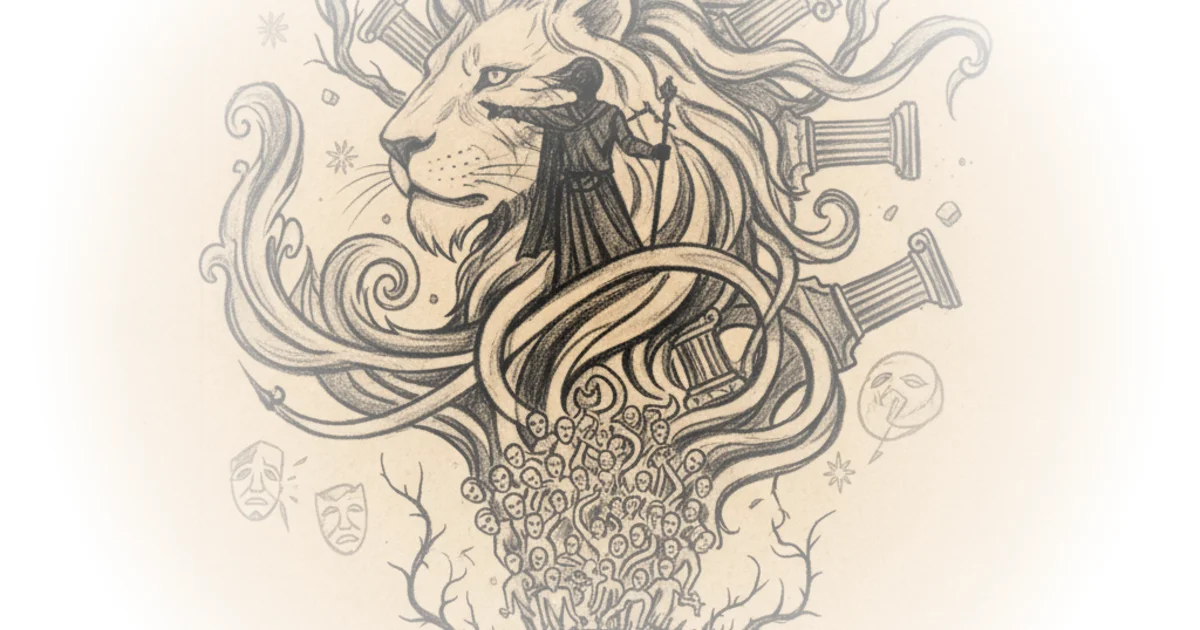
The author leans heavily on endorsements to validate this grim perspective, quoting Bryan Caplan who notes that Hanania has convinced him that "modern-day populists are objectively worse than the elite midwits they're replacing." This framing is significant because it rejects the common "both-sides" narrative that assumes a balance of power between establishment figures and populist insurgents. Instead, Hanania suggests a hierarchy of competence where the "rule by the worst" is a tangible, historical risk.
"Rejecting both romantic defenses of 'the people' and reflexive elite self-congratulation, Kakistocracy is a serious, data-grounded account of why movements that begin as corrections to genuine elite failures often end in something worse than what they replaced."
Critics might argue that this view underestimates the genuine grievances that fuel populist movements, dismissing them as mere "unpleasant motivations" rather than structural failures. However, Hanania's insistence on data over sentiment forces a re-evaluation of whether the cure for elite incompetence is truly the mob.
Lions, Boars, and the Bronze Age
In a striking pivot, Hanania connects the collapse of complex societies to the tangible reality of ancient predators. He explores the presence of lions in ancient Greece, noting that while scholars once dismissed the idea, archaeological evidence from Tiryns confirms that "wild lions once roamed alongside humans across Southeastern Europe." This historical fact serves as a metaphor for the loss of a world where humanity had to contend with genuine, physical dangers, contrasting sharply with modern abstractions.
Hanania reflects on the respect ancient cultures held for dangerous animals, observing that "when humans being killed by boars was a real possibility, they earned a lot more respect." He draws a parallel to the Iliad, where boars are listed alongside lions and panthers as creatures of immense pride. This section subtly touches on the themes found in his companion deep dives on the Late Bronze Age collapse, suggesting that the removal of external threats and the rise of internal fragility are recurring historical patterns.
The author admits a personal struggle with utilitarian logic when it comes to these apex predators, stating, "Big cats and raptors are where my effective altruist and utilitarian instincts break down. They feel too cool to subject to cost-benefit analysis." This admission humanizes the intellectual exercise, reminding the reader that some aspects of the natural world resist cold calculation.
The Economics of Prediction and Failure
Hanania turns his analytical lens to the financial mechanics of prediction markets and the airline industry, offering a stark view of market efficiency. He highlights a disturbing statistic from the Wall Street Journal: on Polymarket, "0.1% of accounts make 67% of profits," while the vast majority of casual traders lose money. Rather than condemning this, Hanania frames it as a necessary cost for societal knowledge, coining the term "Chud Tax" to describe the subsidy that uninformed traders provide to the accuracy of the market.
"It sucks for them, but it's a free country, and in this case the externality is positive," Hanania argues. This perspective challenges the moral intuition that markets should be fair to all participants, suggesting instead that the aggregation of truth requires a sacrifice from the less sophisticated.
Similarly, regarding the airline industry, Hanania questions why anyone would invest in a sector defined by bankruptcy cycles and fixed costs. He concludes that the industry's survival relies on creative, non-obvious revenue streams, such as credit card partnerships, noting that "The genius of capitalism is very cool. A planner couldn't come up with a system like this in a hundred years." This reinforces his broader skepticism of government intervention and antitrust laws, positing that market chaos often yields more efficient outcomes than planned stability.
"A planner couldn't come up with a system like this in a hundred years. This is why you should be skeptical of antitrust law and other intrusions into the market to supposedly improve competition."
The Bottom Line
Richard Hanania's commentary is a bold synthesis of historical archaeology, economic theory, and political philosophy, all aimed at dismantling the comforting myths of modern populism. His strongest argument lies in the refusal to romanticize the "will of the people," instead presenting a cold, empirical case for the superiority of expert governance. However, the piece's greatest vulnerability is its potential to alienate readers who view the failures of elites as a moral imperative for change, not just a statistical probability of disaster. The reader should watch for how Hanania's data-driven approach holds up as the political landscape continues to fracture.
"Populism, in turn, is a danger. Richard Hanania's Kakistocracy makes this case better than anyone else and provides a fresh new perspective on what is happening in America and the rest of the world today."
Bottom Line
Hanania's core thesis—that the cure for elite failure is often worse than the disease—is a compelling, if unsettling, framework for understanding current political turbulence. The argument's strength is its reliance on historical precedent and economic data over emotional appeals, though it risks oversimplifying the legitimate anger that drives populist movements. The most critical takeaway is the warning that institutional decay may be inevitable if the "rule by the worst" becomes the accepted norm.