This investigation by Ryan Grim and Jeremy Scahill exposes a rare, internal rupture at Human Rights Watch, revealing how a completed report labeling the denial of Palestinian return as a "crime against humanity" was quietly shelved by top leadership. The story is not just about a delayed publication; it is a forensic look at how institutional self-preservation can override documented facts, even when those facts involve the displacement of millions. For listeners tracking the erosion of international norms, the evidence presented here suggests that the machinery of human rights advocacy is facing a crisis of integrity.
The Shelved Report
The narrative begins with a stark contradiction: a 43-page report that had successfully navigated seven months of rigorous internal review, including sign-offs from legal, refugee, and justice divisions, was halted just two weeks before its scheduled release. Ryan Grim and Jeremy Scahill write, "The report, which cites interviews with 53 Palestinian refugees and included fieldwork in refugee camps across Jordan, Syria, and Lebanon, connected the expulsions of 1948 all the way to the present moment with the emptying of the camps in Gaza and the West Bank over the past two years." This connection is vital; it frames the current violence not as an isolated conflict but as the continuation of a decades-long policy of displacement. The authors effectively use the timeline to show that the decision to stop the report was not based on new evidence, but on a sudden shift in political calculus by incoming leadership.
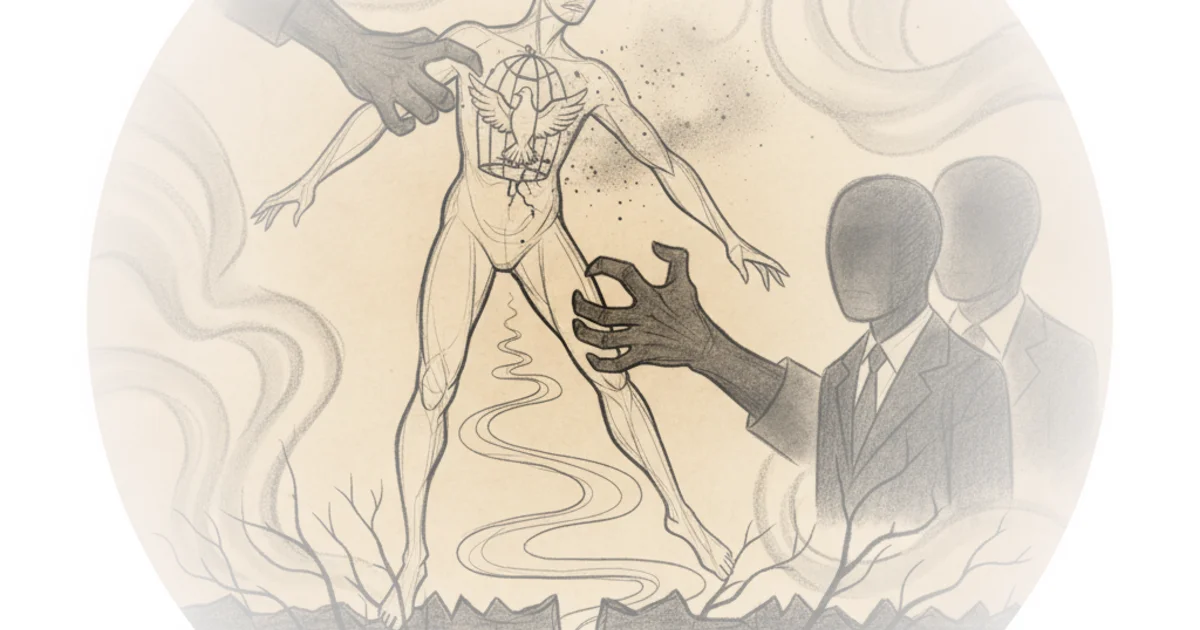
The core of the conflict lies in the definition of a "crime against humanity." While the organization's own legal team had validated the claim, new Executive Director Philippe Bolopion intervened. As Ryan Grim and Jeremy Scahill put it, "I have lost faith in our senior leadership's fidelity to the core way that we do our work, to the integrity of our work, at least in the context of Israel, Palestine." This resignation from Omar Shakir, the Israel-Palestine director, carries significant weight because it comes from a veteran who had defended the organization through difficult years. The authors highlight that Shakir was informed of the decision via a phone call, a detail that underscores the abrupt and personal nature of the suppression. Critics might argue that legal standards for such grave accusations require absolute certainty, but the piece demonstrates that the legal hurdles were cleared by the very experts hired to clear them.
"The refugees I interviewed deserve to know why their stories aren't being told."
Strategic Concerns vs. Legal Reality
The investigation digs into the emails that triggered the reversal, revealing that the objection came not from a lack of evidence, but from a fear of political backlash. Bill Frelick, the director of the Refugees and Migrant division, wrote to Bolopion questioning the "strategic value" of the report. Ryan Grim and Jeremy Scahill quote Frelick's email directly: "I also question the strategic value of HRW advocating in 2025 for Palestinian refugees and their descendants to reclaim homes in present-day Israel that were lost in 1948." This admission is startling; it suggests that the organization's advocacy was being tempered by a calculation of what is politically palatable rather than what is legally sound. The authors note that Frelick's department had already signed off on the report, making his subsequent intervention a bypass of the established protocol.
The authors further illustrate the inconsistency in HRW's approach by comparing this case to their 2023 report on the Chagossians, where the organization successfully argued that denying the right of return constituted a crime against humanity. The distinction made by leadership here—questioning whether the suffering of descendants weakens over time—raises profound questions about the universality of human rights. As Ryan Grim and Jeremy Scahill observe, "Does the suffering (and claims) of descendants of refugees who lost their homes in 1948 weaken over time?" This rhetorical question, posed by the internal critic, exposes a double standard that undermines the organization's global credibility. The framing here is powerful because it forces the reader to confront the idea that some victims' rights are more urgent than others based on the age of their claim.
An Institutional Crisis
The fallout within the organization was immediate and severe, with over 200 staff members signing a protest letter and senior researchers resigning in solidarity. The authors describe a culture where the normal review process was declared "not sacred" by the new leadership. Ryan Grim and Jeremy Scahill write, "Our review processes, as well as our culture of transparency, have until now ensured that our findings are based on a principled and consistent application of the law. The executive director's circumvention of the review process throws into question the integrity of our research, which is the foundation of our organization." This quote captures the existential dread felt by the staff, who see their life's work being compromised by political expediency.
The piece also highlights the isolation of the Israel-Palestine team, noting that Sarah Leah Whitson, a former director, described the situation as "Human Rights Watch's systemic 'Israel Exception.'" This term, used by Whitson and echoed by the authors, suggests that the organization applies a unique, lower standard of scrutiny to Israel that is not applied to other nations. The authors argue that this "Palestine exceptionalism" creates a dangerous precedent where the most critical human rights violations are the ones most likely to be suppressed. A counterargument worth considering is that the organization must navigate complex geopolitical realities to maintain access and funding, but the evidence presented suggests that this balancing act has tipped too far toward self-censorship.
Bottom Line
The strongest part of this argument is the irrefutable documentation of a completed legal process being overturned by political fear, stripping the organization of its moral authority. Its biggest vulnerability lies in the potential for HRW to recover its reputation through the promised external review, though the authors make a compelling case that the damage to internal trust may be irreversible. Listeners should watch whether the external review leads to accountability or merely serves as a public relations reset for a deeply fractured institution.