Casey Newton cuts through the noise of Silicon Valley's latest corporate drama to reveal a startling truth: the board that fired OpenAI's CEO may have won the battle but lost the war, and the real story is just beginning. While the public sees a return to the status quo, Newton argues that the board's failure to communicate their reasoning has left a vacuum that an independent investigation and a reshuffled leadership team will struggle to fill. This isn't just about who sits in the CEO's chair; it is a critical stress test for how we govern the most powerful technology of our generation.
The Illusion of Stability
On the surface, the scene at OpenAI looks unchanged. The same faces are back in the office, and the hundreds of employees who threatened to walk out have returned to their desks. Newton observes that "viewed from a sufficient distance, it appears odd that the net result of Silicon Valley's most engrossing drama in recent memory was a barely modified status quo." This framing is crucial because it challenges the reader to look past the headline of "Altman returns" and examine the structural fractures beneath. The board's attempt to govern without transparency has backfired spectacularly, proving that in an era of radical transparency, silence is a liability.
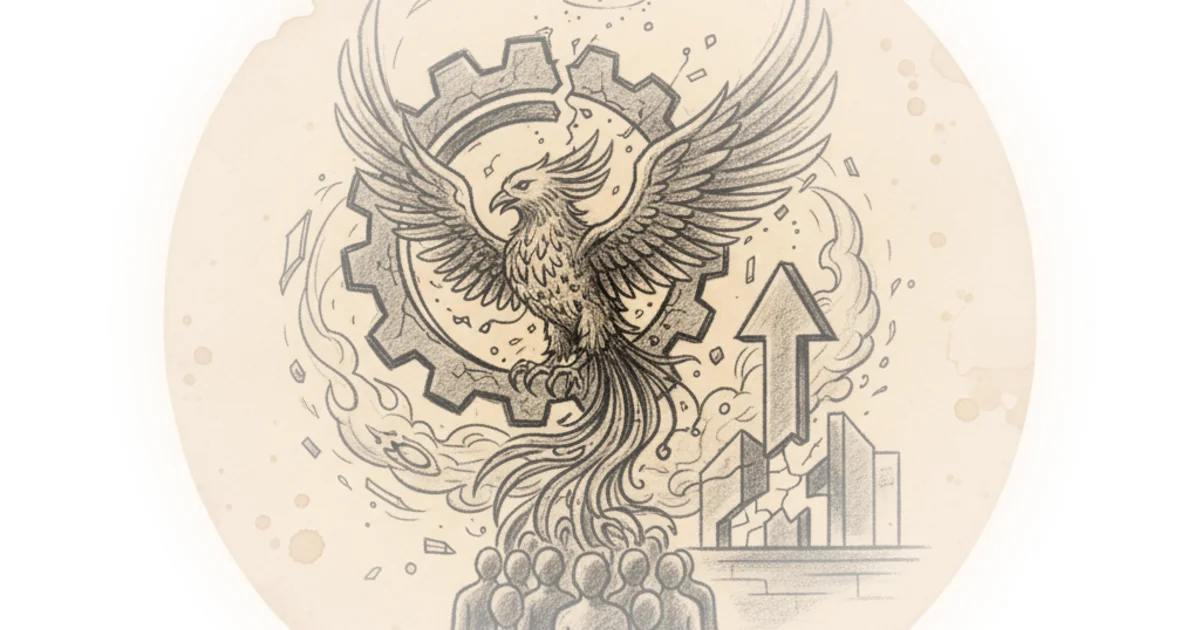
Newton writes, "Whatever reasons the board may have had for declining to outline with any specificity why they fired the CEO who had led their organization to great success, in the end their silence doomed them." This is a damning assessment of the board's strategy. By refusing to explain their decision, they alienated the very workforce that holds the company's technical future in its hands. The board's haste to act before the CEO could mobilize resources created a scenario where the only way to restore order was to reinstate the person they tried to remove. It is a classic case of tactical speed undermining strategic legitimacy.
A New Architecture of Power
Despite the chaos, the board did achieve one tangible outcome: a restructuring of the company's governance. The old guard has been largely purged, replaced by heavyweights like Bret Taylor, the former Twitter board chair, and Larry Summers, the former US Treasury secretary. Newton notes that these new members "will appoint up to six new members," effectively consolidating power in a more traditional corporate structure. This shift signals a move away from the nonprofit mission that originally defined OpenAI toward a model that prioritizes stability and institutional credibility.
However, the path forward is paved with uncertainty. The new board has commissioned an independent investigation into the events surrounding the firing, but Newton rightly cautions that "corporate investigations vary widely in quality and rigor." The outcome of this probe could reshape the narrative, or it could be buried. Newton points out the inherent tension here: "It's not clear at this point what it would have to find to justify Altman's removal — especially to the company's employees, whose near-unanimous support for their CEO is all but unheard of in Silicon Valley." If the investigation cannot produce a compelling reason for the firing that satisfies the staff, the new board's authority will remain fragile.
The board's silence doomed them, and their haste created the conditions for the very return they sought to prevent.
Critics might argue that the board's decision to fire Altman was a necessary check on unchecked power, regardless of the fallout. They could contend that the lack of a clear explanation was a strategic necessity to prevent a preemptive counter-move. Yet, as Newton suggests, this approach failed to account for the unique culture of OpenAI, where employee loyalty is a primary defense mechanism against board overreach.
The Ghosts of Q* and the Missing Letter
One of the most revealing aspects of Newton's reporting is the debunking of the rumors that sparked the entire crisis. The story of Q, an AI model capable of solving basic math problems, was central to the narrative that the board acted on safety concerns. Reports suggested that staff had warned the board of existential risks, but Newton reports that "the board never received any such letter about Q." Furthermore, a letter purporting to be from staff, which was circulated by Elon Musk and cited as evidence of misconduct, was never actually delivered to the board.
Newton writes, "The board never received the letter that Elon Musk posted, either." This detail is critical because it suggests the board may have acted on incomplete or fabricated information, or perhaps on internal fears that were never formally communicated. The absence of a formal warning letter undermines the board's stated justification for their actions. It raises the question of whether the firing was a genuine safety intervention or a power struggle disguised as a moral imperative. The board's failure to receive these warnings highlights a disconnect between the researchers on the ground and the directors in the boardroom.
The Bottom Line
Newton's analysis exposes the fragility of corporate governance in the age of artificial intelligence, where the line between safety concerns and power plays is dangerously blurred. The strongest part of this argument is the exposure of the board's communication failure, which turned a potential safety intervention into a PR disaster. The biggest vulnerability remains the independent investigation; if it fails to uncover concrete evidence of misconduct, the board's legitimacy will be permanently compromised. Readers should watch closely to see if the new leadership can bridge the gap between the board's decisions and the workforce's values, or if this saga is merely the opening chapter of a longer institutional crisis.