This piece cuts through the fog of official optimism to reveal a stark reality: the intelligence community warned the administration of Iran's missile capabilities, yet those warnings were seemingly disregarded until the damage was done. Jeff Stein's reporting relies on satellite data and suppressed on-the-ground imagery to expose a gap between the administration's public narrative of total victory and the operational reality of a resilient adversary. For the busy strategist or policy watcher, this is not just a recounting of past strikes; it is a critical case study in the cost of ignoring threat assessments.
The Cost of Ignored Warnings
Stein opens with a chilling detail that sets the tone for the entire analysis: the suppression of evidence regarding the direct hit on Israel's air force headquarters. "News of Iran's strike on Tel Aviv's Kiriya Defense Ministry complex was suppressed by Israeli censors, but SpyTalk obtained a photo of the damage," Stein writes. This act of censorship masked a significant breach in Israel's defenses, a fact that becomes even more critical when viewed alongside data from Oregon State University. Stein notes that Iranian missiles also struck five other military bases during the 2025 conflict, including the Glilot intelligence complex and the Tel Nof air base, yet these events remained largely unreported.
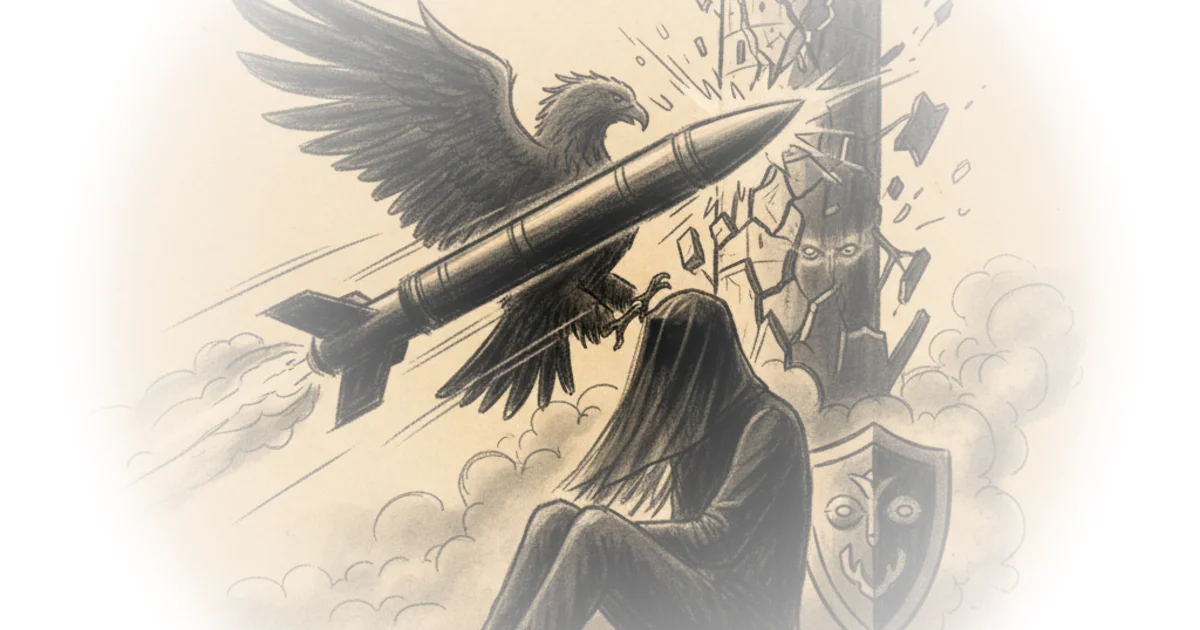
The core of Stein's argument is that the administration's confidence was not based on a lack of information, but on a refusal to engage with it. He points to the Office of the Director of National Intelligence's 2025 Worldwide Threat Assessment, which explicitly stated that Iran "continues to bolster the lethality and precision of its domestically produced missile and UAV systems." Stein highlights the disconnect between this official data and the administration's actions, quoting Norman T. Roule, a former senior CIA officer, who noted that analysts would be expected to ensure such assessments are "immediately available to senior policymakers and warfighters when required for their planning."
The Trump administration grossly miscalculated who they were fighting and the enemy's capabilities across the board.
Thomas Joscelyn, a senior fellow at JustSecurity.org, identifies a "weird paradox" in the administration's strategy, which Stein uses to frame the strategic failure. Joscelyn explains that while the administration believed the Iranian missile capability was deadly enough to warrant a preemptive war, they simultaneously "underestimated the accuracy of the same missiles." This miscalculation had immediate, tangible consequences. Stein details how Iranian swarms of GPS-guided drones overwhelmed air defenses in the Gulf, hitting 13 U.S. military bases and forcing thousands of troops to relocate to hotels and offices. The human cost was severe, with a direct hit on a makeshift operations center in Kuwait killing six U.S. soldiers.
Critics might argue that the administration's public stance was a necessary psychological operation to maintain morale among allies, but Stein's evidence suggests the damage was far more extensive than any "operational security" could justify. The administration's claim of being "shocked" by the retaliation rings hollow when juxtaposed with the pre-war intelligence that Iran had been preparing for such a response for a generation.
The Resilience of the Arsenal
As the conflict moved into a ceasefire phase, Stein shifts focus to the alarming speed of Iran's recovery. The narrative that the Iranian military had been "obliterated" is dismantled by intelligence showing that Tehran has restored 30 of the 33 missile sites guarding the strategic Strait of Hormuz. Stein writes that Iran has effectively taken control of the strait, requiring ships to coordinate passage with the Islamic Revolutionary Guard Corps and pay a toll. This is not the posture of a defeated nation; it is the behavior of a power reasserting dominance over a critical global chokepoint.
The administration's response to these findings has been to double down on downplaying the threat. Stein quotes Admiral Brad Cooper, commander of U.S. Central Command, who testified that intelligence suggesting Iran retains 70 percent of its missiles was "not accurate." Cooper claimed that over 1,450 U.S. airstrikes had left Iran with only a "moderate, if not small, capability." Stein contrasts this with the assessment of Mark Fowler, a retired CIA case officer, who describes the Iranian drone program as a "new development" where "they're cheap, but at the same time, they're very effective."
The danger of this gap between intelligence and political messaging is highlighted by a near-miss at the Barakah Nuclear Power plant in the UAE, where a drone set off a fire just outside the perimeter. Stein notes that while radiation levels remained normal, the incident served as a stark warning of the precision and reach of the remaining arsenal. The administration's insistence that the enemy is "decimated" is not just a political talking point; Stein suggests it may be a dangerous delusion.
The real question is how much are Trump's cronies who are in charge at the top layer of the I.C. accurately reflecting the intelligence to Trump, as opposed to feeding the boss what he wants to hear.
Daniel Flesch, an Iran expert at The Foundation for Defense of Democracies, aligns with the intelligence community over the political leadership, stating he "leans toward believing these intelligence assessments." Stein uses this to underscore the institutional rot that occurs when political ideology overrides empirical data. The administration's reaction to any suggestion of Iranian resilience is to label it "treason," a move Stein frames as an attempt to silence necessary debate rather than address the threat.
Bottom Line
Stein's most compelling contribution is his forensic dismantling of the "decimated enemy" narrative using satellite data and suppressed on-the-ground reports, proving that the administration's confidence was built on a foundation of ignored warnings. The piece's greatest vulnerability lies in its reliance on the assumption that the intelligence community was fully transparent with the White House, a dynamic that remains inherently opaque. The reader must now watch whether the administration adjusts its strategy to the reality of a restored Iranian arsenal or continues to gamble on a victory that the evidence suggests is an illusion.