Hamilton Nolan delivers a searing indictment not just of federal policy, but of the absurdity of deploying militarized force in a city defined by its chaotic, multicultural soul. While other reports might focus on arrest statistics, Nolan frames the current immigration crackdown in New Orleans as a profound cultural collision, arguing that the administration's attempt to "purify" the city's bloodline is a grotesque mismatch against a population built on centuries of drifters and dreamers. This is not a dry policy analysis; it is a visceral account of how a community is mobilizing to turn the tables on federal overreach.
The Absurdity of the Purge
Nolan opens by dismantling the logic of the raids, noting that launching a "violent government purge of immigrants" in New Orleans is "even more ludicrously monstrous" than anywhere else. He paints a vivid picture of the contrast between the city's history and the current reality: a place that "collected drifters from Europe and dreamers from the Caribbean" now faces agents in "clownish tactical gear." The author's description of the Border Patrol leadership is particularly scathing, characterizing the visual presentation of the officers as crossing the line from "unintentionally Nazi-esque" into "Nazi on purpose."
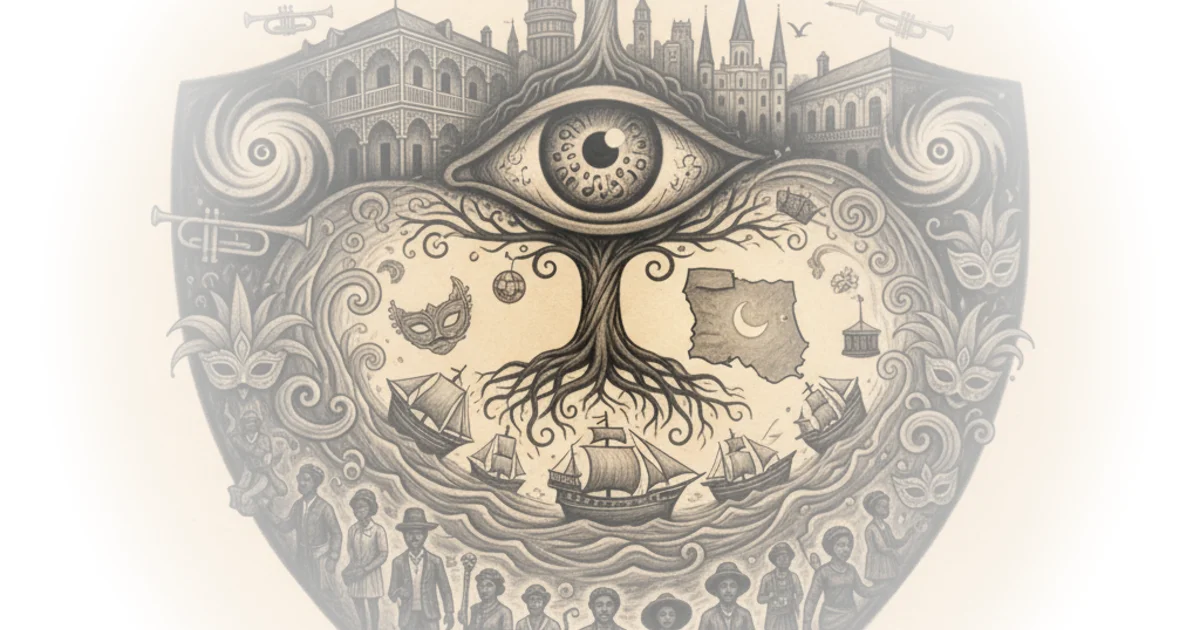
This framing is effective because it refuses to treat the raids as a standard law enforcement operation. Instead, Nolan highlights the dissonance of a city that built a statue to honor Latino workers who rebuilt it after Hurricane Katrina now being targeted by an operation dubbed "Catahoula Crunch." The name itself, which Nolan notes sounds like an "AI-generated name for a Louisiana breakfast cereal," underscores the surreal, almost farcical nature of the federal presence. Critics might argue that focusing on the aesthetic absurdity of the agents distracts from the serious legal arguments against the raids, but Nolan uses this absurdity to highlight the moral bankruptcy of the operation. The goal, he suggests, is not justice but intimidation.
"You want to bring a bunch of white racist clods in clownish tactical gear to run the immigrants out of New Orleans? The city of gumbo metaphors? You villains. You dirty dogs."
The Rise of the Citizen Intelligence Network
The core of Nolan's reporting shifts from the spectacle of the raids to the quiet, sophisticated resistance emerging from the streets. He details the work of "Ojos," an ICE-watching project, describing it as a "spectacular underground intelligence service" run entirely by volunteers. The training sessions Nolan attended reveal a community preparing for a siege, teaching residents how to document raids with precision: "date and time, description, exact cross streets." This information is then disseminated through a dense network of group chats, creating a real-time warning system that the federal agents cannot easily bypass.
Nolan observes that this effort mirrors the chaos of actual policing, with volunteers role-playing as teachers, passersby, and even the agents themselves. The author notes the irony that "the primary method that Ojos uses is training enough volunteers that wherever something happens, someone plugged into their network is very likely to be nearby." However, he is careful to point out the limitations: this system can only react after a raid has begun, not prevent it. "The most useful version of ICE watching would be to be able to track the agents, to monitor them in real time," Nolan writes, acknowledging the difficulty of tracking vehicles that blend into the background of a city full of large SUVs.
"For an effort that is run completely by volunteers and dependent on the zeal of regular, unpaid citizens, it is a fairly spectacular underground intelligence service."
The author's own attempt to track agents in Kenner illustrates the futility of trying to outmaneuver a well-resourced federal agency without similar resources. He describes circling Walmart and Home Depot, only to realize that identifying agents is nearly impossible when "big American-made SUVs" are everywhere. This section serves as a crucial counterpoint to the triumphalism of the resistance; it shows that while the community is resilient, the power imbalance remains stark. The risk of false accusations and the "flood of well-intentioned people sharing rumors" adds a layer of complexity that Nolan does not shy away from.
The Human Cost and Historical Echoes
Moving beyond the mechanics of the resistance, Nolan turns to the human toll, interviewing Angela Davis of Project Ishmael. Davis provides a sobering perspective, noting that while the tactics may have changed, the cruelty is consistent across administrations. "Under every single one of those presidents, many, many families are being separated, torn apart, and detained," she tells Nolan. The article highlights the specific impact of ending "deferred action" for vulnerable youth, which has forced legal teams to work harder for fewer results.
Nolan weaves in a heartbreaking account from a client who, after seven years of compliance and fear, chose to return to Honduras to avoid the trauma of separation. The author uses this story to dismantle the administration's narrative of success. "To harass and persecute and terrorize a mother so fiercely that she chooses to bring her children back to an impoverished country where they may be killed is the best possible outcome that Stephen Miller and Gregory Bovino and their nationwide army of masked raiders could hope for," Nolan writes. This is a powerful reframing: what the government calls a victory is, in reality, a forced expulsion driven by terror.
"Something not too dissimilar [to Anne Frank] is what it is like. Something not too dissimilar."
The article also touches on the historical context of New Orleans as a sanctuary city, implicitly drawing on its long history of protecting the vulnerable. The author notes that the current crackdown feels like a return to the darkest days of the city's past, yet the response is different. The community is not hiding in attics; they are on the streets, filming, protesting, and organizing. The image of roofers yanking up a ladder to escape federal agents becomes a potent symbol of this defiance. "Hardworking immigrants escaping deportation by pulling up the ladder behind themselves," Nolan writes, noting that the agents are likely too "dumb" to see the irony of their own ancestry.
Bottom Line
Hamilton Nolan's piece succeeds by refusing to treat the immigration raids as a dry policy dispute, instead framing them as a moral and cultural assault on the very identity of New Orleans. The strongest element of the argument is the detailed documentation of the community's grassroots intelligence network, which offers a tangible, if imperfect, counter-force to federal power. However, the piece's vulnerability lies in its reliance on the moral outrage of the reader; while the emotional resonance is high, the long-term legal and political viability of these citizen-led resistance efforts remains uncertain. The reader should watch for whether this localized, volunteer-driven model can be scaled to other cities facing similar militarized crackdowns.
"To harass and persecute and terrorize a mother so fiercely that she chooses to bring her children back to an impoverished country where they may be killed is the best possible outcome that Stephen Miller and Gregory Bovino and their nationwide army of masked raiders could hope for.""