The most important thing in poetry isn't analysis — it's encounter.
That's the argument from Close Reading Poetry, a channel that explores how reading poetry can transform our lives. The author contends that academic study of literature, while valuable, becomes dangerous without first cultivating an imaginative, personal relationship with the poem itself.
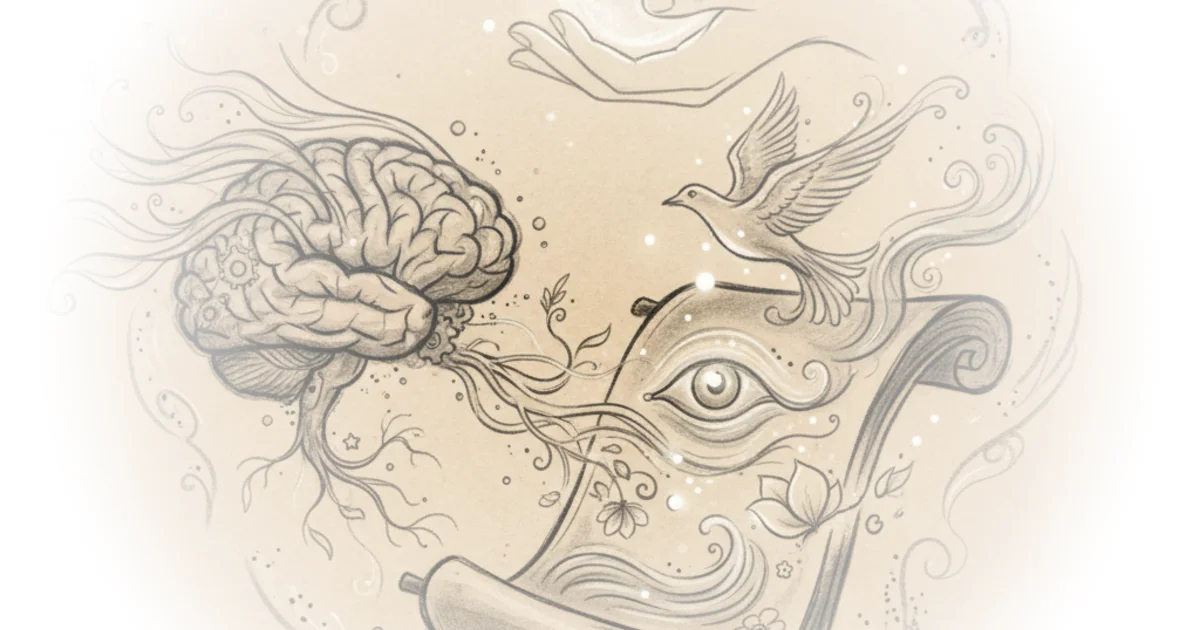
The difference matters. In school, we learn to dissect poetry: dissecting meter, identifying rhyme schemes, understanding historical context. These skills are important. But they're secondary. The primary task is something far more intimate — a direct encounter with the poem that changes how we see and feel.
The author developed a five-stage method for integrating both approaches. This isn't abstract theory. It's practical. You can bring these questions to any poem, play, or novel passage you encounter.
Stage One: Emotional Response
Begin with feeling. After reading a poem aloud, ask what impression it leaves. Did anything feel connected or disconnected, strange or familiar? Notice your own emotional response. A good close reader of poetry knows that reading the poem means reading both the text and your reaction to it. What is the mood or atmosphere?
Stage Two: Thinking With the Body
Move from emotion to senses. What sights, sounds, or textures appear in the poem? Poetry is an embodied art — it marries sound and sense. Sometimes the sense imitates the sound, sometimes vice versa. Ask what imagery is being invoked. What can be seen, heard, touched?
Stage Three: Spiritual Insight
This is where Mary Oliver's poetry becomes essential. Her work centers on attention as a form of devotion — devotion begins with attention. What philosophical or spiritual insight does the poem model? How does it teach us to live or attend to the world? How does the poem change the way you see things?
Stage Four: Close Reading
Now examine where those emotional impressions come from in the language itself. What about word choice, line endings, or rhyme creates this feeling? How does language produce these encounters? It's not just knowing what a metaphor is — it's understanding how language creates the experience. We don't love Keats because he gives us good ideas. We love him because of the way it sounds. It's delicious.
Stage Five: The Return
The final stage involves stepping back and asking: did the discussion change your understanding? What shifted from when you first heard the poem to now?
This is what makes poetry powerful. Different people bring different perspectives — different times of life, different backgrounds, different beliefs. They see things each other are blind to. A beautiful mosaic emerges from the conversation itself.
We love Shakespeare's language, not just his characters.
Some poems transform us in small ways. Others affect what poets have called spiritual conversion. Either way, it's the accumulation of these changes that helps us understand who we are — individually, spiritually, psychologically, socially.
Critics might note that prioritizing personal encounter over academic rigor risks undermining the disciplined study of literature. A reasonable disagreement exists about whether poetry should be framed as primarily spiritual practice or scholarly subject. The answer likely depends on what readers seek from poetry.
Bottom Line
The strongest part of this argument is its inversion of traditional literary education — starting with experience rather than analysis makes poetry feel relevant to daily life. The vulnerability is that the author's method feels more like promotion for their upcoming Mary Oliver course than a universal approach. Still, the core insight holds: the same qualities needed to extract meaning from poetry help us find meaning in life itself.