This piece delivers a startling revelation: the version of Toy Story you remember—the one with the soft, grainy warmth—is technically a different movie than the one streaming on your screen today. Animation Obsessive uncovers a hidden layer of film history where the first fully digital feature was actually a hybrid, meticulously designed for analog projection and fundamentally altered when stripped of its physical film stock. For anyone who believes digital restoration always equals improvement, this is a necessary correction.
The Analog Soul of a Digital Film
The core of the argument rests on a technological paradox from 1995: Pixar created the movie on computers, but the world was not ready to display it digitally. Animation Obsessive reports that "computer chips were not fast enough, nor disks large enough, nor compression sophisticated enough to display even 30 minutes of standard-definition motion pictures." Consequently, every single frame of the film was printed onto 35 mm film, a process that required the artists to design colors they would never see on their monitors.
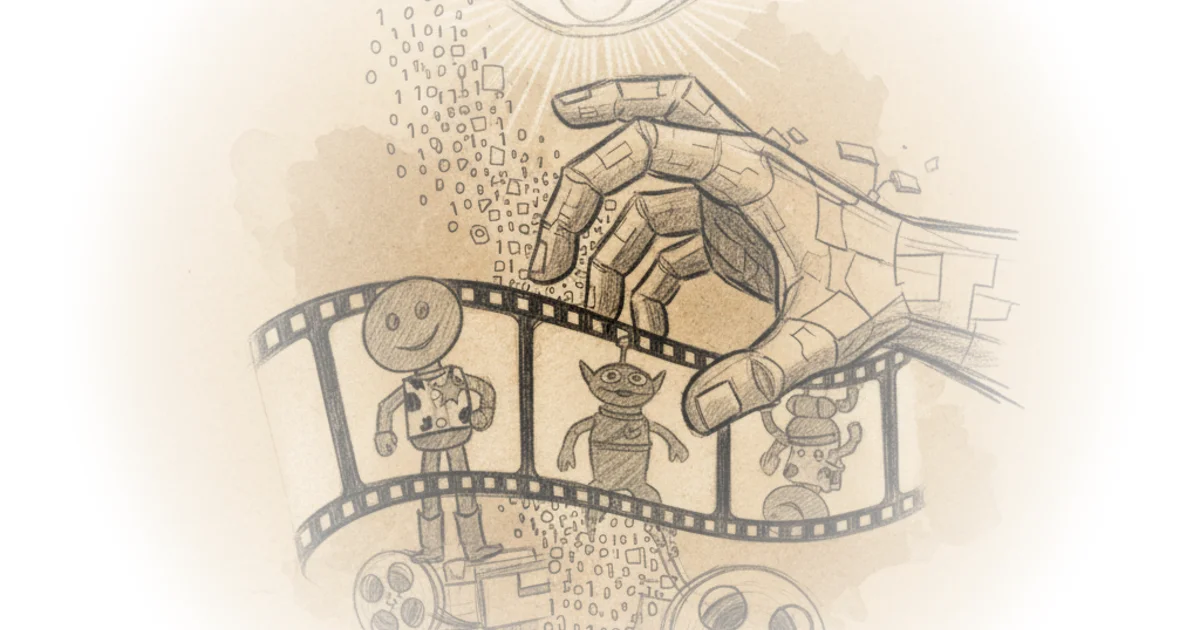
This constraint forced a unique artistic discipline. The piece highlights how the team had to anticipate how the physical medium would warp their digital work. "Greens go dark really fast, while the reds stay pretty true," said Toy Story's art director, Ralph Eggleston, quoted in the article. "Blues have to be less saturated to look fully saturated on film, while the oranges look really bad on computer screens, but look really great on film." This is a profound insight into the era's workflow; the final product was a compromise between the screen and the projector, a balance that modern streaming services have completely ignored.
The transfer process itself was a laborious, almost alchemical feat. David DiFrancesco, a pioneer in the field, noted that his team used modified Solitaire Cine II machines to expose each frame three times—once for red, once for green, and once for blue—against a cathode ray tube. It reportedly took nine hours to print just 30 seconds of footage. This context, often lost in discussions of "CGI history," reminds us that the transition from analog to digital was not a clean break but a messy, expensive overlap. The piece effectively argues that the "grain" and "softness" of the original theatrical release were not bugs, but intentional features of the medium.
The memories were real. The film did feel different back then, and the version Pixar originally intended to make is barely available today.
Critics might argue that modern viewers prefer the clarity of digital transfers, citing the "crisp, blazingly bright" quality that reviewers praised in the early 2000s. However, the article suggests this preference comes at the cost of the film's original aesthetic cohesion. When the film was converted to digital for home video, the colors became "raw" and "searing," losing the deep, muted warmth that tied the elements together. The piece notes that on Disney+, the greens are too bright because they were calibrated to darken on film, a detail now lost in the digital transfer.
A Lost Era of Hybrid Cinema
The coverage expands beyond Toy Story to encompass the entire Disney Renaissance, noting that films like The Lion King, Mulan, and Aladdin underwent the same transformation. These movies were designed with the knowledge that they would be recorded onto analog film, yet the current streaming versions are direct transfers of digital files. Animation Obsessive observes that these later releases are "almost unrecognizable" in their color grading, feeling less cohesive than their predecessors.
This shift represents a broader institutional failure in preservation. The piece points out that "the studios themselves haven't quite figured it out" how to present these transitional works. The current standard prioritizes technical sharpness over artistic intent, erasing the specific texture that defined the era. The article draws a parallel to the broader history of film preservation, where the move to digital intermediates often strips away the unique characteristics of the original capture medium, much like how early digital intermediate processes struggled to replicate the dynamic range of film grain.
The argument is bolstered by the observation that even Pixar's subsequent film, A Bug's Life, which introduced the first digital-to-digital transfer, suffered from this shift. John Lasseter called it "a real pure version of our movie straight from our computers," but the result was a "sharp and grainless" image that lacked the texture of the theatrical release. The piece suggests that this "purity" is actually a loss, removing the very qualities that made the animation feel tangible.
The Current Landscape
While the article focuses heavily on the technical history, it briefly touches on the current state of the industry in its news section, noting a booming anime market in China and a potential bubble in the Japanese industry. However, the main thrust remains the preservation of the past. The editors note that "a dedicated few are trying to save the old work," with comparison videos gaining traction online. This grassroots effort highlights a growing awareness among audiences that the version of a film they grew up with is not the same one available to them today.
The piece concludes by emphasizing the importance of seeing these films in their original form. "If you get the chance to see one of the old Disney or Pixar films on 35 mm, it's always worthwhile," the editors write. This is a call to action for film preservationists and casual viewers alike to recognize that the "original" version is not just a nostalgic fantasy, but a distinct artistic product that has been systematically altered by the industry's shift to digital distribution.
Bottom Line
Animation Obsessive makes a compelling case that the "digital restoration" of late-90s animation is often a form of erasure, stripping away the intentional artistic choices made for the analog medium. The strongest part of the argument is the technical breakdown of how colors were calibrated for film, proving that the current streaming versions are technically inaccurate to the creators' intent. The biggest vulnerability is the lack of a clear solution; while the problem is identified, the article offers no roadmap for how studios can reverse course without incurring massive costs, leaving the original vision in a state of permanent limbo.