More Perfect Union exposes a brutal paradox at the heart of modern music: the industry is richer than ever, yet the artists creating the product are being systematically impoverished. This isn't just a complaint about low royalties; it is a forensic look at how a platform built on the promise of artist empowerment evolved into a machine that replaces human labor with cheap, algorithmic filler. For the busy professional trying to understand the hidden costs of their $12 monthly subscription, this piece offers a necessary reality check on who actually profits from the "perfect playlist."
The Illusion of the Savior
The article dismantles the long-held narrative that streaming saved the music business. More Perfect Union writes, "Saving the music business isn't the same as saving musicians." This distinction is the article's most critical insight. The author details how Spotify, initially conceived as a video or audiobook platform, pivoted to music only after realizing the potential for ad revenue. While the company claimed to be democratizing access, it actually entrenched a new set of gatekeepers. The text notes that early contracts gave major labels equity and cash advances, meaning the very entities that controlled radio now controlled the streaming economy.
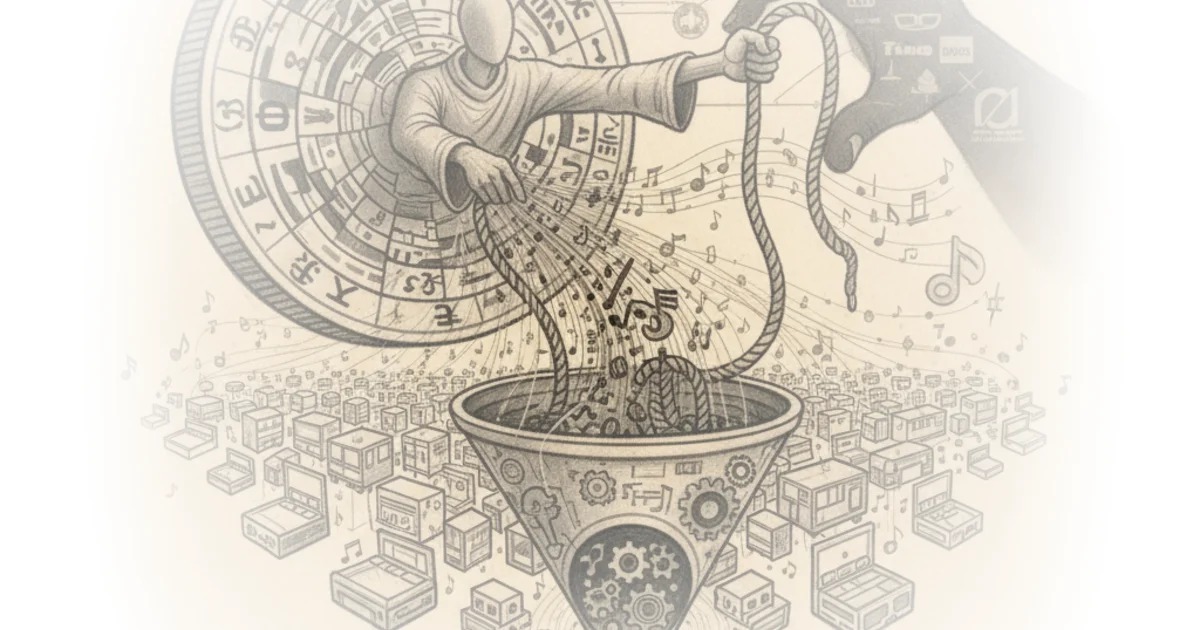
The coverage effectively highlights the opacity of the payment system. More Perfect Union explains that royalties are not paid per stream but through a complex "pro-rata" model where the total revenue pool is sliced up based on market share. This means a massive pop star with billions of streams absorbs a disproportionate amount of the pie, leaving working artists with fractions of a penny. As the author puts it, "Spotify might pay 70% of its revenue to rights holders, but in reality, most of that revenue goes to major labels and pop stars." This framing is powerful because it shifts the blame from a simple "low rate" to a structural design that inherently favors concentration over diversity.
Critics might argue that streaming has lowered the barrier to entry, allowing bedroom producers to reach global audiences without a label. While true, the article counters that this access is meaningless without a viable economic model. The sheer volume of content has created a "winner-takes-all" economy where visibility is the scarcest resource, not the music itself.
"It's never been easy to make a living as an artist, but musicians in the streaming era are up against a lot: mysterious blackbox recommendation algorithms, unregulated payola-like practices, and greedy and out-of-touch tech execs who don't understand the labor of making music."
The Rise of Ghost Artists
Perhaps the most disturbing revelation in the piece is the existence of "Perfect Fit Content" (PFC). More Perfect Union uncovers an internal cost-saving scheme where Spotify commissions anonymous, stock music to fill playlists designed for sleeping, studying, or chilling. This isn't accidental; it is a deliberate strategy to lower licensing costs. The author describes how a band's song, once featured on a popular playlist, was eventually replaced by this sterile, anonymous content. More Perfect Union writes, "Playlisting this music saves them money, but working artists like the Westerlys are missing out."
This section is particularly effective because it moves beyond abstract economics to a tangible human cost. The article illustrates how the pressure to go viral forces artists to become content creators rather than musicians. One artist interviewed notes, "I certainly don't want to be sitting down thinking about how to make one of my songs go viral. It's just not how I want to spend my one precious life." The commentary here lands hard: the platform's algorithm rewards engagement metrics, not artistic merit, creating a feedback loop that devalues human creativity.
The piece also touches on the looming threat of generative AI, noting that upwards of 10,000 AI tracks are released daily. More Perfect Union points out the indifference of streaming services, stating, "Spotify can say the cost of making content is close to zero when they're engaged in these practices of boosting material that costs next to nothing to make." This observation suggests that the industry is actively moving toward a future where human labor is rendered economically obsolete.
The Human Cost of Consolidation
The article balances its systemic critique with intimate portraits of musicians who are struggling to survive. It cites the UK Musician Census, which estimates the average full-time musician salary to be less than £30,000 a year, and a Nashville survey showing over 60% of musicians make little to no income from recordings. The narrative weaves in the story of Liz P, author of Mood Machine, who documents the frustration of artists who log in daily only to find no logic to their income. More Perfect Union writes, "There is no logic to when the income is going to come."
This focus on the disconnect between corporate wealth and artist poverty is the piece's emotional anchor. The author contrasts the net worth of Spotify's CEO, Daniel Ek, at nearly $10 billion, with the reality of a seven-piece band that could only afford for one member to stop working based on their streaming income. The argument is bolstered by the revelation that even touring, traditionally the safety net for artists, is becoming less viable due to corporate consolidation in the live music sector. As one musician laments, "You got to make a choice. You don't get to have it all."
A counterargument worth considering is that the sheer volume of music available allows for niche audiences to support artists directly through merchandise and Patreon, bypassing streaming entirely. However, the article suggests that the streaming model actively cannibalizes these alternative revenue streams by training listeners to expect music for free or for a flat monthly fee, making direct support feel like an anomaly rather than a norm.
"They're looting. They're they're a bunch of thieves."
Bottom Line
More Perfect Union delivers a damning indictment of the streaming economy, successfully arguing that the platform's business model is fundamentally incompatible with a sustainable career for the average musician. Its strongest asset is the exposure of "Perfect Fit Content," revealing a corporate strategy that prioritizes margin over art. The piece's biggest vulnerability is its focus on the recorded music sector, which, while critical, sometimes underplays the resilience of the live performance and direct-to-fan economies that still sustain many artists. Readers should watch for how regulators respond to the rise of AI-generated content and whether the public's appetite for "perfect" playlists can be disrupted by a demand for human connection.