In a landscape often dominated by political theater, The Pillar offers a rare, sobering look at the internal fractures of the Catholic Church as it approaches its own historical milestones. This piece stands out not for sensationalism, but for its unflinching examination of how institutional identity is tested when obedience clashes with perceived necessity.
The Weight of History and Communion
The article opens by weaving a narrative that connects the ancient struggles of Pope Marcellinus to modern ecclesial governance. It notes that in the year 296, during the onset of the Diocletian persecution, Marcellinus faced a choice between apostasy and martyrdom—a dilemma that echoes through centuries of Church history. The Pillar highlights the ambiguity surrounding his legacy: "by some accounts... Marcellinus offered a few pinches of incense to Roman idols, rather than face a slow and painful death." This historical uncertainty serves as a backdrop for current debates on authority and unity.
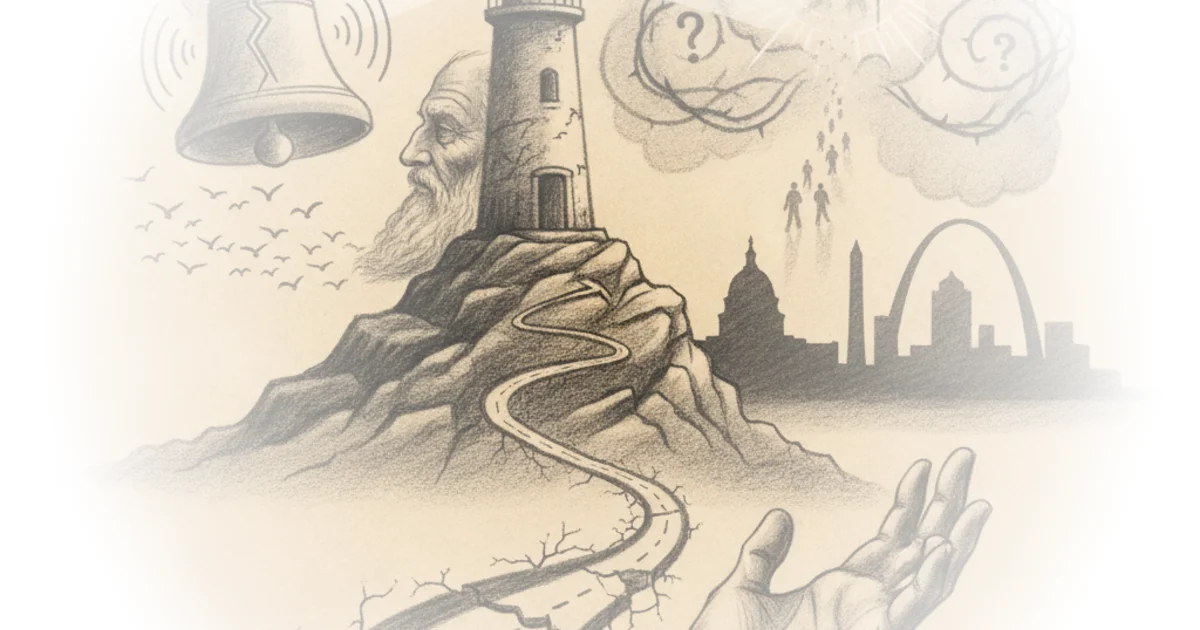
The piece argues that recent gatherings of the College of Cardinals under Pope Leo represent a shift from administrative business back to sacramental reality. The editors emphasize that the pontiff framed these meetings not as policy sessions but as "an experience of communion at service of mission." This distinction is crucial; it suggests that the Church's ability to discern its path forward relies on theological bonds rather than procedural efficiency. As the article notes, if this foundation is ignored, leaders risk "flattening our ecclesiology to that of a business meeting" or losing the specific identity formed by baptism.
The path to holiness — though always a call to the extraordinary — is also predicated... upon the ordinary bounds of communion, in the sacramental and hierarchical reality of what makes us a church.
Critics might argue that emphasizing "communion" can sometimes mask deep structural disagreements or delay necessary reforms. However, the piece suggests that without this shared spiritual baseline, any reform risks becoming merely another factional battle rather than a unified movement toward the common good.
The Crisis of Disobedience and the SSPX
The commentary then pivots to the most immediate threat to Church unity: the Society of Saint Pius X (SSPX) and their planned illicit episcopal ordinations. The Pillar reports on a direct plea from Pope Leo, who wrote, "I plead with you and ask you with all my heart: please turn back!" This is not a diplomatic warning but a personal appeal from a father to a son, underscoring the gravity of the potential schism.
The article dissects the SSPX leadership's justification for their actions. Fr. David Pagliarani, the superior of the Society, claims they are assisting a "mother in distress who requires particular help," even if that help is misunderstood. The piece finds this analogy deeply flawed and dangerous. It suggests that such reasoning stems from a prideful belief that one's own judgment supersedes established authority: "any time I decide some rule doesn't apply to me, there is underlying the false sense that I am extraordinary..." This critique strikes at the heart of the conflict, framing it not as a theological dispute but as a crisis of humility and obedience.
The editors predict the fallout with chilling clarity: "I'd bet on more disunity following those consecrations." They foresee excommunications, ambiguity regarding the validity of sacraments for laity, and a fractured landscape where U.S. bishops may issue conflicting precepts. The piece warns that while the SSPX claims to act out of necessity, their actions may ultimately deprive the faithful of "licit and, in some cases, even valid reception of the sacraments."
America at 250: The Test of Virtue
Finally, the commentary connects these ecclesial struggles to the broader American context as the nation approaches its 250th anniversary. Drawing on the wisdom of Pope John Paul II, the piece reminds readers that national greatness is not measured by power or policy alone, but by character. It quotes the late pontiff's words from Denver: "The ultimate test of your greatness is the way you treat every human being, but especially the weakest and most defenseless ones."
The Pillar identifies a dangerous trend in contemporary American life: the erosion of virtue driven by political coarseness and algorithmic hostility. The article argues that many have adopted a mindset where "Christianity becomes reduced to pious devotion and to a set of policy aims," justifying cruelty against opponents with the logic that "WE have to fight this way, because THEY have become so bad." This framing reduces faith to a weapon in a culture war, ignoring the call to protect human dignity.
The editors warn that this approach drags society "to the bottom," replacing patience and charity with ruthlessness. They suggest that true patriotism requires resisting the temptation to view political opponents as enemies to be destroyed rather than neighbors to be loved.
The danger of being dragged to the bottom... Our politics have eroded dramatically in the last 10 years... many of us have allowed ourselves to be more coarse, more cruel, more caustic, and less patient.
A counterargument worth considering is that structural injustices sometimes require aggressive confrontation rather than gentle persuasion. However, the piece maintains that even in the face of genuine evil, the methods used must reflect the values one seeks to uphold; otherwise, the victory is hollow.
Bottom Line
The strongest element of this commentary is its ability to link ancient theological principles with immediate political and ecclesial crises, showing how the failure of obedience and virtue in one sphere inevitably weakens the other. Its biggest vulnerability lies in its reliance on a specific hierarchical view of authority that may alienate those who feel the current structures are themselves part of the problem. Readers should watch closely to see if the SSPX's planned ordinations proceed, as this event will likely serve as the defining moment for the Church's unity in the coming decade.