This piece from Works in Progress does more than recount the history of immunization; it strips away the sterile myth of scientific inevitability to reveal a chaotic, high-stakes gamble where humanity survived by sheer luck and stubborn observation. By treating the development of vaccines not as a linear march of progress but as a series of terrifying experiments conducted without microscopes or germ theory, the editors expose the gruesome reality of how we conquered smallpox. The narrative forces the listener to confront the fact that for centuries, the only defense against a 30% mortality rate was a procedure that carried its own lethal risk.
The Gamble of Variolation
The editors anchor the story in the sheer terror of the 18th century, a time when the mechanism of disease was a mystery. "Smallpox could cause blindness. It could cause arthritis. It could cause heart failure, sepsis, pneumonia. It's estimated that 30% of people who have any symptoms die from the disease," the piece notes, establishing the desperate stakes that drove early medical innovation. Without the ability to see the pathogen, doctors were flying blind, relying on folk knowledge that survivors of one outbreak were immune to the next.
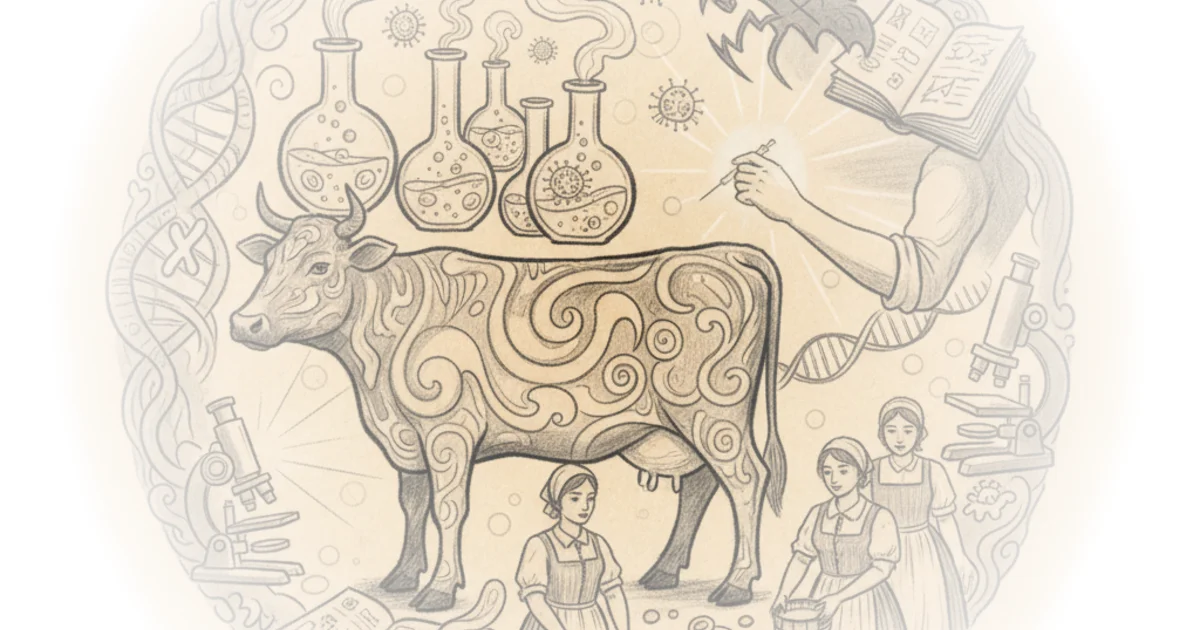
The coverage brilliantly details the brutal trial-and-error of variolation, the precursor to vaccination. "Basically until the 1940s, you couldn't see the smallpox virus at all," the editors explain, highlighting the profound limitation of the era's tools. Yet, aristocrats like Lady Mary Wortley Montagu championed the practice after witnessing it in the Ottoman Empire, despite the procedure involving the deliberate infection of healthy children with actual smallpox pus. "The estimate is that there was a 2% or so mortality rate from variolation," the text reveals, a statistic that seems reckless today but was a rational calculation against a one-in-three death toll.
The narrative does not shy away from the horror of the methods used to administer these early protections. "You would get the pus from someone who had been infected, and then you would put it through another healthy child's nostril with a cotton, with a piece of cotton," the piece describes, noting that some even used "cooked pox" to try and mitigate the risk. This section serves as a stark reminder that the germ theory of disease, which would later provide the scientific framework for safe immunization, was decades away. The editors effectively argue that the success of variolation was less about medical mastery and more about statistical luck and the sheer volume of data collected by early practitioners who were essentially conducting uncontrolled clinical trials on the populace.
"The first cut is the deepest," the piece observes, capturing the brutal pragmatism of an era where the only alternative to a risky procedure was certain death.
Critics might argue that focusing on the 2% mortality rate of variolation risks normalizing a practice that was, by modern standards, a form of biological warfare against one's own patients. However, the editors contextualize this by emphasizing the lack of alternatives, framing it as a desperate survival strategy rather than a triumph of ethics.
From Folklore to Microscopy
The turning point in the history of vaccines, as presented by Works in Progress, is the shift from empirical observation to visual confirmation. The story of Edward Jenner is reframed not as a singular genius moment, but as the culmination of rumors and failed attempts by others who lacked the documentation skills to publicize their findings. "The key thing that Jenner did was actually write this up in a lot of detail and publicize it," the editors argue, suggesting that the scientific method's emphasis on record-keeping was as crucial as the biological discovery itself.
However, the true revolution in understanding came much later, bridging the gap between the 18th century's guesswork and the 20th century's precision. "There's an enormous improvement in the resolution that you can get, thousands of times higher than light microscopy," the piece reports regarding the development of the electron microscope by Ernst Ruska and Max Knoll. This technological leap, which finally allowed scientists to see the virus itself, parallels the earlier breakthroughs in variolation where the invention of the light microscope had previously failed to reveal the true nature of the enemy. The editors note that "all of that changes when Ernst Ruska and Max Knoll developed the electron microscope," marking the moment when immunology moved from a dark art to a visible science.
The commentary also touches on the bizarre and often frightening nature of early vaccine production, such as the use of "brain tissue from a rabid dog" to create rabies vaccines. "Frankenstein was written much earlier in the 19th century," the editors quip, noting how these early experiments fueled public fear of scientists playing god. "You can sort of get why people had a view of scientists that was kind of like, 'What the hell are they up to?'" This humanizes the scientific process, showing that the path to modern medicine was paved with public suspicion and genuine horror at the methods employed.
The Legacy of Trial and Error
Ultimately, the piece serves as a testament to the resilience of human ingenuity in the face of incomprehensible threats. "According to the latest estimate in The Lancet, vaccines have saved 154 million lives over the last 50 years," the editors state, a staggering figure that stands in contrast to the primitive beginnings of the practice. The narrative arc from the "cooked pox" of the 18th century to the high-resolution imaging of the 20th century illustrates a profound evolution in how humanity understands and manipulates biology.
The editors also weave in the broader context of scientific communication, noting how the rejection of early manuscripts and the slow adoption of new ideas often delayed progress. "He submitted, got rejected, reviewer 2 had some comments, and then he became a Substacker?" the piece jokes, drawing a humorous parallel between historical academic gatekeeping and modern independent publishing. This lightness, however, underscores a serious point: the dissemination of knowledge is just as critical as the discovery itself.
"Don't go back. Don't go back. Both options are very bad," the editors conclude regarding the choice between smallpox and variolation, a sobering reminder of the precarious nature of public health.
Bottom Line
The strongest element of this coverage is its refusal to sanitize the history of medicine, forcing the audience to grapple with the terrifying reality that our safety today was bought with the lives of those who came before. The piece's greatest vulnerability lies in its reliance on a podcast transcript format, which occasionally sacrifices narrative depth for conversational banter, though the core historical facts remain robust. Readers should watch for how the editors connect these historical struggles to current challenges in vaccine development, where the shadow of public skepticism and the difficulty of scaling new technologies echo the past.
The editors successfully argue that the history of vaccines is not a story of inevitable triumph, but a fragile, hard-won victory achieved through a combination of luck, observation, and the eventual power of technology to make the invisible visible.