Tom van der Linden makes a startling claim: the evolution of his own moral philosophy mirrors the trajectory of modern cinema, moving from the hopeful character-building of Aristotle to the rigid rules of deontology, and finally to the dangerous calculus of consequentialism. He argues that our favorite films do not just entertain; they act as a training ground for how we navigate a world that feels increasingly alien and cruel. This is not a standard film review; it is a confession that our ethical frameworks are often just reactions to the chaos we see on screen.
The Illusion of Character Building
Van der Linden begins by anchoring his reflection in the opening monologue of No Country for Old Men, where Sheriff Bell laments a world he no longer understands. "You can't help but compare yourself against the old-timers," the character muses, sensing a gap between the past and a present that feels like it is "coming apart at the seams." Van der Linden suggests that this sentiment is not unique to the fictional sheriff but is a shared modern anxiety. He writes, "It's not just a sense that things are bad and getting worse, but also that deeper feeling of having lost some understanding and some faith in the world around you."
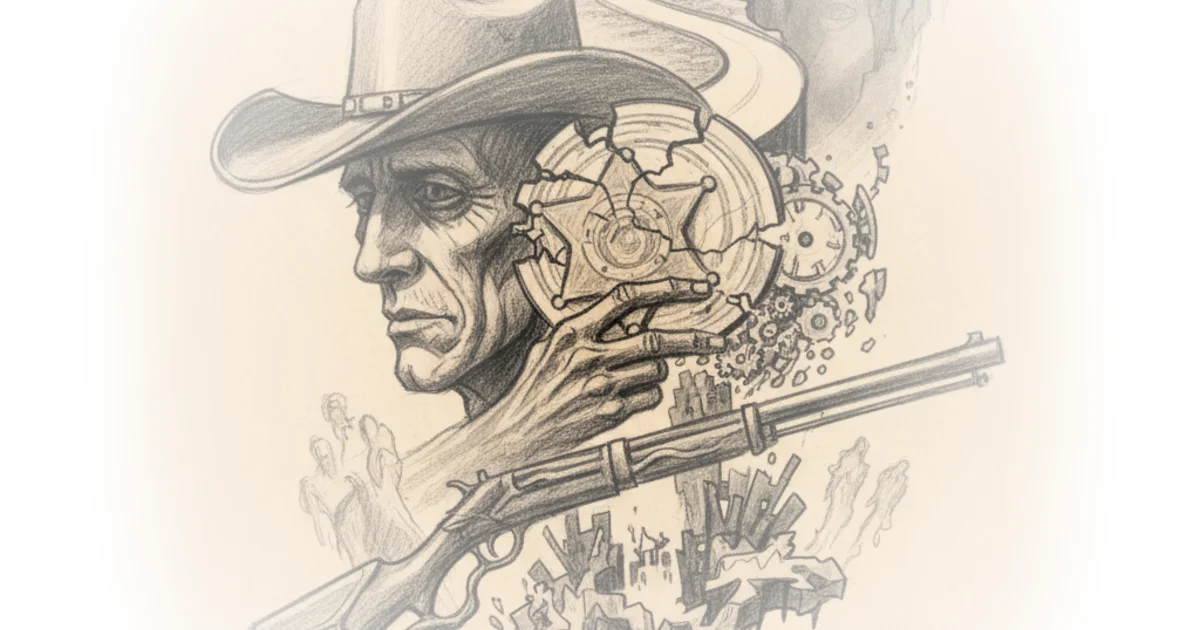
This framing is effective because it validates the reader's sense of disorientation before offering a solution. The author then traces his early philosophical formation to virtue ethics, inspired by classic hero stories where character is built through habit. He cites the famous Aristotelian idea that "excellence then is not an act but a habit," linking it to movie tropes where heroes fall but keep moving forward. The core of this argument is that these stories provide a safe, aspirational vision of goodness where effort guarantees a better outcome.
"You are not what you were born, but what you have it in yourself to be."
Critics might note that this reliance on "heroic stories" can be overly simplistic, ignoring the systemic barriers that prevent individuals from simply "practicing goodness" into success. However, Van der Linden acknowledges this by showing how his philosophy had to evolve when the world stopped playing by the rules of a three-act structure.
The Trap of Rigid Rules
As the author's worldview darkened, his moral compass shifted from character to code. He describes a turn toward deontological ethics, or rule-based morality, found in films like The Dark Knight and A Hidden Life. Here, the means are more important than the ends. Van der Linden captures the allure of this stance perfectly: "It is a kingdom of conscience," where a character refuses to compromise their beliefs even when the cost is high. He argues that while virtue ethics can feel "nebulous," rule-based ethics force a concrete confrontation with the world.
However, the author quickly identifies the fatal flaw in this approach: the paralysis of purity. He points out that in a hyper-connected world, maintaining a "clean conscience" often requires severing ties with society entirely. "Wouldn't that whole effort just be a misguided fantasy?" he asks, questioning whether a rigid adherence to rules is actually a form of selfishness. The argument here is sharp and necessary, exposing how moral rigidity can become a shield against the messy reality of causing harm.
"Speak the truth always, even if it leads to your death."
This quote highlights the noble but potentially destructive nature of deontology. Van der Linden suggests that this philosophy often leads to a "reactionary passiveness," where the focus on one's own moral purity prevents active engagement with the world's greater evils.
The Seduction of the Greater Good
The final stage of the author's journey takes him to consequentialism, the philosophy that judges actions by their outcomes. This is the realm of the "bad men" who do evil to achieve a greater good. Van der Linden writes, "Sometimes people deserve more," suggesting that the ultimate sacrifice might not be dying for a belief, but "burning my decency for someone else's future." He finds a strange nobility in the idea of sacrificing one's own soul to save others, a theme prevalent in films like The Dark Knight and The Counselor.
Yet, the author remains deeply wary of this path. He identifies the "slippery slope" where the desire to control outcomes masks a deeper desire for power. "The fever, the rage, the feeling of powerlessness that turns good men cruel," he notes, warning that consequentialism can easily devolve into tyranny. The argument is that both rule-based and outcome-based ethics are ultimately attempts to solve the same problem: the terrifying lack of control in a chaotic universe.
"The hardest choices require the strongest wills."
Van der Linden uses this line to illustrate the seductive power of consequentialism, but he immediately undercuts it by suggesting that such "strong wills" often lead to horror. The author's insight here is that our moral philosophies are often just coping mechanisms for our inability to predict the future.
The Metaphysics of Fate
In his conclusion, Van der Linden pivots from ethics to metaphysics, using the film The Counselor to argue that the problem isn't our choices, but the structure of reality itself. He posits that "there is no choosing there. There's only accepting." The author suggests that all our ethical frameworks—whether based on character, rules, or consequences—are futile attempts to impose order on a world that refuses to be controlled.
"You are the world you have created. And when you cease to exist, this world that you have created will also cease to exist."
This is the piece's most profound realization: that moral philosophy is less about navigating the world and more about defining the self within it. Van der Linden argues that we are not just making choices; we are creating the very reality in which those choices matter. This shifts the burden from "doing the right thing" to "accepting the reality of the thing."
Bottom Line
Van der Linden's strongest asset is his ability to map complex ethical theories onto the emotional arc of popular cinema, making abstract philosophy feel immediate and personal. His biggest vulnerability is the potential fatalism of his conclusion, which risks suggesting that moral effort is ultimately an illusion. Readers should watch for how this perspective influences their own engagement with current events: does it encourage acceptance, or does it justify inaction?