Phillips P. O'Brien reframes a global spectacle not as a display of strength, but as a window into the Kremlin's deepest insecurities. The piece's most striking claim is that the absence of a Ukrainian attack on the Victory Day Parade revealed more about Russian vulnerability than any disruption ever could. For listeners tracking the shifting balance of power, this analysis suggests that the administration's fear of its own capital is now a strategic reality, not just a psychological state.
The Hollow Spectacle
O'Brien argues that the parade was a "damp squib," stripped of the usual military hardware and foreign prestige. He writes, "Far from being a showcase of Russian might, what the parade really revealed was Russian weakness and Putin's fears about what he cannot control." This framing is compelling because it shifts the focus from the pageantry to the logistics: the executive branch had to strip air defense systems from the front lines to create a protective bubble over Moscow.
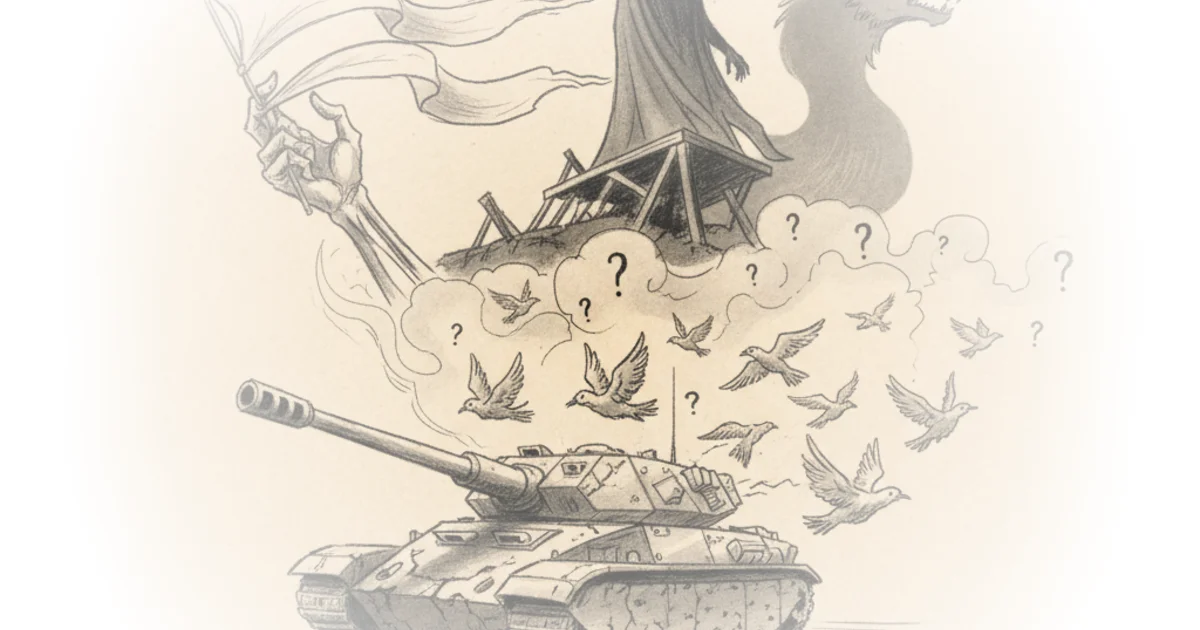
The author notes that even with "100 or more different systems operational surrounding Moscow," the leadership remained terrified. This massive concentration of defensive assets implies a critical admission: the Russian military cannot guarantee safety anywhere within 1,500 kilometers of the border. As O'Brien puts it, "If they can not protect Moscow with a historic number of air defense systems in place, what can they be sure of protecting." This logic holds weight, especially when considering the historical context of the S-400 missile system, which was once touted as an impenetrable shield but is now being cannibalized to protect the capital.
The parade was historically short, only 45 minutes long, and when it was over he hustled out of dodge as quickly as he could.
The presence of North Korean troops marching in Red Square is highlighted by O'Brien as a particularly humiliating detail, signaling that the administration is relying on foreign conscripts to retake lost territory. Critics might argue that the parade's subdued nature was a calculated security measure rather than a sign of panic, yet the author's evidence regarding the frantic removal of equipment from other fronts suggests a deeper structural weakness.
The Diplomatic Gambit and Broken Promises
A significant portion of the commentary focuses on the diplomatic maneuvering surrounding the event, specifically a prisoner exchange deal brokered with the help of the former US administration. O'Brien writes, "Putin must have impressed on Trump with how desperate he was to get the Ukrainians not to attack the parade and dangled the prospect of releasing 1000 Ukrainian prisoners if Trump could broker a deal."
The human cost here is central to the argument. The author emphasizes that Ukrainian prisoners face "brutal and inhumane conditions," citing reports from human rights organizations and the experiences of soldiers like Shaun Pinner. The deal was framed by the US side as a major victory, with the former president boasting, "This request was made directly by me, and I very much appreciate its agreement by President Vladimir Putin."
However, O'Brien suggests this was a trap. He argues that the administration was used to secure a ceasefire that was never intended to hold. "He seems to have used Trump to do his dirty work and get Zelensky not to attack the parade, let Trump boast about a deal that he never intended to follow." The subsequent Russian drone attacks on Kharkiv and the apparent stalling on prisoner releases support this cynical view. While one could argue that the delay in prisoner swaps is bureaucratic rather than malicious, the immediate resumption of kinetic attacks suggests a deliberate strategy to humiliate the US negotiator while achieving the Kremlin's security goals.
The Rising Tide of Ukrainian Strikes
The final pillar of the argument is the tangible increase in Ukrainian long-range strike capabilities. O'Brien presents data showing that for the first time, Ukrainian systems launched more strikes against Russia than Russia did against them in April, with numbers reaching approximately 7,500 to 6,500. This is not just a statistical shift; it represents a change in the nature of the war.
The author details specific successes, such as the strike on a missile ship in the land-locked Caspian Sea, a location previously considered a safe haven. "That is clearly no longer the case," O'Brien writes, noting the ship was capable of launching Kalibr cruise missiles. Furthermore, the sustained attacks on oil infrastructure deep inside Russia, such as the Lukoil refinery in the Ural Mountains, demonstrate a growing capacity to disrupt the enemy's economic and logistical backbone.
Even with Moscow covered with the densest air defense network that I have ever seen, the Russians were truly worried that they could not protect the parade from a Ukrainian attack.
This section connects the parade's anxiety directly to the battlefield reality. The author's point is that the "paranoid" behavior of the leadership is a rational response to the fact that their territory is no longer secure. The reference to the 12th anniversary of "Come Back Alive," a Ukrainian organization dedicated to returning POWs, adds a layer of human resilience to the technical analysis of drone warfare.
Bottom Line
Phillips P. O'Brien delivers a potent argument: the Victory Day Parade was a performative admission of defeat, revealing an administration that is militarily stretched and diplomatically outmaneuvered. The strongest element is the synthesis of the parade's emptiness with the hard data of Ukrainian strike capabilities, proving that fear is now a driving force in Kremlin strategy. The biggest vulnerability in the analysis is the reliance on the interpretation of diplomatic back-channel deals, which are inherently opaque, but the subsequent actions of the Russian government lend credence to the claim of bad faith. Readers should watch for whether the surge in Ukrainian production can be sustained against Russian industrial adaptation in the coming months.