Kenny Easwaran reframes a 1950 philosophical paper not as a relic of early computing, but as the foundational text for the very artificial intelligence debates dominating our current moment. By stripping away the mythos surrounding Alan Turing's tragic personal life to focus on his rigorous logic, Easwaran reveals how the father of computer science predicted the trajectory of machine learning with startling precision, arguing that the definition of intelligence lies not in biology, but in behavior.
The Architect of the Universal Machine
Easwaran begins by establishing Turing's unparalleled influence, noting that while earlier thinkers like Charles Babbage built mechanical devices, Turing provided the theoretical blueprint for everything that followed. "In his doctoral work in 1936 he wrote a paper on computable numbers where he introduced the idea of what is now called a turing machine," Easwaran writes, explaining that this was the first abstract concept of a general-purpose computer capable of solving any problem given the right sequence of instructions. This framing is crucial; it shifts the reader's perspective from viewing computers as mere calculators to understanding them as universal problem solvers, a distinction that remains the bedrock of modern software engineering.
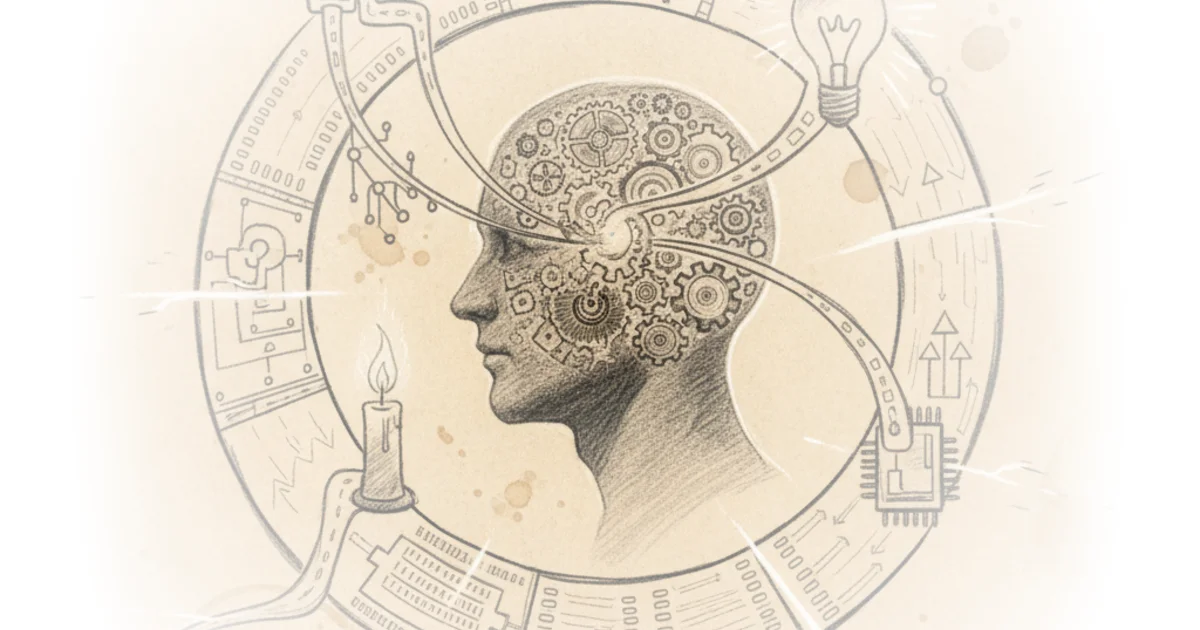
Yet, Easwaran points out a darker, equally important truth Turing uncovered: the limits of computation. He notes that Turing proved "there are problems that this machine can't solve and therefore that these problems can't be solved by any sort of machine," specifically citing the "halting problem" where a computer cannot predict if a program will crash before it happens. This insight is often overlooked in popular histories that focus solely on Turing's wartime heroism at Bletchley Park, where he helped break the Enigma and Lorenz ciphers. Easwaran reminds us that the same mind that shortened the war by developing statistical techniques to crack German codes also realized that some questions are fundamentally unanswerable by machines, a paradox that still haunts computer scientists today.
"Although this machine is universal and can solve any problem that a machine can solve he also showed that there are problems that this machine can't solve and therefore that these problems can't be solved by any sort of machine."
Critics might argue that focusing on the halting problem distracts from the more romantic narrative of Turing's wartime contributions, but Easwaran's choice grounds the reader in the harsh reality of computational limits, making the subsequent discussion of machine intelligence more grounded and less speculative.
The Imitation Game as a Practical Standard
Moving to the 1950 paper itself, Easwaran highlights Turing's brilliant rhetorical strategy: bypassing the impossible task of defining "thinking" to instead propose a measurable test of behavior. "He suggests he's actually just ignoring the question can a machine think and replacing it by a more practical and meaningful question," Easwaran observes. This shift is the paper's most enduring legacy, transforming a metaphysical debate into an empirical one. Turing proposed the "imitation game," where an interrogator communicates via text with a man and a woman, trying to distinguish them. The twist comes when the man is replaced by a machine.
Easwaran emphasizes the radical nature of this setup for 1950, a time when computers were room-sized vacuum tube contraptions. "The new form of the problem can be described in terms of a game which we call the imitation game," he explains, noting that Turing's goal was to see if the interrogator would be fooled just as often when interacting with a machine as when interacting with a human. This is a profound move because it decouples intelligence from the physical body. As Easwaran puts it, "The new problem has the advantage of drawing a fairly sharp line between the physical and the intellectual capacities for men," arguing that we should not care if a machine has "artificial flesh" or human skin, only if it can perform the intellectual task of conversation.
The author illustrates this with Turing's own sample dialogue, where a machine might feign human limitations, such as taking thirty seconds to add two large numbers or claiming it cannot write poetry. "The answer says count me out on this one I never could write poetry," Easwaran recounts, pointing out the irony that modern AI has since mastered poetry, while the original test relied on the machine's ability to mimic human error. This highlights a critical vulnerability in Turing's original framing: the test rewards deception and the simulation of human fallibility rather than genuine understanding. If a machine can simply be programmed to lie about its capabilities, does passing the test truly prove it thinks?
"He's not interested in the question what's going on inside the machine he's just interested in the question can we get everyone to agree that this machine is doing everything just the same way that a person is so that we interact with it just as a person."
This distinction between internal state and external behavior is the core of the piece's argument. Easwaran suggests that Turing's approach was ahead of its time, anticipating the modern dominance of neural networks over symbolic logic. While the Chomskian paradigm of rule-based language processing dominated the late 20th century, Easwaran notes that "in recent years it has seemed more plausible that the Turing Paradigm may be more relevant," as we see machines learning through imitation rather than explicit programming.
The Tragic Cost of Genius
Easwaran does not shy away from the human cost of Turing's life, weaving in the tragic post-war persecution that led to his suicide. He details how, under British law at the time, Turing was prosecuted for being gay after reporting a burglary, forced to undergo "mandatory hormone treatment with estrogen that was meant to feminize his body and suppress his sexuality." The commentary is somber but necessary, reminding the reader that the man who gave us the concept of the universal computer was destroyed by the very society he saved. "It wasn't until many decades later in 2009 that the British government finally apologized for its role in killing the person who had saved their country during the war," Easwaran writes, a statement that underscores the profound injustice of his death.
This biographical context serves to humanize the abstract concepts discussed earlier. It reminds us that the "thinking machine" was conceived by a man whose own humanity was denied by his government. The juxtaposition of Turing's intellectual triumphs with his personal tragedy adds a layer of emotional weight that pure technical analysis would miss. However, one might argue that focusing too heavily on the tragedy risks overshadowing the technical brilliance of the 1950 paper itself. Easwaran balances this well by returning to the text's predictive power, noting that Turing accurately forecasted the development of computing technology "all the way out until the end of the 20th century."
"He didn't just forecast the growth in power and prevalence of computers but also many of the important Central debates in artificial intelligence."
Bottom Line
Easwaran's commentary succeeds in revitalizing a 70-year-old text by connecting Turing's 1950 insights directly to the current explosion of generative AI, proving that the questions we ask today are the same ones Turing asked then. The strongest part of the argument is the reframing of the "imitation game" not as a test of consciousness, but as a test of social agreement on what constitutes thinking. The biggest vulnerability remains the test's reliance on deception, a flaw that modern AI has arguably turned into a feature. As we navigate an era where machines can write poetry and solve math problems, the reader must watch for the next evolution of the Turing test: one that moves beyond imitation to measure genuine reasoning and intent.
"He's not interested in the question what's going on inside the machine he's just interested in the question can we get everyone to agree that this machine is doing everything just the same way that a person is so that we interact with it just as a person."
"