Noah Smith detonates a progressive sacred cow: the comforting belief that history inevitably bends toward justice. His evidence? Concrete polling showing Democrats less popular than ICE itself—and a warning that clinging to "long arc" thinking could doom them to permanent backlash cycles. In an era of escalating polarization, this isn't academic. It's electoral survival.
The Polling Bombshell
Smith opens with a jarring NBC News finding: "The Democrats' net favorability was worse than the GOP, Donald Trump, or even ICE itself." This isn't abstract theory—it's a visceral reality check. He methodically dismantles the progressive excuse that low ratings stem solely from insufficient Trump-fighting. Instead, he cites polling where voters preferred Republican approaches on immigration and crime even while planning to vote Democratic. The core of the argument is that progressive ideology itself has drifted from mainstream values—a disconnect masked by Democratic self-perception.
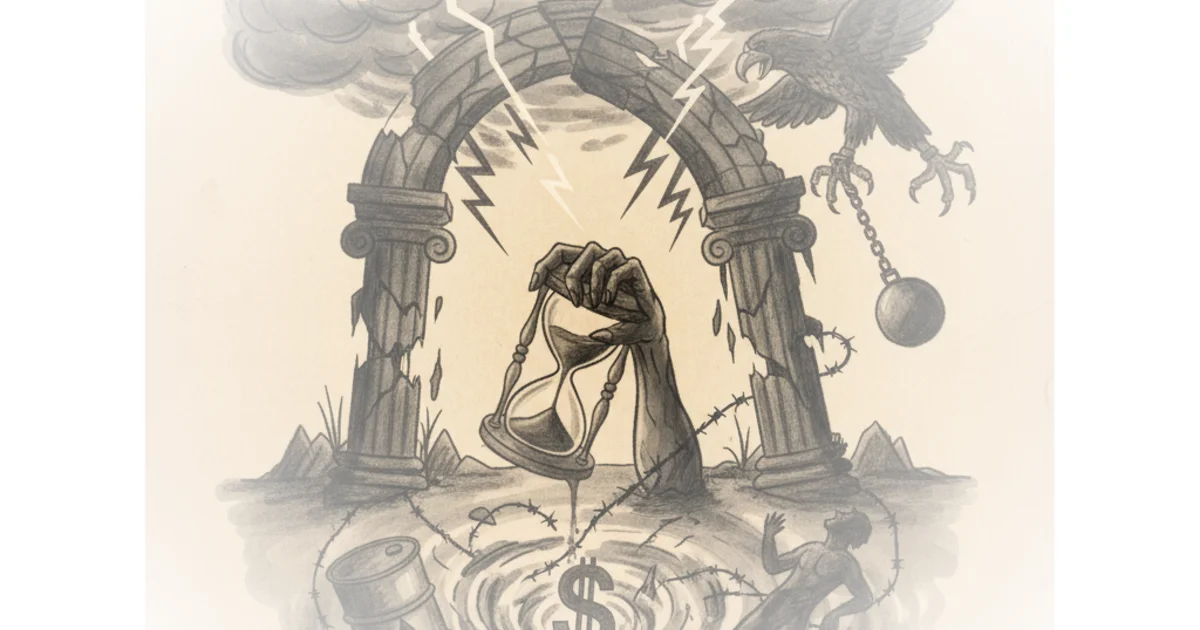
As Smith puts it, "Democrats saw themselves as moderates, even though Independents and Republicans saw them as leaning strongly to the left." This isn't partisan sniping; it's data from the Cooperative Election Study showing a profound bubble effect. Smith attributes this to progressives clustering in universities and blue cities, starving them of contact with swing voters. It lands because it explains why well-intentioned policies backfire: when 74% of Independents believe gender is determined at birth versus 54% of Democrats, insisting trans rights debates are purely about "basic human rights" ignores the lived reality of the very voters Democrats need.
"The danger is that 'long arc' thinking will prevent Democrats from compromising on any of this, leading to another backlash cycle in 2028 or 2032."
The Historical Trap
Smith then delivers his most vital insight: progressives confuse past victories with future inevitability. He doesn't deny societal progress toward tolerance but exposes the fatal flaw in assuming all current demands will be enshrined as rights. "Looking back at modern American history, it's clearly not the case that the country always trends toward what liberals or progressives want." His evidence is devastating: affirmative action struck down with majority public support, busing abandoned, abortion rights rolling back with minimal backlash. This reframes "rights" as contested terrain—not predetermined endpoints.
The communist parallel is especially sharp: "It was the great mistake of communism to believe that History made them inevitable... This caused them not to worry enough about the mistakes they were making along the way." Smith argues "long arc" thinking is a quasi-religious surrender of agency—exactly what doomed Marxists. Critics might note he underestimates how some compromises (like "safe, legal, and rare" abortion) can actually energize backlash. But his core point stands: treating strategy as cowardice ignores that civil rights required tactical flexibility.
The Strategic Imperative
Smith’s most urgent contribution is rejecting fatalism. "History is contingent—the Equal Rights Amendment failed ratification by only three states... and never really got a second shot." This transforms the debate: if victories aren’t inevitable, every battle demands strategic calculus. He doesn’t demand progressives abandon principles but insists they distinguish between non-negotiable rights and winnable compromises—especially on issues like public safety or asylum where Broockman & Kalla’s research suggests moderation could rebuild trust.
This lands because it offers a path beyond the binary of "sell out or lose." Smith acknowledges the moral tension: if you truly believe trans women in sports is a civil right, compromise is unconscionable. But for those open to pragmatism, he shows how rigid ideology fuels the very backlash it fears. A counterargument worth considering: strategic retreats might demoralize the base more than alienate moderates. Yet Smith’s data on Independents—the growing swing bloc—suggests the risk lies in not adapting.
Bottom Line
Smith’s strongest contribution is demolishing the "long arc" myth with concrete historical reversals—proving progress isn’t linear but earned. His biggest vulnerability? Underplaying how hard it is to convince activists that their hill isn’t worth dying on. Watch whether Democrats treat this as a wake-up call or dismiss it as surrender—because the next backlash cycle won’t wait for their epiphany.