Natalie Wexler delivers a stinging rebuke to the prevailing narrative that recent academic failures are merely a pandemic hangover. While the headlines scream about post-COVID decline, Wexler points to a far more uncomfortable truth: the rot set in a decade ago, driven by a fundamental misunderstanding of how reading comprehension actually works.
The Myth of the Pandemic Excuse
The piece opens by dismantling the convenient story that schools simply need time to recover from the last few years. Wexler notes that while the latest National Assessment of Educational Progress scores are historic lows—with 45 percent of 12th graders scoring below basic in math—the trend line was already pointing down long before the virus emerged. "The steady decline in reading and math started in 2013," she writes, citing insights from NAEP insiders and economists like Eric Hanushek. This reframing is crucial; it forces educators and policymakers to look at structural flaws rather than temporary disruptions.
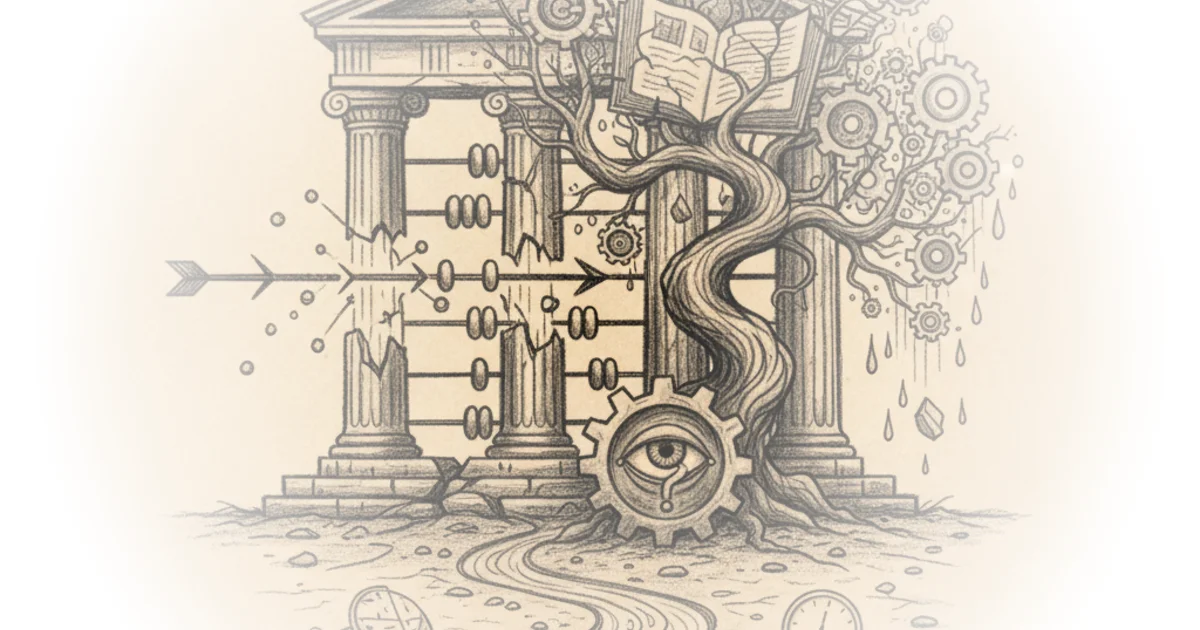
The author argues that the common culprits, smartphones and a lack of accountability, are only part of the picture. While she agrees with cognitive scientist Dan Willingham that devices offer a level of stimulation that books cannot match, she pushes back hard on the idea that more testing will fix the problem. "Holding schools and educators accountable for test-score results can only work if the tests are assessing something truly measurable," Wexler writes. "And comprehension isn't measurable in the abstract." This distinction is the intellectual anchor of her argument: you cannot drill a skill like "finding the main idea" in a vacuum and expect it to transfer to complex texts.
Critics might argue that without high-stakes pressure, schools lack the incentive to improve rigor. However, Wexler counters that the current system has already created a perverse incentive to teach to the test without actually teaching the content, a problem that more accountability would only worsen.
"The principles of evidence-based teaching, and the consequences of diverging from them, apply across subject areas. And it's not like there's a firewall between literacy and math."
The Content Deficit
Wexler shifts her focus to the curriculum itself, highlighting a critical disconnect between what is tested and what is taught. She points out that reading comprehension at the 12th-grade level is less about decoding words and more about possessing the background knowledge to understand complex subjects. When schools focus on abstract skills rather than building a knowledge base in history, science, and civics, students hit a wall as texts get harder.
The commentary draws on the work of Holly Korbey and others to illustrate that the decline is hitting everyone, including students from wealthy, educated families. "Nearly 40 percent of the 'lower performers' have parents who graduated from college," Wexler notes, suggesting that the problem is systemic, not just a result of poverty. This is a powerful observation because it removes the excuse that the issue is solely about resource allocation; even the most privileged students are failing to develop deep literacy.
The author also touches on the commercial realities of education publishing. She reveals that the prevalence of short, disconnected texts in classrooms isn't an accident of pedagogy but a result of profit margins. "Using brief texts is good for curriculum publishers' profit margins," Wexler explains, noting that anthologies are cheaper to produce than licensing whole books. This exposes a market failure where the financial interests of publishers directly undermine the educational needs of students.
A Glimmer of Hope in Louisiana
Amidst the grim data, Wexler identifies a promising experiment in Louisiana that challenges the status quo. The state attempted to ground reading tests in the specific content students had actually been taught, rather than using random, disconnected passages. The results were telling: students were more engaged, teachers received better feedback, and scores rose. "Instead of dropping instruction to focus on test prep, teachers can prepare kids for the tests by continuing to teach the content in the curriculum," she writes.
However, the initiative was ultimately terminated due to federal regulations requiring statewide implementation, which proved impossible given the patchwork of curricula used across the state. This bureaucratic failure highlights the difficulty of implementing coherent reform in a fragmented system. While other states like Texas are considering similar moves, Wexler warns that without a unified approach to content, these efforts will just add to the testing burden without yielding results.
"Until we shift to a system that systematically builds students' academic knowledge beginning in the early grades, reading scores will remain low."
Bottom Line
Wexler's most compelling argument is that the solution to declining literacy isn't more testing or stricter phone bans, but a radical shift toward content-rich curricula that build knowledge across subjects. Her analysis is strongest when it exposes the disconnect between abstract testing and real-world comprehension, though it leaves open the difficult question of how to unify curriculum standards in a decentralized system. The reader must watch for whether states can overcome federal rigidity to implement the kind of content-based testing that Louisiana briefly proved works.