Matt Stoller delivers a rare, concrete victory in the long war against corporate consolidation, revealing how Congress is finally treating pharmacy benefit managers like the monopolistic utilities they have become. While most analysis fixates on the symptoms of rising drug costs, Stoller traces the disease to a specific, vertically integrated structure that has been strangling independent pharmacies and inflating prices for decades. This is not just policy wonkery; it is a forensic accounting of how a middleman industry captured the American healthcare system and the legislative maneuver that might finally break its grip.
The Anatomy of a Monopoly
Stoller begins by dismantling the narrative that the collapse of retail giants like Walgreens was due to digital disruption or poor management. Instead, he points to a systemic squeeze from above. "PBMs are a bogeyman in modern American medicine, blamed for everything from driving up drug prices to denying people vital medicine to destroying access to pharmacies," Stoller writes. He argues that these Pharmacy Benefit Managers are not neutral facilitators but profit-maximizing gatekeepers that have consolidated into an oligopoly. The three largest entities—owned by the biggest insurance companies—control 80% of the market, creating a vertical integration that eliminates competition.
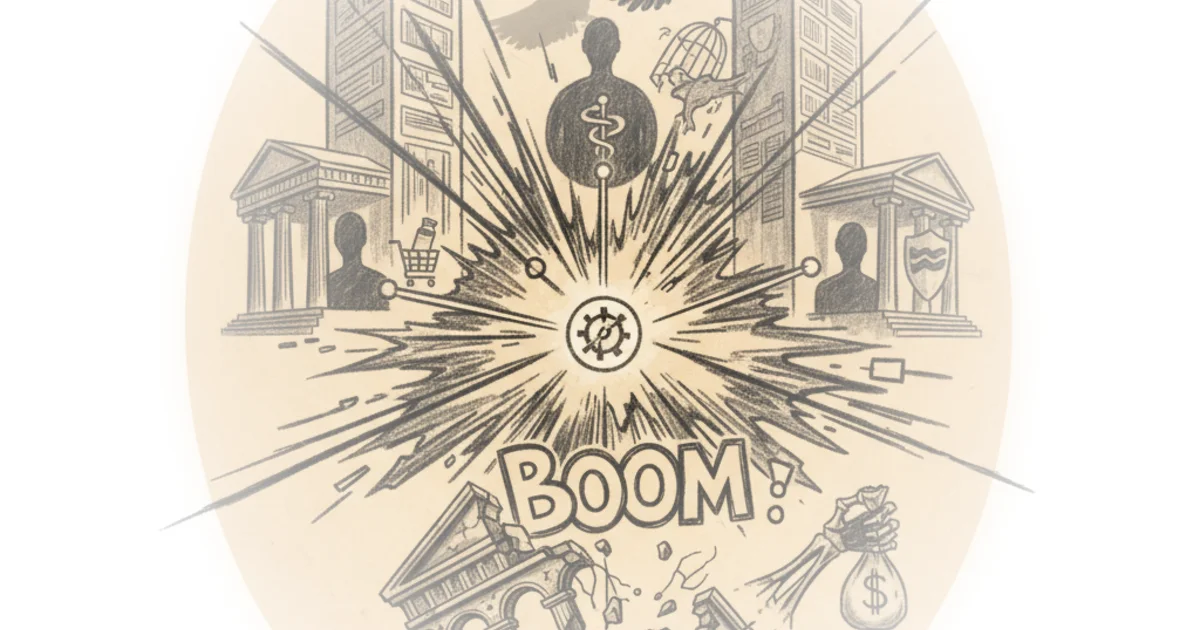
The author's framing is particularly sharp when he exposes the perverse incentives built into this system. Rather than negotiating lower prices for patients, these middlemen profit from higher drug costs. "The allegation is they negotiate 'discounts' from drug companies in the form of rebates, which they then effectively keep by charging various fees and by manipulating the copays that patients have to pay," Stoller notes. This creates a scenario where a generic drug costing $97 at a wholesale club can be priced at nearly $20,000 through a PBM-controlled mail-order service. The evidence here is damning: the system is designed to extract wealth, not distribute it efficiently.
PBMs are much much more profitable than networks running commodities should be, and the reason is that they have become monopolies with the ability to divert revenue that is supposed to travel over their networks to themselves.
Critics might argue that vertical integration allows for operational efficiencies that benefit consumers, but Stoller counters this by highlighting the catastrophic failure of independent pharmacies. He notes that when these middlemen get replaced by public versions in state Medicaid programs, the results are "terrific," with dramatic savings and expanded access. This suggests the private model is not just flawed but actively harmful.
The Legislative Breakthrough
The core of Stoller's commentary shifts to the recent legislative action, which he describes as a fundamental shift in how the government views these networks. The new rules, embedded in must-pass spending bills, treat PBMs as public utilities. "Congress is now saying they have to start treating those networks like public highways," Stoller explains. This is a significant rhetorical and legal pivot, moving from voluntary compliance to mandatory regulation of access and pricing.
The legislation includes three critical provisions that directly address the monopolistic behaviors Stoller has outlined. First, it prevents PBMs from arbitrarily excluding pharmacies from their networks, ensuring that any pharmacy meeting "reasonable and relevant" standards can participate. Second, it prohibits PBMs from pocketing rebates meant for patients, forcing them to pass those savings through. Finally, it mandates full pricing transparency for employers and insurers. Stoller emphasizes that these changes are not theoretical; they are a direct response to the "blood letting" seen in the retail pharmacy sector, where thousands of stores have closed.
The author connects this policy shift directly to the financial ruin of major retailers. He cites Walgreens' own annual reports, which warned for years that "consolidation of the entities that provided its reimbursements" was creating "greater pricing pressures" that the company could not withstand. "Every single year until its sale to Sycamore in 2025, Walgreens told investors that its reimbursement rates were collapsing," Stoller writes. This corporate testimony serves as undeniable proof that the market has failed to self-correct.
The Political Roadblock and the Path Forward
Stoller does not shy away from the political machinations that nearly derailed this reform. He recounts a bizarre moment where proposed legislation was stripped of its PBM provisions simply because a prominent tech figure claimed it had "too many pages." This delay had real-world consequences: in the three months following the failure of the initial reform, hundreds of pharmacies closed. "No one knew if Congress would resurrect PBM reform. But they did," Stoller observes, highlighting the resilience of the bipartisan coalition that pushed the measure back into the spotlight.
However, the author remains cautiously critical of the final outcome. He points out significant gaps, including a delayed implementation date of 2028 or 2029 and the fact that insurers can still own PBM subsidiaries, leaving the door open for conflicts of interest. "I doubt this legislation takes care of the price discrimination at the heart of the PBM problem, because it doesn't ban rebates," Stoller admits. Yet, he concludes that in a political climate where passing any meaningful regulation is rare, this is a necessary step. "It's rare enough to have Congress pass anything good these days, let alone something that addresses flagrant monopoly power and lowers health care costs," he writes.
Three cheers for our elected leaders. Or, if you're feeling cynical, a sincere slow clap.
The author's tone here is a masterclass in measured optimism. He acknowledges the imperfections of the bill while celebrating the fact that the political will finally coalesced to challenge a powerful industry. The framing shifts the focus from the personalities of the politicians to the structural victory of the policy itself.
Bottom Line
Stoller's strongest argument lies in his ability to connect the abstract mechanics of rebate manipulation to the tangible reality of shuttered Main Street pharmacies, making the case that this is a monopoly problem, not a market efficiency one. The legislation's biggest vulnerability remains its delayed enforcement and the persistence of vertical integration, which savvy corporate lawyers may exploit to circumvent the spirit of the law. Readers should watch closely how the Department of Health and Human Services defines "reasonable and relevant" contractual terms, as that regulatory detail will determine whether this law truly breaks the monopoly or merely reshapes it.