Most histories of the Arabian Peninsula begin with the rise of a new faith, treating the preceding centuries as a chaotic prelude. Kings and Generals challenges this narrative arc, arguing that the region was not a vacuum waiting to be filled, but a complex, dynamic ecosystem of trade, tribal law, and competing empires. This documentary reframes the era not as the 'Age of Ignorance,' but as a sophisticated period where the seeds of a unified Arab identity were sown through commerce and conflict long before the first revelation.
The Tribal Imperative
The authors establish a stark reality: without a central state, survival depended entirely on kinship. "Pre-islamic arabia was mostly a nomadic society inhabited by constantly moving tribal units," Kings and Generals writes, noting that these Bedouin tribes were the primary political units with "constantly shifting alliances" and "rare occurrences of organized and centralized statehood." This framing is crucial because it explains why the later unification of the peninsula was such a radical shift; the default setting of the region was fragmentation. The commentary effectively highlights the brutal pragmatism of this system, where "vengeance was sought for the killing of a tribe member by another tribe which led to virtually constant warfare and conflict."
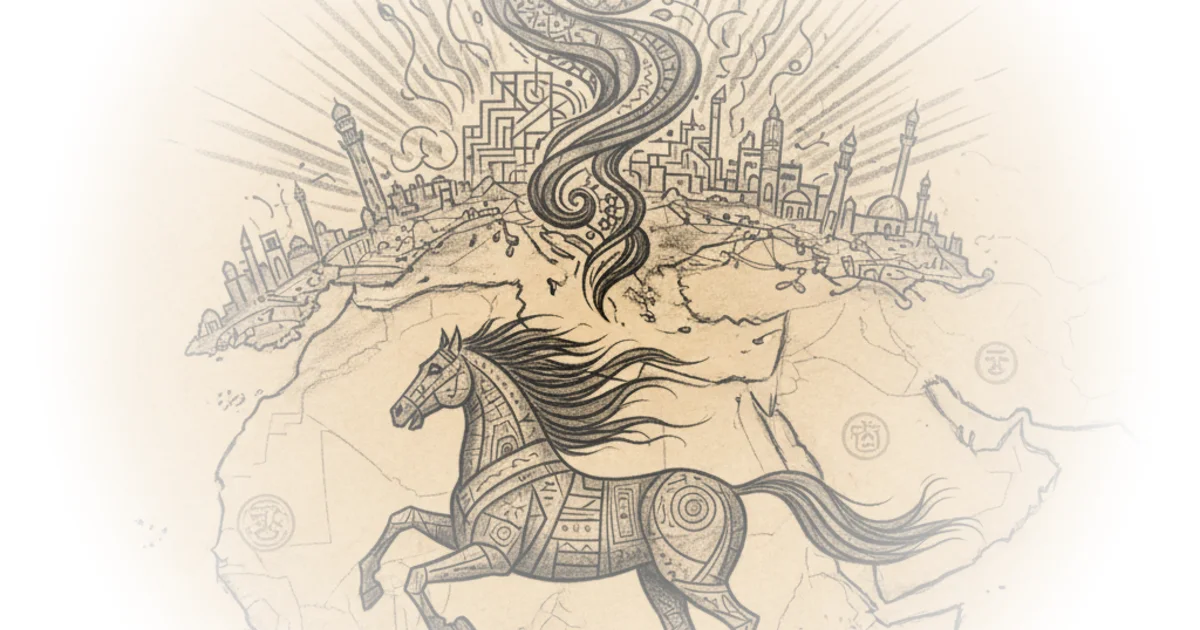
The piece does not shy away from the harsh social hierarchies of the time. It details a patriarchal structure where "women could not inherit property and were virtually rightless as they could be seized in tribal conflicts as a spoil of war." While this description is historically grounded, a counterargument worth considering is whether the documentary overstates the universality of these practices across the entire peninsula, given the known variations in status for women in the more settled, urban centers like Mecca compared to the deep desert. Nevertheless, the authors use this to illustrate the high stakes of tribal loyalty: "the only protection for a man's life was the certainty established by custom that it would be dearly bought blood for blood and a life for a life."
The vendetta, the 'ar' in arabic, is one of the pillars of bedouin society, turning lawlessness into the law of the land.
The Rise of the City-State
The narrative shifts compellingly from the desert to the cities, identifying the emergence of urban centers as the catalyst for a broader Arab identity. Kings and Generals points out that "the emergence of cities like mecca was the primary cause of the dawn of the common arab identity in the pre-islamic period." This is a significant insight, suggesting that the unification of the Arabs was driven less by theology and more by the economic necessity of managing trade routes. The authors describe Mecca not just as a religious site, but as a neutral ground where "conflict would stop, a truce would be declared, disputes and debts would be resolved, and trade happened between different tribes."
The documentary correctly identifies the strategic geography of the Hijaz region. With "sufficient water supply," cities like Mecca and Yathrib became logical hubs in an otherwise punishing climate. The authors argue that the disruption of traditional trade routes by Roman-Persian conflicts forced commerce through Mecca, elevating the city's status. "Meccans signed treaties with the byzantine empire and bedouin tribes for safe passage of their trading caravans," creating a loose confederation bound by economic interest rather than blood. This reframes the pre-Islamic era as a time of intense geopolitical maneuvering, where local tribes were already engaging in international diplomacy.
A Mosaic of Faiths
Perhaps the most nuanced section of the coverage is its treatment of religion. The authors dismantle the idea of a monolithic pagan past, describing a landscape where "religion in pre-islamic arabia was a mix of polytheism, christianity, judaism, and iranian religions." The documentary notes that the Kaaba itself was a pantheon, housing "up to 360 such statues and images," including figures from other faiths. This detail is vital; it shows that the region was already a crossroads of belief systems.
Kings and Generals highlights the significant influence of neighboring powers, noting that "early as the 1st century a.d, arab traders brought christianity to arabia" and that Jewish communities were well-established in Yathrib. The narrative even touches on the Himyarite Kingdom in the south, which "converted to judaism in the 4th century," leading to a zealous persecution of Christians that eventually invited military intervention from the Ethiopian kingdom of Aksum. This historical context is often overlooked, yet it is essential for understanding the religious tensions that existed before the rise of Islam. The authors suggest that the monotheistic Hanif movement, which rejected idolatry, was already afoot, with some sources claiming that "the prophet of islam muhammad and some of his future companions belongs to this religion."
Critics might argue that the documentary leans too heavily on Islamic sources when discussing the Hanifs, potentially conflating later theological interpretations with historical reality. However, the overall evidence presented regarding the diversity of religious practice remains robust. The authors conclude that the region was far from spiritually barren: "the rise of commerce was inevitably going to lead to usury, a practice which was used by both the arabs and jews," indicating a complex economic and moral landscape that would later be addressed by new religious laws.
Bottom Line
Kings and Generals succeeds in humanizing a period often dismissed as a dark age, revealing a society defined by sophisticated trade networks, complex tribal diplomacy, and a rich tapestry of religious belief. The strongest part of this argument is the emphasis on the economic drivers of unity, showing that the city-states were already forging a common identity through commerce. The biggest vulnerability lies in the reliance on later oral traditions for certain political claims, but the documentary's focus on the material reality of the desert and the cities provides a solid foundation. For the busy reader, this coverage offers a necessary correction: the world before Islam was not empty; it was waiting for a new order to organize its existing chaos.