Fred Mills doesn't just report on a trend; he stages a cultural intervention, arguing that construction's survival depends on rebranding itself from a dusty trade into a high-tech manufacturing sector. This isn't a standard industry update; it is a manifesto for a digital revolution that promises to solve the sector's chronic productivity and labor crises by moving work from chaotic job sites to controlled factory floors.
The Perception Gap
Mills opens by confronting a brutal reality: the industry that shapes every human habitat is invisible to the public. "The problem we have is that most people don't know about our industry and what we do," he writes, noting that passersby miss the "cutting-edge technology" and the "decisions being made that shape not just a city's but our homes." His strategy is radical transparency, aiming to take stories from "trade shows and trade magazines that people have to opt into" and place them on platforms where billions scroll daily. This framing is essential because it shifts the focus from internal metrics to external perception, arguing that you cannot attract top talent if society views the sector as obsolete.
"My mission in life is a very simple one: I love construction and I want the whole world to love it too."
This emotional appeal is the engine of his argument. Mills suggests that the industry's stagnation isn't just a technical failure but a communication one. By positioning construction as a sector that "doesn't shout about itself," he creates a narrative of untapped potential. However, one might argue that passion alone cannot fix structural economic barriers; the industry needs more than a love letter—it needs policy changes and capital investment to match the hype.
The Manufacturing Pivot
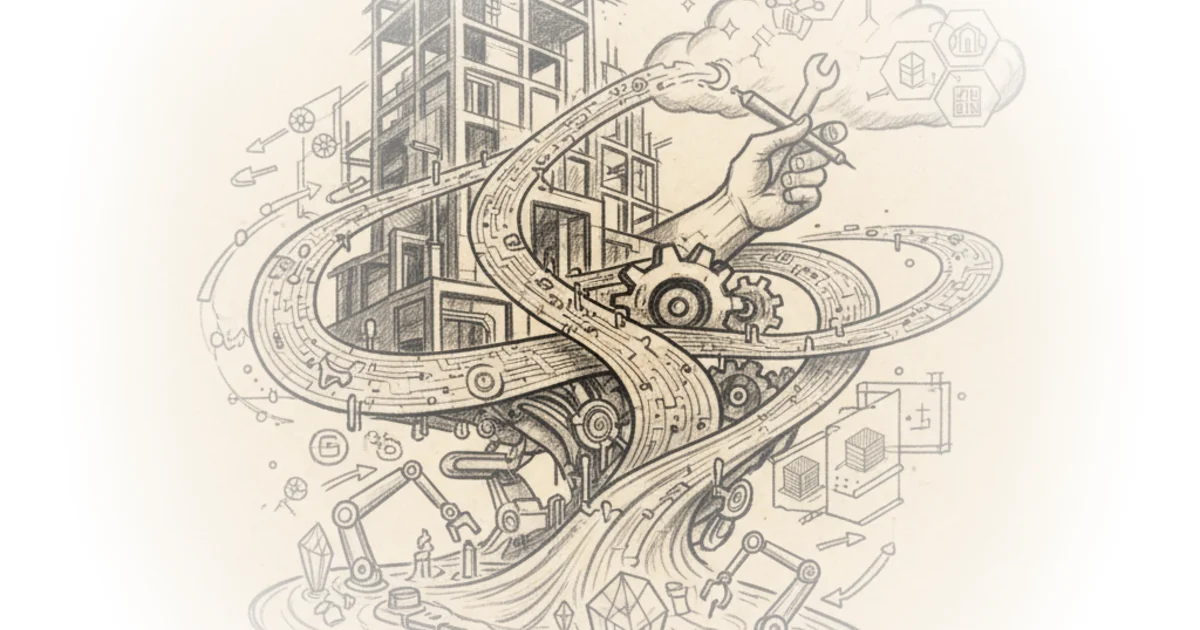
The core of the piece pivots to the mechanics of change: off-site manufacturing. Mills explains that for centuries, construction has relied on "sketching on a paper and building basically on the same way that we have done for the last 300 years." He contrasts this with the emerging model where "repetition honed processes, quality control and a consistent flow of work" replace volatile outdoor environments. The argument here is that moving production to factories allows for "economies of scale" and "automated production lines," which are impossible in traditional site-based work.
To prove this isn't theoretical, Mills highlights Laing O'Rourke's Explore Industrial Park in the UK. He notes that the facility has managed to "move 70 percent of its on-site manufacture to off-site means," resulting in a "60% increase in productivity and a 30% increase in accuracy." These figures are staggering and serve as the piece's strongest evidence. The logic is sound: if you treat a building like a car, you eliminate the "human error, uncertainty, factor of risk" that plagues traditional sites.
"Automation is very much a part of that paradigm shift and having the right automation can eliminate most of the issues a typical design process would encounter."
Critics might note that this model requires massive upfront capital and is best suited for repetitive structures like housing or hotels, potentially leaving complex, one-off architectural projects behind. Yet, Mills counters this by emphasizing that "non-volumetric and component-based approaches can retain the benefits of off-site production while offering the adaptability needed across the many different types of sites."
Trust as the Currency
A crucial, often overlooked point in the discussion is the role of trust in digital design. Veli Kirsten, the CEO of the software partner Sylabry, joins Mills to argue that digital tools are only as good as the confidence stakeholders have in them. "To really benefit from those good designs and drive manufacturing... it requires that we actually trust the models, trust the designs, trust what we have," Kirsten states. This adds a layer of psychological depth to the technological argument; the revolution isn't just about robots, but about creating a data ecosystem so reliable that everyone from the architect to the homeowner can rely on the output.
Mills synthesizes this by suggesting that the industry is finally ready to stop "telling the same old story" and start showing how it can "embrace the cutting edge to innovate, to imagine, to dream." The narrative arc moves from a sector defined by its past struggles to one poised to lead the future of climate action and urbanization.
"This is what happens when you show construction at its best... this is what happens when you stop boring and start engaging."
Bottom Line
Mills makes a compelling case that the construction industry's future hinges on a dual transformation: adopting manufacturing precision and mastering the art of storytelling. While the reliance on a single success story like Explore Industrial Park leaves questions about scalability for smaller firms, the data on productivity and accuracy is undeniable. The most critical takeaway is that the technology exists today; the only remaining barrier is the industry's willingness to shed its old identity and trust the new digital reality.