Noah Smith delivers a searing critique of a dominant intellectual trend on the American left: the reflexive hostility toward the technology sector. Rather than dismissing the legitimate dangers of surveillance or algorithmic control, Smith argues that the current discourse has devolved into a class-warfare caricature that ignores how society itself has willingly embraced digital tools. This piece is essential listening for anyone tired of the binary choice between blind techno-optimism and Luddite resentment, offering a nuanced path through the noise.
The Panopticon Debate
Smith opens by addressing the specific criticisms leveled against him by political scientist Henry Farrell, who has characterized Smith as a "Dr. Pangloss" who ignores the dark side of technology. Smith concedes that the fear of ubiquitous surveillance is valid, noting that "nobody particularly wants to work in an environment where algorithms are perpetually surveilling them, deciding whether they are hired or fired, with little or no recourse to human decision makers." However, he challenges the premise that this is the central failure of the current intellectual debate. Smith points out that while Farrell and others dwell on the metaphor of the panopticon, the books they defend barely scratch the surface of the issue. "Despite Henry's claim that Acemoglu and Johnson 'invoke the metaphor of the panopticon early, and return to it, explicitly or implicitly, throughout,' they only discuss digital surveillance for three pages," Smith writes. This discrepancy suggests that the critics are fighting a battle of their own making, one that the texts they champion do not fully support.
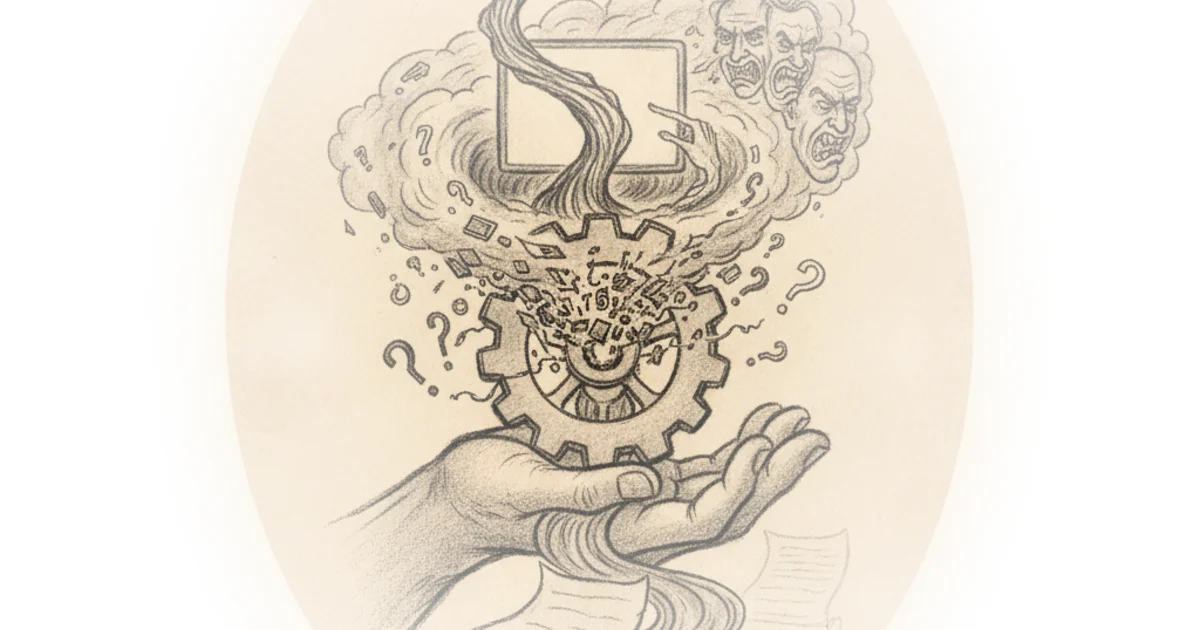
Smith's argument here is compelling because it shifts the focus from abstract fear to textual evidence. He argues that the left's obsession with the "death of privacy" has become a distraction from the reality that "humanity has once again chosen to give their lives over to the machine." Critics might note that this framing risks minimizing the coercive nature of platforms that make privacy opt-out rather than opt-in, but Smith's point stands: the intellectual class has not solved the privacy paradox, and pretending otherwise is unproductive.
Spending my days carefully considering the social downsides of the fact that everyone puts their whole existence online feels like shooting nerf darts at an oncoming freight train.
The Class Enmity Problem
The core of Smith's commentary targets the emotional undercurrent of the anti-tech movement. He suggests that the animosity toward Silicon Valley is less about policy and more about a deep-seated resentment of the wealthy elite. "Henry perceives me as being too trusting of, enamored with, or favorably disposed toward this class of people," Smith observes, before revealing how this perception leads to flawed analysis. He illustrates this by discussing a screenshot used by Farrell that depicted Smith seemingly praising Elon Musk, a context Smith argues was completely missing. "I doubt Henry Farrell actually saw the context of my tweet before he posted it," Smith writes, suggesting that the critic was operating on a preconceived narrative rather than the evidence at hand. This dynamic, Smith argues, is symptomatic of a broader issue where "class enmity toward the techno-industrialists" clouds judgment.
Smith traces this shift to the post-2016 era, where the narrative that social media swung the election turned the left against the industry. He notes that the rise of the "New Brandeis movement" explicitly framed antitrust not as a consumer price issue, but as a fight to prevent companies from "destroying democracy." While this movement failed to win major court victories because "U.S. antitrust law doesn't leave any room for breaking companies up for political reasons," it succeeded in cementing an intellectual legacy of hostility. This historical context is vital; it shows that the current rage is a political construction, not an inevitable reaction to the technology itself.
The Trap of Binary Thinking
Smith's most incisive point is that the anti-tech movement has become a self-fulfilling prophecy of cynicism. He argues that while he agrees that tech giants have caused harm, the solution lies in policy enacted by a democratically elected government, not in a cultural war against innovation. "I've expressed concern about the catastrophic risks associated with AI technology, and devoted a fair amount of thought to AI's potential to cause radical inequality," Smith writes, establishing his credibility before dismantling the straw man of the "techno-optimist." He warns that the current discourse is so entrenched that "if you say this at a lefty policy wonk conference, you will be treated as an enemy of the people." This rigidity prevents a nuanced discussion about how to regulate powerful tools without stifling the very progress that could solve other societal problems.
A counterargument worth considering is that the "class enmity" Smith describes might be a rational response to the sheer concentration of wealth and power in the hands of a few founders. However, Smith's insistence on separating the critique of power from the rejection of technology offers a more constructive path forward. He urges readers to see that the problem is not the technology, but the governance of it.
Bottom Line
Smith's strongest move is exposing the gap between the fervor of the anti-tech critics and the actual content of the books they champion, revealing a debate driven more by class resentment than by policy analysis. The argument's vulnerability lies in its potential to understate the structural incentives that make privacy impossible in the current market, but it succeeds brilliantly in calling for a return to pragmatic, democratic solutions over cultural vitriol. Watch for how this critique influences the next wave of tech policy debates as the administration seeks to balance innovation with regulation.