Brad DeLong dismantles a comforting myth about political discourse: that 'civility' is a neutral virtue shared equally by all sides. In this archival deep dive, he reveals how demands for polite debate often serve as a shield for the powerful to silence dissent, while they themselves feel no obligation to be honest or fair.
The Double Standard of Good Faith
DeLong begins by dissecting Andrew Sullivan's nostalgic recollection of a 'generous spirit' in the public square. Sullivan describes a time when ideological opposites could 'jostle together' and engage in 'crackling and productive' debate before social media fractured everything into 'tribal swarms.' DeLong, however, points out that this nostalgia ignores who was forced to swallow their true feelings to remain at the table.
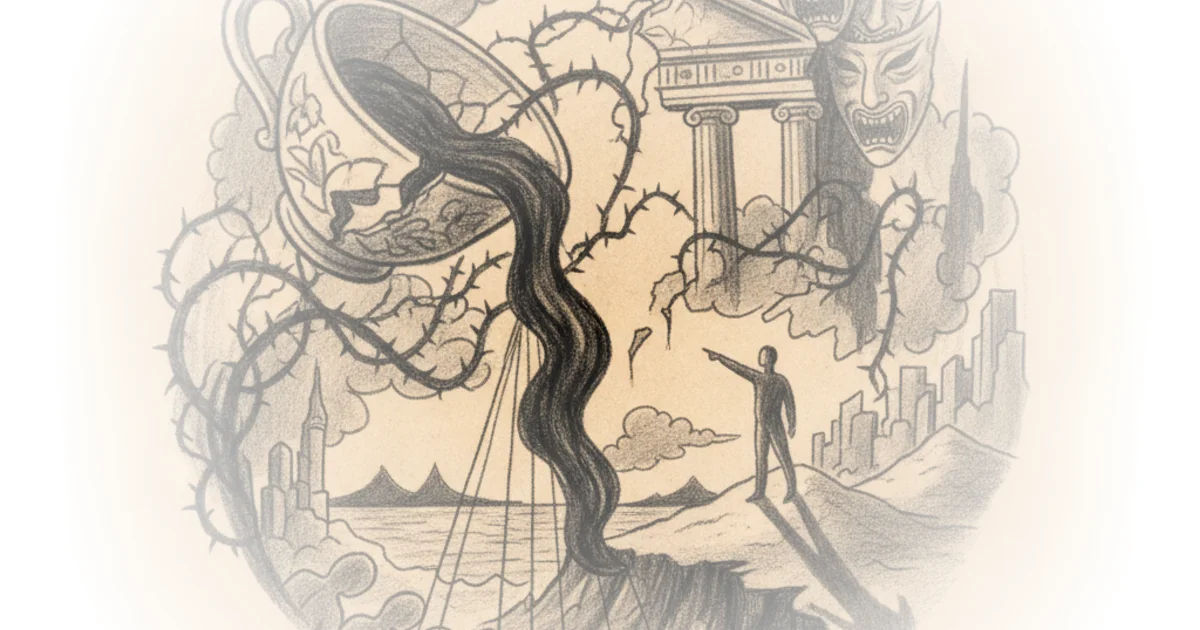
He contrasts Sullivan's rosy view with Ta-Nehisi Coates's experience of that same era. Coates admits he had to learn from men he knew were racist, noting, 'I actually had to take this seriously... I couldn't speak in a certain way to Andrew.' DeLong highlights the brutal reality behind the polite exchange: 'The "civility" and "generosity of spirit" that supported "human to human" conversation is juxtaposed to Coates's "teachers" who didn't see him "completely as a human being."'
This framing exposes a critical flaw in how we remember past political debates. It wasn't that the left became less civil; it was that the terms of engagement were rigged from the start.
What Sullivan depicts as a 'different time' when 'neither of us denied each other's good faith or human worth', is, in Coates's understanding, a time where he was required to 'take seriously' the argument that 'black people are genetically disposed to be dumber than white people' as a price of entry into the rarified heights of conversation.
The Architecture of Strategic Dishonesty
The commentary then shifts to DeLong's most damning evidence: Sullivan's own writings from 2001 regarding the Bush administration. While demanding civility from critics, Sullivan openly celebrated strategic deception by the executive branch. DeLong quotes Sullivan directly on the necessity of obfuscation:
'The fact that Bush has to obfuscate his real goals of reducing spending with the smoke screen of "compassionate conservatism" shows how uphill the struggle is.... A certain amount of B.S. is necessary for any vaguely successful retrenchment of government power in an insatiable entitlement state.'
DeLong argues this proves a consistent pattern: 'Sullivan felt himself under no obligation to be honest or civil back when he thought he was riding high. Rather the reverse.' This connects to broader historical anxieties about internal dissent; just as Sullivan later invoked the specter of a domestic 'fifth column' after 9/11, he had previously treated arithmetic and policy accuracy as secondary to ideological victory.
Critics might argue that political strategy inherently requires some level of spin from all sides. DeLong's counter is sharp: it matters who gets to define what counts as 'spin' versus 'good faith,' and who gets labeled a traitor for pointing out the math doesn't add up.
The Modern Echoes
DeLong fast-forwards to 2026, applying this historical lens to contemporary debates involving Helen Pluckrose. He accuses Sullivan of repeating his old tactics—using 'Vavilovian Philosophical Mimicry' to misrepresent opponents and confuse the public sphere. DeLong writes that when he sees Sullivan paired with the phrase 'good faith,' his mind goes straight to 'easily confused.'
He warns Pluckrose against being 'gullible when Andrew Sullivan or others of his ilk try to pick your pocket again in this way,' noting that while presuming good faith is a liberal glory, it can be weaponized by those who do not reciprocate. The piece serves as a reminder that the 'riptide of tribalism' often flows from one direction: those in power demanding silence from the marginalized while they shout their own strategic lies.
I remember Andrew Sullivan back in 2001... Thus when I see you put the words "Andrew Sullivan" and "good faith" together in the same sentence, the words that come to my mind are "easily confused".
Bottom Line
DeLong's strongest contribution is exposing 'civility' not as a mutual agreement but as a hierarchy of power where the privileged demand silence from the oppressed while feeling free to lie. The argument's vulnerability lies in its focus on individual intellectual history, which may obscure how structural incentives drive dishonesty across the entire political spectrum today.