Sarah Kendzior delivers a harrowing indictment of the international community's failure to halt a campaign of annihilation in Gaza, framing the conflict not as a complex geopolitical struggle but as a deliberate, documented genocide. The piece's most disturbing claim is that the destruction was not an unintended consequence of war, but the stated objective of the Israeli leadership, a truth now acknowledged by world leaders only because the physical evidence of mass death is undeniable. Kendzior argues that the silence of the global powers is not neutrality, but active complicity in a process that has turned an entire population into ghosts.
The Architecture of Silence
Kendzior anchors her argument in the final words of Anas Al-Sharif, a Palestinian journalist assassinated shortly after warning of a full-scale invasion. She writes, "If this madness does not end, Gaza will be reduced to ruins, its people's voices silenced, their faces erased — and history will remember you as silent witnesses to a genocide you chose not to stop." This quote serves as both a prophecy and an accusation, highlighting the fatal cost of documentation in a conflict where the witness is the primary target. The author emphasizes that Al-Sharif was one of 184 journalists killed since 2023, a statistic that underscores a systematic effort to erase the narrative of the victims.
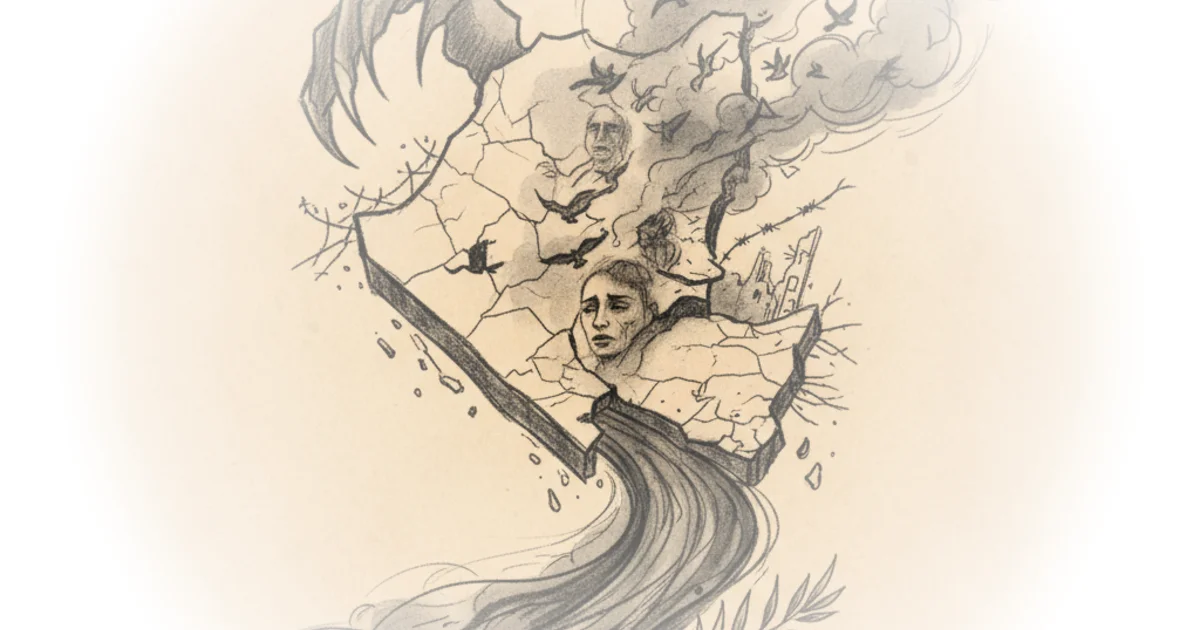
The core of Kendzior's analysis is that the perpetrators themselves laid out the plan in advance, yet the world waited until the devastation was total before expressing concern. She notes that true concern would require stopping the flow of money and arms, a step the United States has consistently refused to take. "Pundits and politicians tell the truth about Israel's genocide because they think truth no longer matters," Kendzior observes, suggesting that the timing of this admission is cynical rather than moral. Critics might argue that the administration faces immense domestic political pressure and security concerns that complicate immediate policy shifts, but Kendzior counters that the sheer scale of civilian death, particularly among children, renders such excuses hollow.
"Hope without deeds is an empty cup that turns, over time, into a poisoned one. It poisons the people who drink it, and it poisons the people who proffer it, as they serve it up again and again."
The Weaponization of Memory
Kendzior expands her critique to the psychological dimension of the conflict, arguing that the destruction of Gaza is as much about erasing collective memory as it is about physical annihilation. She draws on the work of the late poet Refaat Alareer, noting that Palestinian journalists are killed because they "document internal conditions that outsiders deny exist." By framing the conflict through the lens of memory, Kendzior challenges the narrative that this is a new or complex dispute. Instead, she presents it as a continuation of a decades-long strategy where "memory is a primary target."
The author contrasts the advanced weaponry of the Israeli state with the vulnerability of a population that has lived in "caged conditions" since 2007. She writes, "Gazans saw catastrophe coming. They warned the world, and the world shrugged, or in the case of my country, funded the regime attacking them." This framing shifts the blame from the immediate violence to the long-term enablers who provided the resources and diplomatic cover for the assault. The argument is particularly potent because it connects the current slaughter to historical patterns of displacement and erasure, drawing a parallel to the Trail of Tears to illustrate the deliberate nature of the forced migration.
The Failure of American Institutions
Perhaps the most stinging portion of the commentary is its assessment of the United States' role. Kendzior points out that the bipartisan consensus in Washington has been a willingness to "abet genocide," a claim she supports by listing high-profile figures from both major parties who have defended the Israeli campaign. She highlights the contradiction of President Biden's stated "red line" regarding the invasion of Rafah, noting that the line was crossed and the response was merely more funding. "The red line is blood, and all of them — Netanyahu, Biden, Trump, and their operatives — let it run," she writes, using the term "Trump" only to list a name in a sequence of political figures, reframing the focus on the collective failure of the executive branch and Congress rather than any single individual.
The piece also touches on the chilling effect on dissent within the United States, where public figures expressing sympathy for Palestinians face termination or pressure to resign. Kendzior argues that this suppression of speech is designed to maintain the illusion of a "complex" conflict where moral clarity is impossible. "If you cannot recognize the humanity of a child, you have lost your own," she asserts, reducing the debate to a fundamental test of human empathy that the current political leadership has failed. While some might argue that the administration is balancing competing strategic interests in the Middle East, Kendzior's evidence suggests that the cost of this balance is the systematic destruction of a civilian population.
Bottom Line
Sarah Kendzior's commentary is a powerful, unflinching examination of how a genocide is executed in plain sight, sustained by the complicity of the world's most powerful nation. Its greatest strength lies in its refusal to accept the "complexity" narrative, instead presenting the evidence of intent and the scale of child casualties as undeniable proof of a deliberate campaign. The argument's vulnerability is its absolute certainty, which may alienate readers seeking a more nuanced geopolitical analysis, yet the moral clarity it offers is precisely what makes it essential reading for understanding the human cost of the current war.
"The red line is blood, and all of them — Netanyahu, Biden, Trump, and their operatives — let it run."
The most critical takeaway is that the destruction of Gaza is not an accident of war but a calculated outcome of policy, and the silence of the international community has been the most effective weapon in the arsenal of the aggressors.