Natalie Wexler returns from a two-week immersion in Australian classrooms with a startling observation: the country down under is outpacing the United States in applying cognitive science to actual teaching. While American policymakers obsess over phonics, Australian educators are embracing "explicit teaching" and high-pace instruction, a shift that challenges the entrenched American belief that students learn best through discovery. This is not a travelogue; it is a diagnostic of why the U.S. education reform movement is stalling and where the next breakthrough might actually originate.
The Cognitive Science Divide
Wexler's primary thesis rests on a stark contrast in how cognitive science is being operationalized. She notes that while the U.S. has made strides in the "science of reading," the application often stops at decoding skills. In Australia, the conversation has moved further. "Most American education officials and policymakers these days are on board with the 'science of reading,' but what they generally mean by that is 'phonics.'" She argues that this narrow focus misses the broader cognitive imperative: students need a curriculum rich in content to build the background knowledge necessary for comprehension.
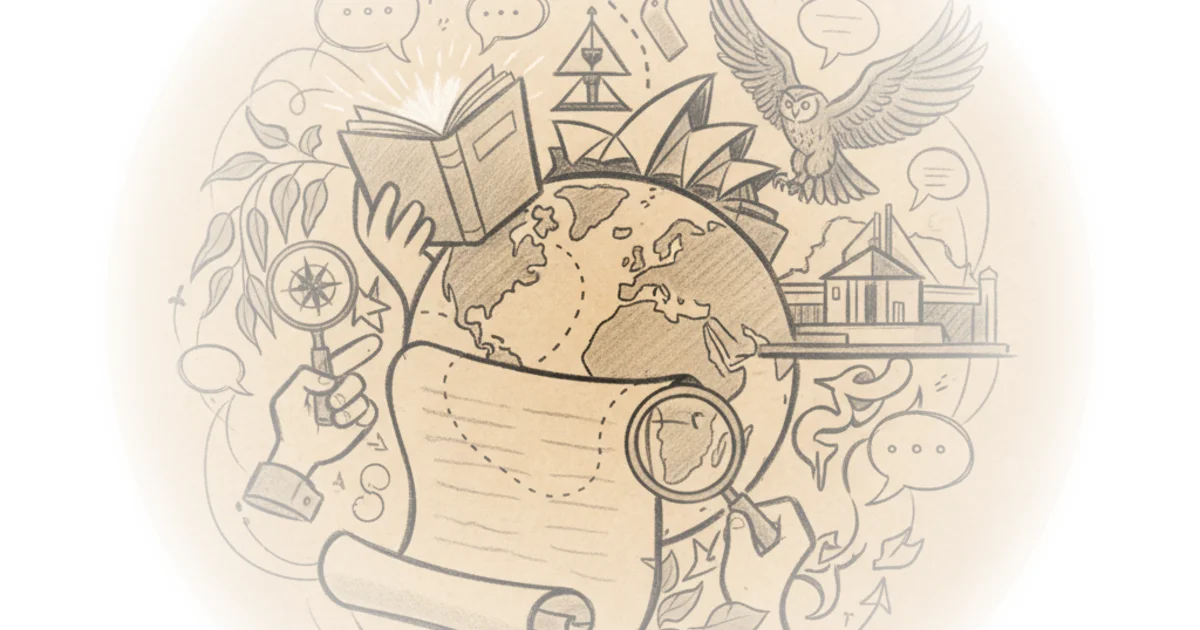
This distinction is crucial because it addresses the root of reading comprehension failure, not just the symptom. As Wexler puts it, "A few states have recognized that cognitive science also says that to enable kids to understand text, you also need a curriculum that is rich in content beginning in the early grades. Few if any states have gone beyond that." The Australian approach, influenced heavily by American theorists like the late Siegfried Engelmann and Anita Archer, seems to have bypassed the American hesitation regarding direct instruction. Wexler observes that these American gurus "have had more influence in Australia than in their home country."
The evidence she presents is visceral. She describes classrooms where teachers maintain a "perky pace," using rapid-fire questioning to ensure continuous engagement. "A teacher might say, for example, 'Freezing means 'really cold,' and then immediately follow that with 'What does freezing mean?'" This method stands in direct opposition to the "longstanding orthodoxy" in both nations that views the teacher as a mere facilitator. Critics might argue that this high-velocity style sacrifices deep critical thinking for rote retention, but Wexler counters that for students with learning challenges or those far behind, this structure is a lifeline. "Kids who previously felt like failures are getting a chance to experience success, and that's crucial."
While the U.S. debates whether to teach phonics, Australia is already mastering the art of explicit, interactive teaching to build knowledge.
The Curriculum Vacuum
However, Wexler identifies a significant structural weakness in the Australian model that the U.S. is only now beginning to address: the lack of high-quality, shared instructional materials. In the U.S., the term "curriculum" implies detailed scripts, texts, and assessments. In Australia, it often means vague standards. "As in the U.S., Australian teachers have often learned during their training that good teachers don't follow a detailed curriculum," Wexler writes, noting the dangerous assumption that teachers can tailor instruction to every student's unique needs without a scaffold.
The consequence of this philosophy is a fragmentation of quality. She cites a survey revealing that "85 percent of teachers don't have access to 'a shared bank of high-quality curriculum materials,'" with teachers in disadvantaged schools being half as likely to have such resources. This creates an inequitable landscape where the burden of translating cognitive theory into practice falls entirely on the individual teacher. Wexler argues this is a recipe for failure: "If they're expected to create science-informed lessons from scratch, they may, despite their best efforts, come up with something that doesn't actually work well."
There is a glimmer of hope in the form of organizations like Ochre, which is providing free, detailed lesson plans online. While the adoption rate is impressive—"92 percent of Australian schools" have signed up in just three years—Wexler remains cautious. She worries that without institution-wide adoption, these resources may only reach one teacher per school, failing to provide the "coherent educational experience that would be optimal for students." This mirrors the U.S. struggle, where districts often adopt "high-quality" curricula that are subsequently ignored or cherry-picked by staff.
The Danger of Extremes
The most nuanced part of Wexler's commentary is her warning against the pendulum swinging too far in the opposite direction. As cognitive science gains traction, there is a risk of overcorrection. "New ideas have a way of getting taken to extremes," she warns. She illustrates this with the phonics debate: "We should teach phonics? Okay, we'll do two hours of it!" or the misapplication of retrieval practice, where students are quizzed on minutiae they cannot possibly remember.
This is where the role of a robust curriculum becomes non-negotiable. Wexler contends that teachers need guidance to translate abstract scientific principles into effective routines. "What they need is guidance from a curriculum put together by someone with the expertise and resources to translate cognitive science into effective routines and practices, with time allocated appropriately." Without this, the very science meant to improve education could be discredited by its poor implementation. "And the risk is that at that point, people may decide that cognitive science itself 'doesn't work.'" This is a vital insight for any reformer: the method is only as good as its execution, and execution requires resources, not just enthusiasm.
Bottom Line
Wexler's strongest argument is that the U.S. is stuck in a theoretical debate while Australia is moving toward a practical, albeit imperfect, application of cognitive science. Her biggest vulnerability lies in her own admission that she did not see enough "elaboration" or open-ended inquiry in the Australian classrooms she visited, suggesting the pendulum may have swung too far toward rote instruction. The reader should watch for whether the U.S. can adopt the Australian model of explicit teaching without losing the American commitment to student-centered inquiry, or if the two systems will continue to diverge. The future of reading instruction depends on finding the balance between the "perky pace" of direct instruction and the deep reflection required for true mastery.