Devin Stone and his colleague, Law by Mike, transform a children's cartoon into a masterclass on courtroom etiquette, revealing that the most dangerous legal mistakes often stem from a lack of decorum rather than a lack of legal knowledge. While the episode of Bob's Burgers is ostensibly about a school mock trial, the commentary extracts a sobering lesson: the perception of a lawyer's professionalism can be as damaging to a case as the evidence itself.
The Cost of Casualness
Stone opens by dissecting the visual cues of the courtroom, immediately zeroing in on the absurdity of the "suit jacket but shorts" look worn by the characters. He notes that while the attire might be "very breathable," it is a strategic error. "The short suit look definitely not gonna fly in court," Stone asserts, emphasizing that judges hold deep-seated biases against casual dress. He paraphrases a viral real-world incident where a defendant wore a stolen sports jersey to court, noting that while it was circumstantial evidence, it created a "very strong" negative impression. The core argument here is that the courtroom is a theater of authority, and failing to respect the stage undermines the client's credibility before a word is spoken.
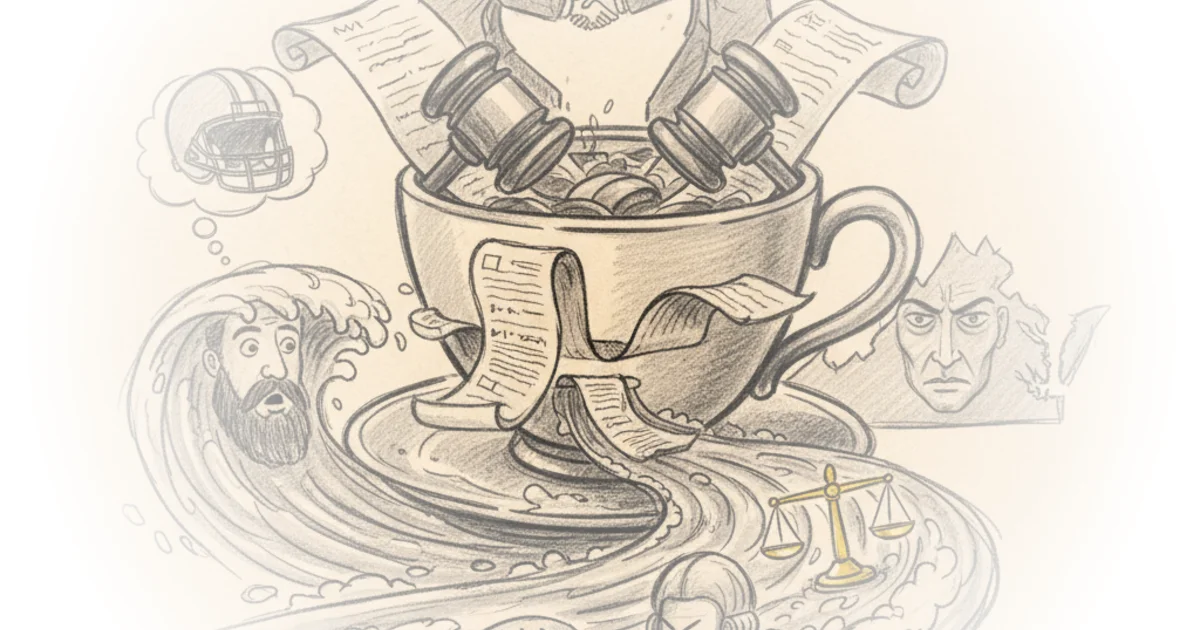
This observation holds up under scrutiny. In high-stakes litigation, the "recency effect" and the judge's first impression are critical. Stone's point that one should "borrow a suit" rather than appear in casual clothes is not just about fashion; it is about signaling respect for the institution. Critics might argue that this advice favors the wealthy or those with access to formal wear, yet the underlying principle remains: the legal system is deeply resistant to informality, and fighting that current is a losing strategy for the average litigant.
Procedural Pitfalls and Ethical Quagmires
The commentary then shifts to the procedural errors committed during the mock trial, specifically the opening statements. Stone highlights a fundamental misunderstanding by the character Louise, who treats her opening as a time to argue rather than to inform. "You're supposed to tell the jury what is going to come out... we save the arguments for closing," Stone explains. This distinction is vital; an opening statement is a roadmap, not a closing argument. When the defense attempts to argue the case immediately, they violate the rules of evidence and procedure.
Stone further explores the ethical implications of the siblings acting as opposing counsel. Under American Bar Association rules, this creates a conflict of interest that requires client consent. "There is a little bit of a concern if you know the other party's lawyer maybe you're going to give some information away," he notes. The commentary also addresses the jury selection issue, where a family member serves as a juror. Stone correctly identifies this as an automatic "challenge for cause," stating, "you definitely can't have a family member on the jury." These points illustrate how easily a mock trial can devolve into a procedural disaster, mirroring real-world cases where ethical oversights lead to mistrials or sanctions.
You gotta laugh really hard like you got it's a funny joke you've ever heard never in my life if I heard anything funny the best joke judge should be a stand-up comedian your honor.
The Art of Cross-Examination and Judicial Decorum
Perhaps the most instructive segment involves the cross-examination of the "Prince Charming" character. Stone critiques the defense attorney's tactic of asking irrelevant, gross questions simply to upset the witness. "I just wanted to upset the witness," the character admits. Stone's reaction is immediate and severe: "if a lawyer admits that that was their purpose they're probably going to be in uh you know some sanction trouble." He clarifies that while lawyers often try to get under a witness's skin, they must never admit to doing so in bad faith. This is a nuanced distinction that separates a skilled litigator from a reckless one.
The commentary also touches on the judge's role. In the cartoon, Judge Conklin makes jokes and lacks filter. Stone advises a conservative approach: "if the judge makes the joke you laughing oh You Gotta Laugh really hard." While this sounds like sycophancy, Stone frames it as a survival tactic. "Let them go off on them," he suggests, implying that challenging a judge's humor can backfire. The analysis suggests that the courtroom is a place where emotional intelligence often trumps legal brilliance. A counterargument worth considering is that this advice reinforces an overly hierarchical view of the judiciary, potentially discouraging necessary challenges to judicial overreach. However, Stone's practical advice remains sound for the vast majority of practitioners.
Bottom Line
Stone's commentary succeeds by using humor to illuminate serious legal principles, proving that the gap between fiction and reality is often bridged by basic courtroom etiquette. The strongest part of the argument is the emphasis on procedural discipline, particularly regarding opening statements and witness examination. The biggest vulnerability, however, is the potential for readers to over-apply the "laugh at the judge" tactic in real-world scenarios where judicial impartiality is already compromised. For the busy professional, the takeaway is clear: in the law, how you look and how you speak often matters as much as what you know.