This piece from PolyMatter cuts through the geopolitical noise to reveal a quiet, catastrophic collapse that no amount of military posturing can fix. While much of the world focuses on tank movements and border skirmishes, the author argues that the most decisive factor in the coming decades will be a demographic implosion driven by alcohol, despair, and a shrinking workforce. It is a sobering reminder that a nation can lose a war of attrition before a single shot is fired, simply because its people are dying faster than they are being born.
The Anatomy of a Demographic Collapse
PolyMatter opens by dismantling the Kremlin's narrative of resilience, using the remote region of Chukotka as a case study in statistical manipulation. The author notes that while the administration celebrates a "net population increase of 157 between 2010 and 2021," this figure represents a mere 14 people per year in a region larger than France. This framing is effective because it exposes the gap between political theater and mathematical reality. The core argument is that this anomaly is not a sign of recovery but an outlier in a sea of decline; between 2010 and 2017, over 70% of Russian cities actually shrank.
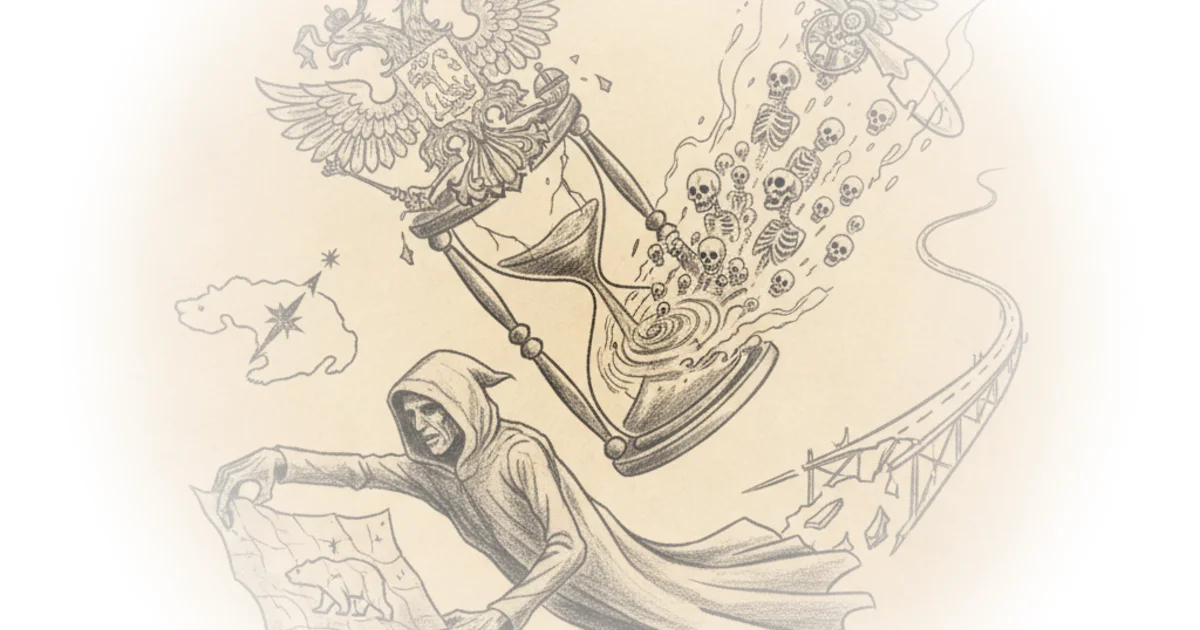
The piece then pivots to the structural causes, contrasting Russia's trajectory with that of other developed nations like Italy and Japan. In those countries, lower birth rates are a "human victory" born of female empowerment and economic stability. In Russia, however, the drop was a reaction to "hard times, mass unemployment and a general sense of uncertainty and despair." This distinction is crucial. It reframes the demographic crisis not as a modern lifestyle choice, but as a symptom of systemic failure. As PolyMatter puts it, "deaths have remained High ever since... this is The Bleak story of a Nation being squeezed simultaneously from two directions fewer births and more deaths."
The annual number of deaths more than doubled during the 30 years when HIV treatment, ICUs and organ transplants became widely available.
The Vodka Paradox
The most compelling section of the analysis dissects the role of alcohol, moving beyond stereotypes to examine the lethal mechanics of consumption. PolyMatter argues that the issue is not just quantity, but the specific culture of binge drinking on vodka, which leads to a "roughly 25 to 30% chance of dying one way or another" for Russian men. The author highlights a tragic historical irony: the Soviet Union effectively ran on vodka, with the tax revenue funding a quarter of the government's budget.
When Mikhail Gorbachev attempted to curb this epidemic, the crackdown worked immediately, raising life expectancy by over three years in men. However, the state lost 28 billion rubles in revenue, a deficit that contributed to the economic collapse of the Soviet Union. This creates a perverse incentive structure that persists today. The author points out that during the 2014 economic downturn, the finance minister explicitly stated that "The Best Thing ordinary citizens could do to help the economy was drink more." This reveals a government trapped in a cycle where public health is sacrificed for short-term fiscal survival.
Critics might argue that focusing so heavily on alcohol ignores other factors like poor healthcare infrastructure or environmental issues. While these are significant, PolyMatter's data on weekend spikes in heart-related fatalities and the specific lethality of vodka culture provides a more direct causal link to the demographic crash than general malaise.
The Cost of Conflict and Exodus
The commentary concludes by connecting these demographic trends to the current geopolitical reality. The administration's decision to prioritize military spending over healthcare has exacerbated the crisis. With hospitals ranked last in efficiency among 55 countries and a vaccination rate lower than the lowest US state, the population is uniquely vulnerable. The war has accelerated the loss of the very demographic needed to sustain the economy: young, educated workers.
PolyMatter notes that while only 29% of the population holds a passport, those leaving are disproportionately the "young, wealthy, well educated and have skills." The loss of 100,000 software engineers alone threatens to dismantle the technology sector. The author sums up the situation with a chilling prediction: "Russia has a serious problem. It's running out of people."
In 2020 and 21 its population declined by over a million and the worst may still be Yet to Come.
Bottom Line
PolyMatter's strongest asset is its ability to synthesize decades of demographic data into a clear, terrifying narrative that explains why the current conflict is unsustainable. The argument's greatest vulnerability lies in its assumption that the state has no capacity to adapt; authoritarian regimes have historically found ways to delay demographic collapse through coercion and propaganda, even if they cannot solve the root causes. However, the sheer scale of the "Russian cross"—where deaths vastly outpace births—suggests that no amount of political will can reverse a trend this deep without a fundamental shift in the nation's relationship with its own people.
The Soviet Union at the time truly ran on vodka, and the tax revenue from which funded 25% of the government's budget, creating a perverse incentive where the state's survival depended on its citizens' demise.