This roundup from Mona Mona does not merely list philosophical texts; it curates a crisis of meaning in an era where institutional trust is fracturing and the very concept of work is being dismantled. The collection's most startling claim is that the era of traditional employment is not just ending, but that its demise should be welcomed as a necessary liberation from an inherently ableist structure. Mona Mona frames this not as economic despair, but as an ontological shift where the "silent vocation" becomes the only authentic way to live a rich life in a collapsing world.
The End of Work and the Rise of the Silent Vocation
Mona Mona weaves together disparate voices to argue that the modern workplace is no longer a site of human flourishing. Citing the piece "The era of jobs is ending : As it fucking should," the author highlights a radical rejection of the status quo. "As it fucking should," the text asserts, stripping away the polite euphemisms often used to discuss economic displacement. This blunt framing forces the reader to confront the possibility that the current labor market is not a broken machine to be fixed, but a failed experiment to be abandoned.
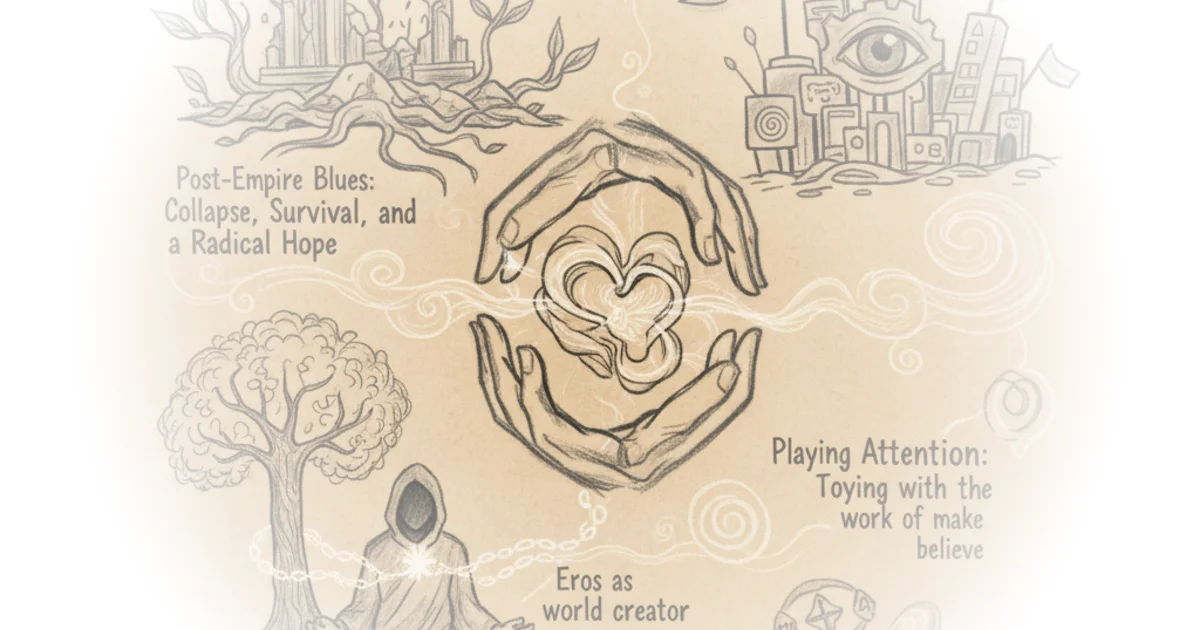
The commentary suggests that in the absence of traditional roles, individuals must find meaning elsewhere. Mona Mona points to Julian de Medeiros's exploration of the "silent vocation" as a counter-narrative to the noise of productivity. "How having a 'silent vocation' can be a way to live a rich life," the author notes, reframing the concept of purpose away from external validation. This is a compelling pivot; it suggests that the loss of the "job" is actually the recovery of the "vocation." However, critics might note that this philosophical liberation is a luxury not available to those whose survival depends on immediate wages, potentially romanticizing poverty for the privileged.
The era of jobs is ending, and perhaps that is the only good news we have left.
Power, Policy, and the Shadow of Authoritarianism
The roundup does not shy away from the geopolitical realities shaping this philosophical shift. Mona Mona draws attention to a stark analysis of the current administration's National Security Strategy, asking, "America has identified its greatest enemy: Western Europe." This provocative framing challenges the traditional narrative of the transatlantic alliance, suggesting a deep fracture in the geopolitical order. The author connects this to the rise of extremist figures, noting the "platforming of extremism" and the commodification of free speech.
Mona Mona writes, "Nick Fuentes and the Platforming of Extremism: Free Speech as Commodity Fetishism," arguing that the digital sphere has turned radicalization into a marketable product. This analysis is crucial because it moves beyond the personality of specific actors to examine the structural incentives of the information ecosystem. The piece further contextualizes this with a conversation with Ammiel Alcalay, who warns, "We're all heading to Gaza…That's the model for the world." This statement, placed alongside discussions of genocide and the unraveling of universities, creates a terrifying continuity between foreign policy and domestic decay.
The author effectively links the "Sovereign Decision" in crisis politics to the "permanent governance" of emergency powers. "A Sovereign Decision: How Crisis Politics Became Permanent Governance," Mona Mona summarizes, showing how the state uses perpetual fear to consolidate control. This framing is effective because it explains why the public feels a sense of exhaustion; the crisis is not a temporary event but the operating system of the state. Yet, one might argue that this view of permanent crisis risks inducing paralysis rather than inspiring the "radical hope" mentioned in other sections of the roundup.
The Human Cost of Abstract Theory
Amidst the high-level theory, Mona Mona ensures the human cost remains central. The inclusion of "Political Violence and the Other" and the discussion of "Liberation From Illness" grounds the abstract in the visceral. The author notes that "capitalism is inherently ableist," a claim that reframes economic policy as a form of bodily violence. "Why capitalism is inherently ableist : Part 1: the roots and the structure," the text argues, connecting the structure of the economy directly to the exclusion of disabled lives.
Mona Mona also highlights the tension between digital media and traditional art history, asking, "Why do so many art historians ignore digital media technology?" This question serves as a metaphor for the broader disconnect between institutional knowledge and the lived reality of the digital age. The roundup suggests that ignoring these shifts is a form of intellectual blindness that mirrors the political blindness of the administration. As Mona Mona puts it, the "mirror-self" obsession is a symptom of a society losing its grip on reality.
We are witnessing the unraveling of the institutions that once held our collective sanity together.
Bottom Line
Mona Mona's curation succeeds by refusing to separate philosophical inquiry from the brutal realities of policy and violence. The strongest part of this argument is its refusal to offer easy comfort, instead presenting the collapse of the job era and the rise of authoritarianism as interconnected phenomena that demand a radical rethinking of human purpose. Its biggest vulnerability lies in the potential for its radical hope to feel abstract to those currently facing the immediate material consequences of these systemic failures. The reader should watch for how these philosophical frameworks translate into concrete political action in the coming months, as the gap between theory and survival narrows.