Kings and Generals delivers a chilling revelation about the Soviet Union's darkest blind spot: a republic so neglected that a catastrophic earthquake was met with state-enforced silence rather than aid. While most histories focus on the grand narratives of Moscow or the Baltic states, this piece argues that Turkmenistan's isolation created a unique pressure cooker of tribal loyalty and religious undergrounds that survived decades of Soviet modernization attempts.
The Architecture of Neglect
The narrative begins by dismantling the myth of uniform Soviet progress. Kings and Generals writes, "Essentially forgotten by the politburo, it remained at the bottom of the priority list. And for Stalin at all, it was evidently easier to postpone their efforts to rejuvenate the republic for as long as possible." This framing is crucial; it suggests that the republic's later authoritarianism was not an inherent cultural trait but a direct result of being abandoned by the center. The coverage highlights the 1948 Ashkhabat earthquake not just as a tragedy, but as a turning point where the state's indifference became lethal.
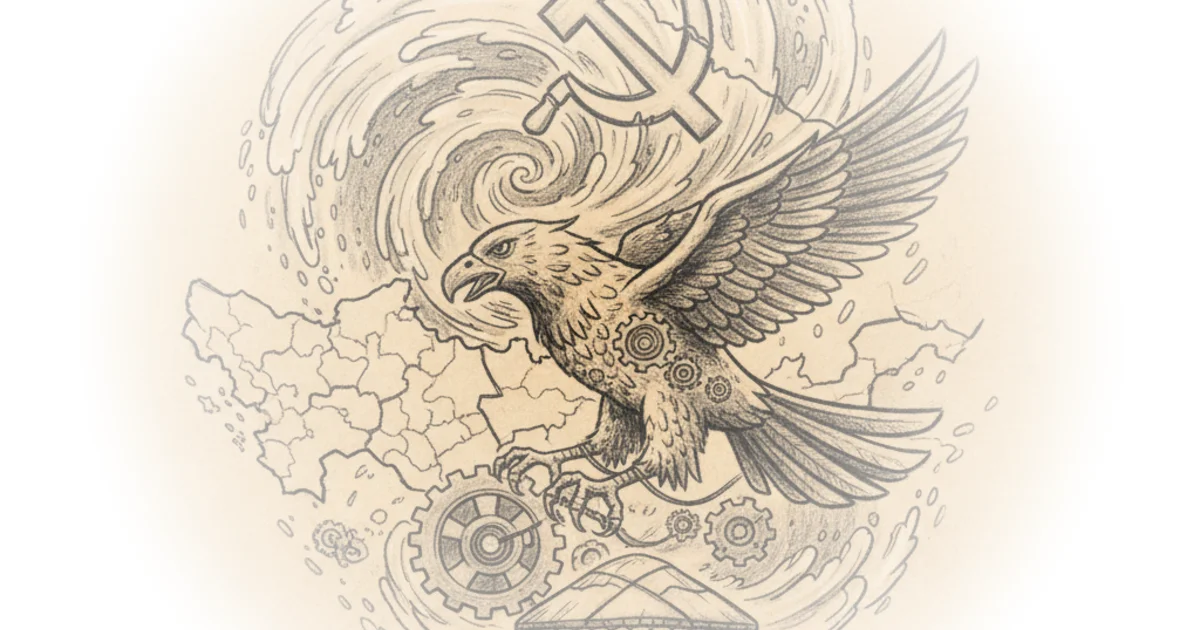
The authors emphasize the scale of the cover-up, noting that "rather than pooling all of its resources together to provide aid or calling for international assistance, the politburo instead heavily censored the event, no doubt contributing to the enormous death toll of as many as 100,000 people." This statistic is staggering—the loss of 10% of the entire population in a single day. Kings and Generals argues that this trauma fundamentally altered the social contract, creating a vacuum where the state could not be trusted. As they put it, "The physical destruction and the loss of life in the Ashkhabat earthquake stunted development in the Turkman Republic for decades." This evidence holds up well against historical records of Soviet censorship, though one might argue that the sheer scale of the disaster made any recovery impossible regardless of political will.
The physical destruction and the loss of life in the Ashkhabat earthquake stunted development in the Turkman Republic for decades.
The Illusion of Modernity
The piece then pivots to the post-war era, exposing a stark contradiction: economic boom in the energy sector versus social stagnation in the cultural sphere. Kings and Generals points out that while gas production "ballooned to 60 billion cubic meters accounting for 60% of Turkmenistan's entire GDP," the social fabric remained untouched by Soviet ideology. The authors argue that the state failed to create a unified national identity, noting that "many characteristics of what the Politburo considered backwardness, namely tribalism and Islam, proved basically impossible to overcome."
This is a sophisticated observation. The coverage explains that the Soviet policy of "stability of cadres" backfired, turning informal networks into survival mechanisms. As the authors explain, "in a political and economic environment in which the party had the monopoly over power and the allocation of resources they turned into valuable strategies of survival." This insight reframes corruption not as a moral failing, but as a rational adaptation to a broken system. Critics might note that the piece leans heavily on the idea of "parallel Islam" without fully exploring how the state attempted to co-opt religious structures before they went underground, but the core argument about the resilience of tribal identity remains compelling.
Kings and Generals writes, "The fact of the matter was that social and cultural developments significantly lagged behind not just the rest of the USSR, but also its neighboring Central Asian republics." This lag is presented as the fertile ground for the rise of Saparmurat Niyazov. The narrative suggests that the republic's isolation allowed a specific type of leadership to emerge—one that could exploit the gap between Moscow's decrees and local reality.
The Rise of the Turkmenbashi
The final section connects the historical neglect to the personal tragedy of Niyazov, whose family was decimated by the 1948 earthquake. Kings and Generals notes, "Already then we can see how the Turkmen SSR's tragic history left a lasting mark on Niyazov's life." This biographical detail is used to explain his later megalomania, suggesting that the loss of his family to state negligence fueled a desire for absolute control. The authors describe his initial rise as unremarkable, stating, "Even his Brezhnev-like look resembled that of an ordinary party official of the 1970s rather than that of a leader."
However, the commentary takes a sharp turn when analyzing his reaction to the late Soviet reforms. The piece argues that Niyazov's denial of the economic crisis was a fatal miscalculation. Kings and Generals writes, "As a staunch ally of Gorbachev and supporter of Perestroika, he failed to see the reality around him, announcing at a conference on April 28th, 1989 that there were no socioeconomic issues in Turkmenistan." This disconnect between the leader's rhetoric and the population's suffering led directly to the 1989 riots. The coverage effectively illustrates how the administration's refusal to acknowledge local realities eventually sparked the very unrest they sought to prevent.
Bottom Line
Kings and Generals successfully reframes the history of Soviet Central Asia by centering the narrative on the consequences of state abandonment rather than just ideological failure. The strongest part of the argument is the link between the 1948 earthquake cover-up and the subsequent entrenchment of tribal and religious networks as the only reliable sources of social order. The piece's biggest vulnerability is its reliance on the "parallel Islam" concept as a monolithic explanation for resistance, potentially oversimplifying the diverse motivations of the populace. Readers should watch for how this historical isolation continues to shape the region's geopolitical strategy today, particularly regarding energy independence and border security.