In a landscape often dominated by policy debates and border statistics, Wayfare offers a startlingly intimate counter-narrative: that the migration crisis is not merely a logistical or political failure, but a profound theological event waiting to be witnessed. The piece argues that the true "borderlands" are not just geographic lines on a map, but the liminal spaces where human suffering forces a confrontation with the divine. For the busy reader seeking depth over headlines, this is a rare invitation to see the crisis not through the lens of security, but through the ancient, enduring language of lament and radical hospitality.
The Theology of the Border
Wayfare reframes the entire migration discourse by suggesting that the act of moving is inherently spiritual. The piece posits that "Borders are places of revelation," a claim that immediately shifts the reader from a mindset of containment to one of discovery. Jenny Richards, a contributor to the collection, grounds this abstract idea in the visceral reality of Mexicali, a city born of "international friendship" yet defined by the physical barrier that now divides it. The article suggests that reflecting on migration requires an "inner journey into the human heart," arguing that the migrant's outer struggle mirrors the soul's own search for safety.
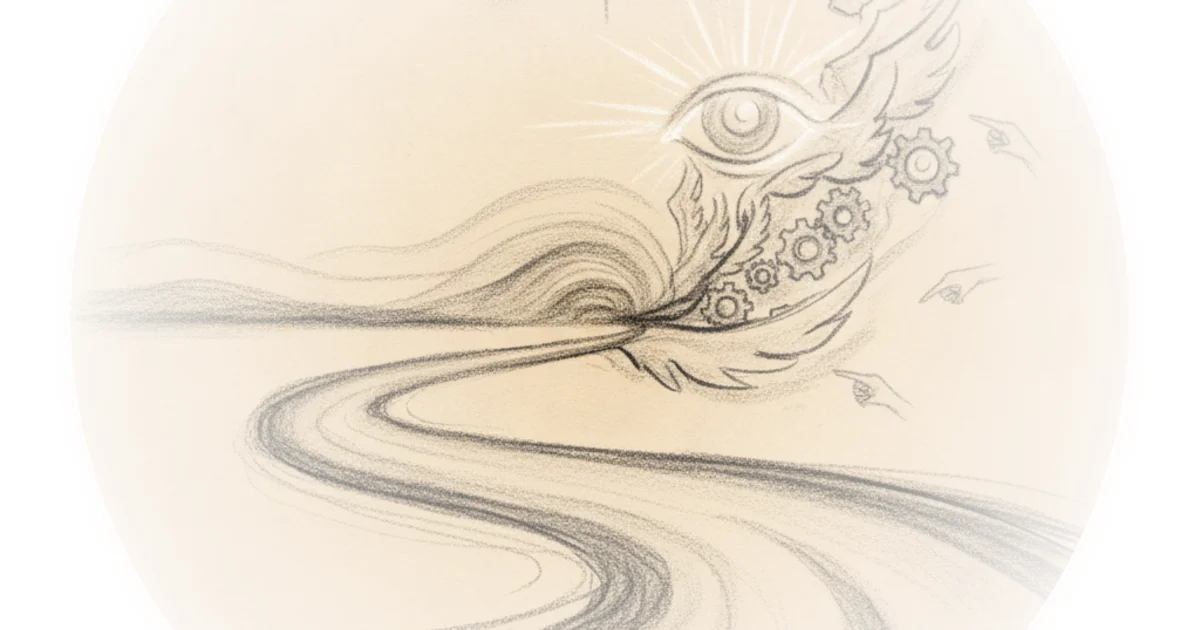
This theological framing is potent because it refuses to reduce the migrant to a problem to be solved. Instead, Wayfare notes that the migrant experience can become a "sacred text" for those willing to read it. The piece draws a powerful parallel between modern refugees and the biblical "forced migrant-Psalmist" who lamented beside the rivers of Babylon. Just as the ancient exiles wept for a home they could not reach, today's refugees seek relief from violence while yearning for belonging. This connection to Psalm 137, a historical text of exile, adds a layer of deep time to the current crisis, reminding us that the cry of the displaced is a recurring human chorus, not a modern anomaly.
"The outer journey of a migrant—leaving behind the familiar, facing uncertainty, and seeking a place of safety, security, and rest—mirrors the inner journey of the soul in profound ways."
However, the piece does not shy away from the brutal mechanics of the current system. It details the reliance on the CBP One app, a digital gatekeeper that the administration uses to manage asylum claims. The narrative captures the sudden, unexplained shutdown of this app, leaving families in a state of suspended animation. While the article focuses on the spiritual toll, it implicitly critiques the bureaucratic fragility that leaves vulnerable people in limbo. Critics might argue that spiritualizing the crisis risks obscuring the need for concrete policy reform, but the piece insists that the two are inseparable: the "sacred text" of migration demands a "pastoral response rooted in love, justice, and inclusion."
The Architecture of Lament
The coverage moves from the theoretical to the deeply personal as it describes the Posada Del Migrante, a shelter painted pink with a sign reading "amor, esperanza y caridad" (love, hope, and charity). Wayfare describes the atmosphere as "heavy and somber," a place where the "terrors of death have fallen on me" become a shared reality. The piece vividly recounts the moment a mother, told there is no path forward for her family, doubles over in the courtyard, her grief echoing the words of Psalm 55. This is not a sanitized version of suffering; it is raw, audible, and overwhelming.
The article highlights the work of Sister Suzanne Jabro and Border Compassion, an all-volunteer nonprofit that has transformed a community meal into a sanctuary for hundreds. Yet, the piece is clear that these shelters are "temporary accommodations, not as permanent dwellings." They offer a "thin line of protection" against a system that often feels designed to exclude. The emotional weight of the narrative comes from the contrast between the children's resilience—playing Connect Four with invented rules—and the crushing knowledge that they are "not in school" and cannot leave the "iron-clad place."
"These women, pushed to the edge of their human vulnerability... are experiencing not only physical homelessness, but legal homelessness, cultural homelessness, and social homelessness."
The editors of Wayfare use this setting to explore the concept of "lament" as a gift of grace. They argue that just as the Psalmist was not afraid to speak to God about "sadness, devastation, injustice, anger, and grief," the migrants are naming their pain and finding a voice in it. This section challenges the reader to view the act of weeping not as a sign of defeat, but as a form of holy labor. The piece suggests that the divine is present in this pain, "crossing the border from heaven to earth in order to succor his people."
The Subversive Table
Perhaps the most striking argument in the piece is its reimagining of hospitality. In a moment of profound vulnerability, the women at the shelter insist on serving the visitors. Wayfare describes this as a "radical hospitality" where the "last shall be first and the first shall be last." The article posits that by offering food and breaking bread, the disenfranchised are exercising agency in a world that has stripped them of power. This scene, described as a "Eucharistic bending of time," flips the traditional power dynamic: the guest becomes the host, and the host becomes the guest.
The piece connects this moment to the ministry of Jesus, who was known for eating with the "rejected of the world" and abolishing "hierarchies, legalistic purity codes, and power dynamics." The narrative suggests that the table at the shelter is a place where "divine leveling" occurs, where the rules of the border are suspended in favor of human connection. The inclusion of a game of musical chairs and a piñata at the end of the day serves as a poignant reminder of the joy that persists even in the shadow of exile.
"In choosing to offer me hospitality, these women are exercising a form of agency in the midst of their powerlessness."
A counterargument worth considering is whether this focus on individual acts of kindness distracts from the systemic forces that created the crisis. While the piece acknowledges the "critical need" filled by the shelter, it does not deeply analyze the geopolitical or economic drivers of migration that put these families in this position. However, the editors seem to argue that the spiritual and human response is the necessary precursor to any lasting political solution.
Bottom Line
Wayfare's "The bend in the road" succeeds by refusing to let the reader look away from the human cost of migration, framing the crisis as a spiritual imperative rather than a political inconvenience. Its strongest asset is the seamless weaving of ancient scriptural lament with the immediate, visceral reality of the borderlands, creating a narrative that feels both timeless and urgent. The piece's greatest vulnerability is its reliance on a theological framework that may not resonate with secular policymakers, yet it effectively argues that without a shift in the human heart, policy alone will never resolve the suffering of the displaced.