In an era where digital writing is increasingly homogenized by algorithmic demands and SEO-driven templates, Justin E. H. Smith mounts a fierce, idiosyncratic defense of the unedited self. He argues that the very imperfections readers often demand to be scrubbed away are actually the only proof of genuine human presence in a sea of artificial content. This is not merely a complaint about grammar; it is a philosophical stance on the nature of authorship, memory, and the irreducible singularity of a life lived.
The Rejection of the Lacquered Table
Smith begins by dismantling the common readerly complaint that his work "could use an editor." He reframes this criticism not as a plea for clarity, but as a demand for conformity to a specific, sterile style of online discourse. He writes, "Imagine an arrangement in which painters, even the most distinguished of them, were expected to tolerate some guy standing over their shoulder, a 'painting editor' let us call him, who constantly butts into the artist's creative process to say, 'You could maybe use a bit more ochre here? Perhaps some lighter brushstrokes there?'" This analogy effectively exposes the absurdity of applying industrial quality control to the messy process of human thought.
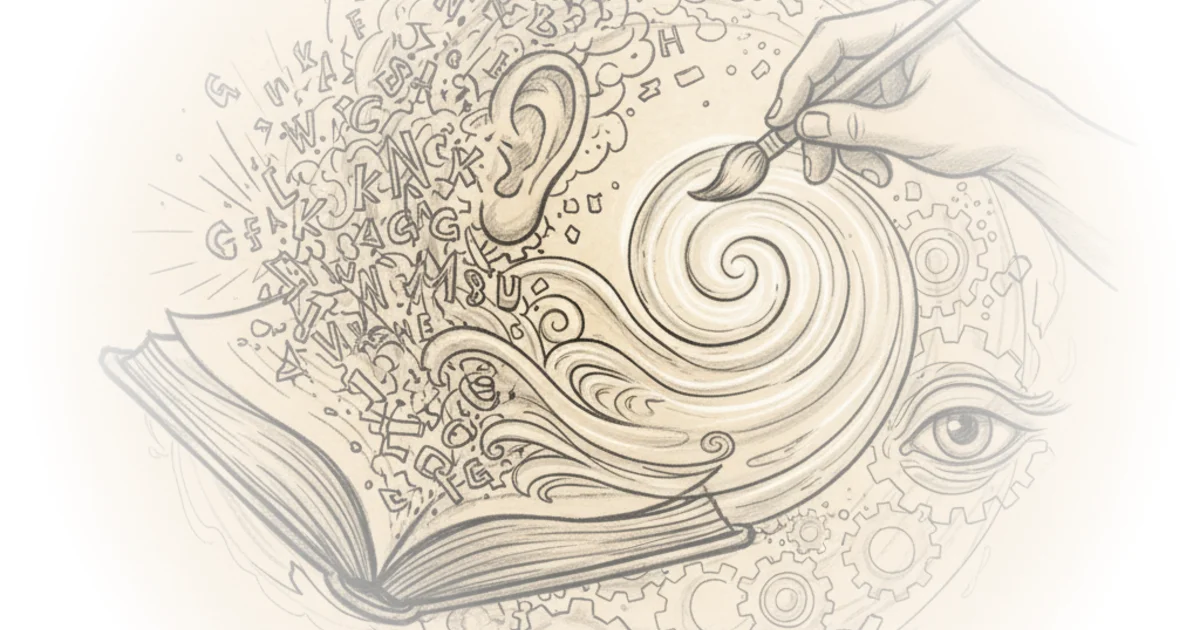
He contrasts the polished, "glistening lacquered teak table" of publications like The New Yorker with his own preference for "bumpier and knottier" prose, akin to the "live-edge furniture" delivered to Harper's. While The New Yorker has earned a reputation for perfection, Smith notes that even their transition to digital platforms revealed cracks in that facade, citing their first-ever misuse of the diaeresis on Substack. He argues that the demand for an editor often comes from readers who are unfamiliar with the "divagatory essay as a legitimate and valued genre of writing with a very long history." Critics might note that this defense risks romanticizing sloppiness; there is a genuine difference between stylistic idiosyncrasy and a failure to communicate. However, Smith's point is that the current internet standard has conflated the two, treating any deviation from the "SEO-tailored, conveniently bullet-pointed" style as a failure rather than a feature.
The transcription no more needs an editor than life itself does. It's nature, not furniture. It's filled with grubs and owls and all sorts of other surprises.
Smith extends his critique to the desire for "white-paper" style writing that mimics the output of artificial intelligence. He suggests that those who claim to dislike AI writing often paradoxically want human writing that duplicates the sterile, impersonal tone of a corporate report. He writes, "These same people likely claim to dislike AI writing, but what they really want is human writing that duplicates, to the extent we imperfect beings are capable of it, the 'white-paper' style of the sort you will see if, say, purely theoretically, you are an IT guy in Hyderabad and you go to ChatGPT and ask it: 'How might new and emerging technologies be mobilized to secure perpetual peace?'" This observation cuts to the heart of the current anxiety about AI: the fear is not just that machines will write, but that humans will voluntarily surrender their unique voice to sound like machines.
The Fingerprint of the Soul
The argument shifts from the aesthetic to the existential, as Smith posits that errors and idiosyncrasies are actually the "fingerprint or iris scan of the author's soul." He draws a parallel to the historical figure Elias Canetti, whose own sprawling, encyclopedic works embraced digression and complexity, to suggest that the "human hapax"—a singular, irreproducible occurrence—is the true value of writing. Smith writes, "The point of reading is to get something like a 'ticker-tape of the unconscious' of the author... something singular, irreproducible, and utterly AI-proof." This framing is powerful because it elevates the act of reading from information consumption to a form of intimate connection with another consciousness.
He admits to his own "peculiar psychological glitch" where he often publishes drafts that need proofreading, only to correct them later in the digital version. Rather than hiding these errors, he embraces them as "insects fossilized in amber," evidence of the living process of creation. He notes that even the confusion surrounding his hyphenated name, which he changed to honor his spouse, serves as a reminder of his "illegible foreigner" status, stripping away the "hegemonic" ease of being a simple "Smith." This personal detail grounds his philosophical argument, showing that the struggle for identity and clarity is ongoing and deeply human.
The Legacy of a Singular Voice
The piece takes a poignant turn as Smith connects his defense of the unedited self to the recent death of his stepfather. He describes his stepfather's humor as a "singular" and "utterly unrepeatable" force, much like the unique voice of an essayist. He recounts how his stepfather, a man with a "Borscht Belt" sense of humor, would invent wordplay that was often "painful" and "mediocre," yet essential to their family dynamic. Smith writes, "When my mom brought home a bag of 'pearl barley' to cook for dinner, he would pretend to read it as 'Pearl Bailey' and say: 'She was great in Hello, Dolly!'" These anecdotes illustrate the value of the imperfect, the groan-worthy, and the spontaneous.
Smith suggests that the vocation of the writer is driven by an "anxiety before death," a desire to ensure that the world is left with an accurate transcript of who we were. He writes, "Writing is therefore selfish, obviously, but in its more honorable ramifications it can, sometimes, grow to encompass the irreducible singularity of the other people in a writer's life." This connects back to his earlier point about the "divagatory essay": just as his stepfather's rambling jokes were a unique expression of his character, so too is the unpolished essay a unique expression of the writer's mind. The "grubs and beetles" in the text are not errors to be removed, but the very things that make the text alive.
Bottom Line
Smith's defense of the unedited essay is a compelling, if polarizing, reminder that the value of human writing lies in its imperfections and its capacity to reveal the unconscious. While the argument may struggle to convince readers who prioritize pure utility or clarity above all else, it successfully reframes the "messiness" of writing as a feature, not a bug. The piece's greatest strength is its ability to link the aesthetic choice of leaving errors in the text to the profound human need for connection and immortality, making a strong case that in an age of AI, the only thing that truly matters is the singular, unrepeatable voice of the author.