In an era where China's universities are celebrated for their rising output in global science rankings, Zichen Wang delivers a stinging counter-narrative: the system's apparent success masks a deep, systemic rot that has suffocated the very spirit of higher learning. This piece is notable not just for its eulogy of Liu Daoyu, the late president of Wuhan University, but for using his life as a mirror to reflect the current stagnation of Chinese academia, arguing that the country has built world-class facilities for world-class students, yet failed to build world-class institutions for them.
The Oasis That Vanished
Wang frames Liu Daoyu not merely as a former administrator, but as the last of a dying breed of educational idealists who viewed the university as a community of scholarship rather than a bureaucratic outpost. The author highlights Liu's tenure in the 1980s, a period Wang describes as Wuhan University's "golden years," where reforms like credit systems and flexible major transfers were implemented with a boldness that is now unimaginable. "Liu placed the development of students' individual potential—rather than ideological conformity—at the centre of the university's mission," Wang writes, noting that this approach briefly turned the campus into an "academic oasis: open, restless, inventive."
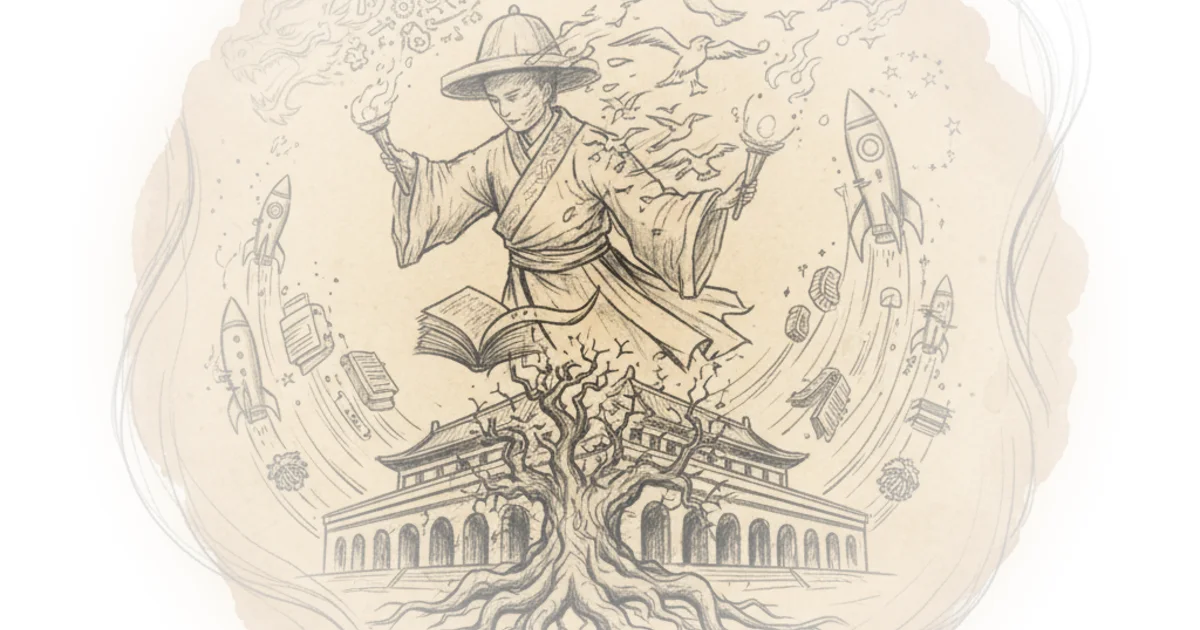
The commentary here is sharp because it contrasts the tangible achievements of the past with the rigid present. Wang points to a specific, telling anecdote: a law student running against an approved list of candidates in a grassroots election and winning with over 7,000 votes, a moment of "civic possibility" that Liu quietly supported. This story serves as a powerful historical anchor, reminding readers that the suppression of such agency was not always the default state of Chinese higher education. It echoes the spirit of the 1977 restoration of the national college entrance examination, an event Liu helped organize, which once signaled a reopening of intellectual life after the Cultural Revolution. That the same system now views such student autonomy with deep suspicion marks a profound regression.
Freedom is the soul of education. Students could skip class, choose majors, skip grades, grow long hair, dance, and fall in love.
Wang argues that Liu's firing in 1988 was the inevitable price paid by an idealist in a system that prioritizes order over dissent. The author suggests that Liu's subsequent transformation into a "moral irritant"—a public critic who had "nothing left to lose"—was perhaps more impactful than his time in office. This reframing is effective; it shifts the focus from the tragedy of his removal to the resilience of his voice. As Wang puts it, Liu became a reminder that "a university is not a ministry, a campus is not a garrison, and education is not the manufacture of obedient functionaries."
The Bureaucratic Straitjacket
The piece moves from biography to a structural critique, drawing heavily on Liu's 2010 book, The Woes of China's Higher Education. Wang synthesizes Liu's argument that the current educational leadership is trapped in the logic of a planned economy, where "education officials" overshadow "educators." The author quotes Liu's frustration with the "official-centrism" that pervades the system, where scholars are incentivized to become officials, and power is hoarded rather than delegated. "Why, after 20 years of reform and opening up, is the Ministry of Education still stuck at the level of the planned economy?" Wang asks, channeling Liu's indignation.
This analysis holds weight because it identifies the root cause of the stagnation: the conflation of academic authority with political rank. Wang notes that the system fears "professor governance" and "student self-government," viewing them through the lens of political control rather than educational efficacy. The author draws a parallel to the ancient Confucian idea that "the best scholars should become officials," suggesting this mindset has evolved into a modern pathology where "being an official" symbolizes identity and power, leading officials to "use it fully and enjoy their authority" rather than empower educators. Critics might note that the central government has recently introduced initiatives to reduce administrative burdens on researchers, but Wang's argument suggests these are superficial tweaks that fail to address the fundamental lack of institutional autonomy.
I wish I could help, but I can't. Write what you can; omit what you cannot. You cannot lose your job. I have nothing to lose.
Wang highlights Liu's emotional admission in a 2015 interview, where he lamented his inability to effect change compared to his earlier freedom. This quote underscores the tragedy of the current climate: the space for independent thought has shrunk so drastically that even a former insider feels powerless. The author contrasts this with Liu's belief that leadership should focus on "offering ideas and using cadres," a principle of "governing by doing nothing" that has been abandoned for micromanagement. Wang argues that the Ministry of Education should shift from a controlling function to a service function, citing the United States as an example where federal oversight is minimal, allowing local initiative to flourish. This comparison is provocative, challenging the assumption that a centralized, top-down approach is necessary for China's educational success.
The Unanswered Question
The piece concludes by elevating Liu's passing from a personal loss to a national reckoning. Wang writes that Liu's death feels larger than the death of an individual because he represented a generation that believed a university should "liberate the mind, not patrol it." The author leaves the reader with a haunting question posed by Liu's life: "China has world-class students. Liu Daoyu spent his life asking whether the country would build world-class universities for them."
This framing is the piece's most powerful element. It forces the reader to look past the impressive statistics of the Nature Index and the success of Chinese-trained talent in American labs. The author suggests that the current system is manufacturing credentials rather than cultivating character, a distinction that Liu spent his life defending. "His voice is now silent. His question is not—even if those students are already changing the world," Wang writes, implying that the future of Chinese innovation may depend on whether the system can rediscover the spirit of the 1980s or if it will remain a "bureaucratic outpost."
China has world-class students. Liu Daoyu spent his life asking whether the country would build world-class universities for them.
Bottom Line
Zichen Wang's commentary succeeds by using Liu Daoyu's life as a lens to expose the deep structural contradictions in China's higher education system, arguing that bureaucratic rigidity is stifling the very innovation the state claims to champion. The piece's greatest strength is its refusal to accept the narrative of success at face value, instead highlighting the human cost of a system that prioritizes control over creativity. Its vulnerability lies in the fact that the reforms Liu proposed—true university autonomy and professor governance—remain politically unpalatable to the current leadership, suggesting that the question Liu asked may go unanswered for the foreseeable future.