The Uncomfortable Truth About Moral Demand
Bentham's Bulldog tackles one of philosophy's most persistent objections to effective altruism: that utilitarian morality asks too much of ordinary people. The piece turns this complaint inside out, arguing that what critics call "overdemanding" is actually underdemanding when viewed from the perspective of those who would die without intervention.
The Sacrifice Principle Reversed
Bentham's Bulldog writes, "It is demanding to require us to give some of our money to effective charities. But it is also demanding if morality requires the beneficiaries of those charities to die at a young age so we don't have to give away money." This reframing exposes the hidden cost of moral laxity—someone else pays it in blood.
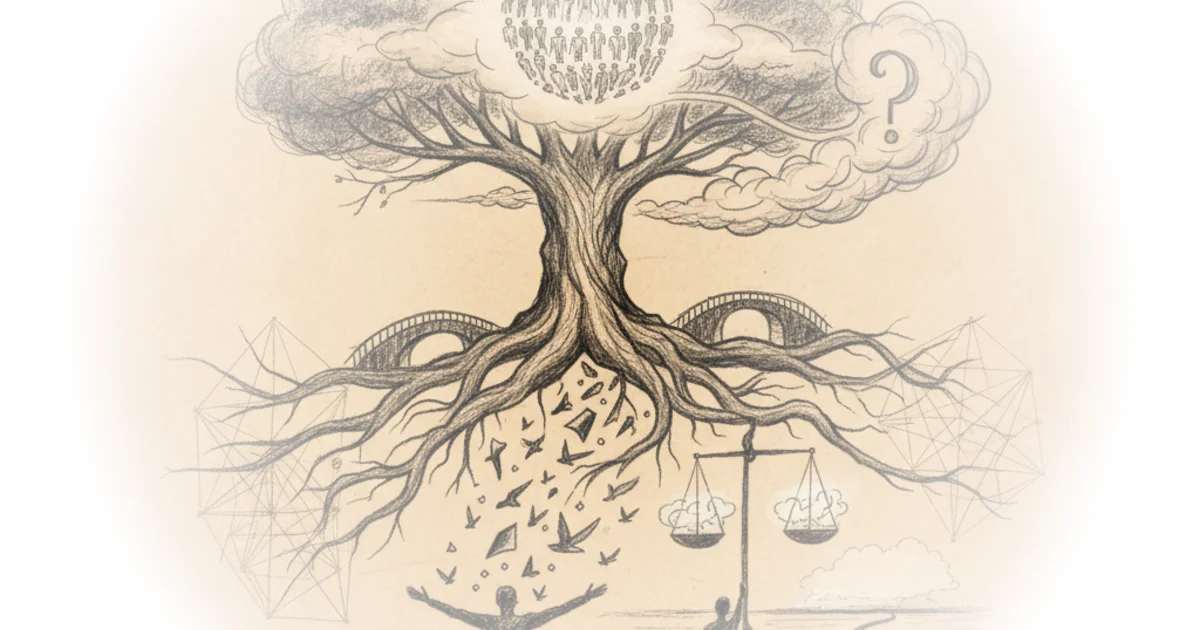
The argument draws on Toby Ord's distinction between the Principle of Sacrifice and what rejecting it would entail: a Principle of Extreme Liberty that permits letting others suffer great harms to secure incomparably small benefits for yourself. Bentham's Bulldog notes these principles "strike me as supremely implausible moral principles. They are far too underdemanding, and yet they follow from the rejection of the Principle of Sacrifice when applied to global poverty."
"It's too demanding for you to have to be tortured, not for them to have to do something about it!"
The thought experiment lands differently when you imagine yourself as the beneficiary rather than the donor. A distant alien filling out a form to prevent torture seems trivial compared to the alternative.
When Common Sense Morality Gets Hard
Bentham's Bulldog puts it, "If the moral stakes are high, morality can be very demanding, without being too demanding." The author cites historical examples: a slave owner morally required to free slaves even at the cost of family livelihood, or an innocent person on Death Row required to die rather than kill an innocent guard to escape.
The piece extends this logic to charitable giving. As Bentham's Bulldog writes, "It is wrong to spend a dollar for personal benefit, when instead, by spending the dollar, you could have produced more expected welfare than all the welfare in human history so far." This sounds extreme until you consider longtermism—the possibility that billions of years of future life could be affected by tiny present-day probabilities.
Bentham's Bulldog argues, "It's often said that common-sense morality isn't demanding. But this isn't so. It's often demanding when the stakes are high." The intuition that morality must be easy collapses when the consequences are severe enough.
The Self-Interest Bias
A sharp observation: "It is difficult to get a man to understand something when his salary depends upon his not understanding it." Bentham's Bulldog extends Upton Sinclair's insight to moral intuition itself—people don't find demanding ethics intuitive because their comfort depends on not finding it intuitive.
The author notes, "Humans are notoriously biased by self-interest—it's thus no surprise that we don't find morality intuitive." This explains why the objection persists despite weak philosophical grounding.
Bentham's Bulldog observes Christianity faces no similar complaint despite Jesus demanding believers give away all riches and warning most fall short of salvation. "That's way more extreme than Peter Singer," the author notes. The selective outrage suggests the objection isn't about demandingness per se, but about which demands threaten current arrangements.
Critics Might Note
The argument assumes effective charities can reliably convert wealth into saved lives at the claimed rates—contested by development economists who emphasize systemic constraints over individual donations. The torture analogy may overstate the clarity of the moral situation; preventing death through charity involves empirical uncertainty the thought experiment abstracts away. And the claim that giving "might make your life better" sidesteps evidence that major wealth sacrifice creates genuine hardship for many families.
Bottom Line
Bentham's Bulldog succeeds in exposing the "overdemandingness" objection as self-interest dressed as philosophy. The piece's strength lies in flipping perspectives—asking readers to imagine themselves as the dying beneficiary rather than the sacrificing donor. But the conclusion that none of us will actually give most of our wealth, yet should try to "save as many lives as we can talk ourselves into saving," admits the argument's practical limit. Morality may demand everything; humans will deliver something less. The gap between them is where this piece lives.