PolyMatter dismantles one of the most pervasive geopolitical myths of our time: that China is systematically executing a "debt trap" to seize African sovereignty. While the narrative of predatory lending dominates Western discourse, this piece offers a rigorous, data-driven correction, arguing that the real story is a collision of China's excess construction capacity with Africa's desperate infrastructure gap, complicated by local corruption rather than Beijing's grand design.
The Myth of the Trap
The piece opens by dissecting the Hambantota port saga in Sri Lanka, the primary exhibit for the "debt trap" prosecution. PolyMatter writes, "In 2012, 3,667 ships berthed at the neighboring Port of Colombo... yet [Hambantota] attracted just 34." The author points out that the project was a white elephant from the start, built in a small town despite a functioning port nearby. This framing is crucial because it shifts the blame from the lender to the borrower's poor planning.
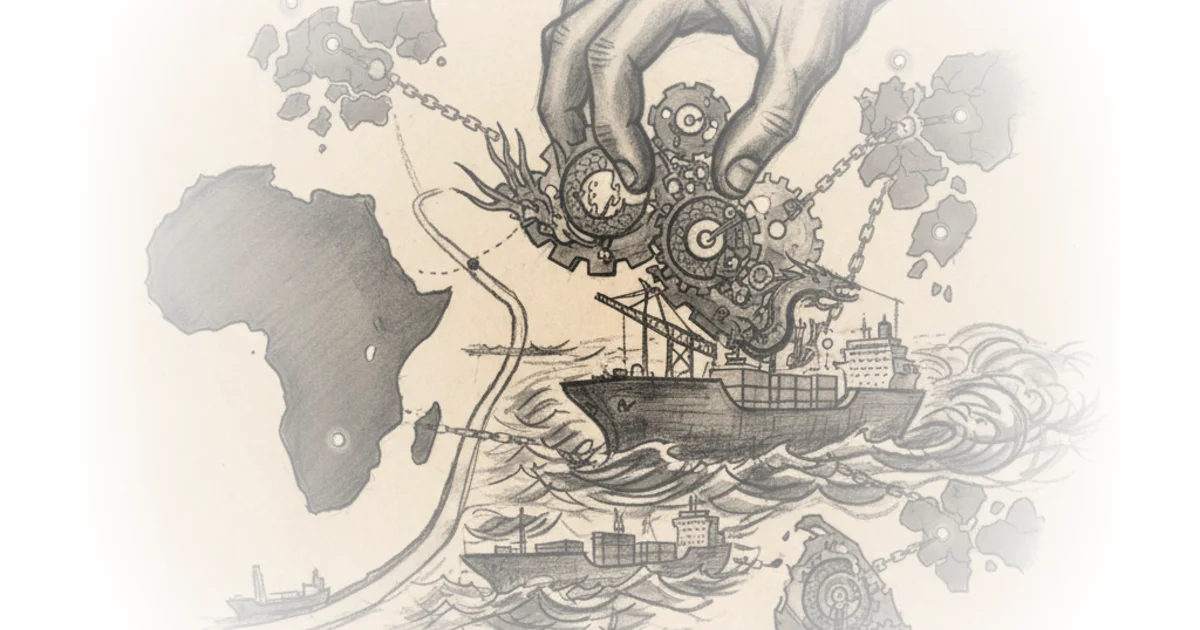
PolyMatter continues, "The debt trap narrative is so often repeated that it's been labeled a meme, yet almost everything said thus far is either downright wrong or at least misleading." This is a bold claim, but the evidence provided holds up. The author clarifies that no debt was forgiven in the Sri Lanka deal; instead, a Chinese company paid $1.1 billion for a 70% stake in a 99-year lease to pay off debts owed to other creditors, not China. The narrative that China seized the port as a military base ignores the lease terms, which explicitly forbid military use without Sri Lanka's permission.
"Africa for instance receives only about half of the $130 to $170 billion in infrastructure it needs each year, leaving it with a massive $68 to $80 billion gap."
The core of the argument rests on supply and demand. While Western institutions like the World Bank have pivoted away from hard infrastructure toward social programs, China faced a domestic crisis of overcapacity. PolyMatter explains that China needed to export its construction model to sustain its economy. This reframing is effective because it treats the phenomenon as an economic inevitability rather than a malicious conspiracy. Critics might note that this economic determinism downplays the strategic geopolitical gains China secures, even if they aren't the primary driver. However, the distinction between intent and outcome is vital for clear analysis.
The Role of Local Agency
Perhaps the most uncomfortable truth PolyMatter surfaces is the role of local corruption. The author notes, "Hambantota is not just any rural coastal town but the hometown of the president who signed off on the project." The text reveals that funds were diverted to a failed re-election campaign and that the project was opened on the president's birthday despite a massive rock blocking the harbor. This detail is often glossed over in favor of a simpler villain narrative.
PolyMatter argues, "The debt trap narrative is right to identify an inherent power differential... but by portraying China as the only party with agency it neglects the unique circumstances of each nation and absolves corrupt local politicians of all culpability." This is a sharp, necessary critique of Western discourse. It suggests that African leaders are not passive victims but active participants in these deals, often prioritizing personal gain over national solvency.
The piece cites independent researchers to bolster this view: "So far in Africa we have not seen any examples where we would say the Chinese deliberately entangled another country in debt." The data supports this; the Center for Global Development and the Lowy Institute find that the vast majority of Chinese loans went to countries that could sustainably absorb them. The failures are often due to the sheer scale of lending and a "no strings attached" approach that ignores due diligence, rather than a premeditated trap.
"The danger of criticizing China for the wrong reasons is that it reduces credibility when you need it the most."
This observation cuts deep. If the West relies on a false narrative of a "Trojan Horse," it loses the moral high ground when pointing out genuine issues like corruption or unsustainable debt. The author suggests that the lack of a cohesive "Belt and Road" strategy—described as "increasingly vague and amorphous"—further undermines the idea of a grand, sinister master plan. Instead, the expansion looks more like a chaotic replication of China's own domestic inefficiencies.
Bottom Line
PolyMatter's strongest contribution is stripping away the sensationalism to reveal a messy reality of economic mismatch and local graft. The piece's biggest vulnerability is that it may offer too much comfort to Western policymakers who prefer a clear villain over the complex, shared responsibility of global development. Readers should watch for how this nuanced view holds up as China's lending practices evolve, but for now, the "debt trap" label remains a convenient fiction that obscures the true drivers of global infrastructure finance.