Cory Doctorow exposes the central illusion driving the artificial intelligence boom: the dangerous conflation of statistical mimicry with genuine understanding. In a field saturated with hype, he argues that the most critical distinction isn't whether a machine can produce a convincing output, but how it fails when the script breaks. This is not just a philosophical debate about consciousness; it is a practical warning about economic stability, labor rights, and the quality of the services we rely on.
The Coin Trick of Intelligence
Doctorow opens with a magician's metaphor, suggesting that the AI industry relies on a sleight of hand where different processes are treated as identical because they yield similar results. "The greatest magic trick of them all is lying," he writes, explaining that an AI producing a sentence and a human producing one are fundamentally different acts, even if the text looks the same. He likens the belief that feeding more data to a model will eventually create consciousness to "breeding horses to run faster and faster until one of them foals a locomotive." This analogy dismantles the linear progress narrative favored by investors, highlighting a category error in how we define intelligence.
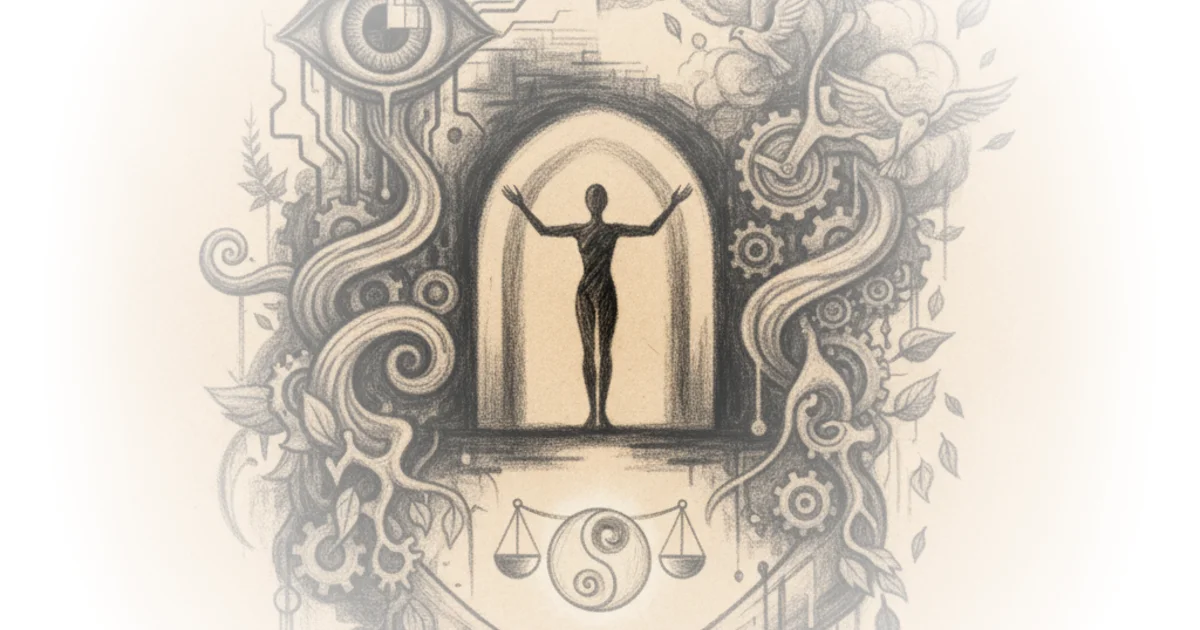
The author draws a sharp line between "understanding" and "statistical extrapolation." While both can predict the next word in a sentence, only understanding allows for graceful failure when the prediction is wrong. He notes that while autocomplete and human intuition might both finish a spouse's sentence, the human does so through a shared history and emotional context, whereas the machine relies on a "rough, automatically generated mental table of the statistical likelihood that word A will follow word B." This distinction is crucial because, as Doctorow points out, "When things go wrong... 'understanding' provides a way forward, while 'extrapolation' founders."
This framing is particularly potent when applied to the history of the field. The piece references the 1950 Turing Test, noting how a nuanced thought experiment has been stripped down over 75 years into a blunt metric: "Can a chatbot trick a human into thinking it is also human?" Doctorow argues that this reductive standard is the "unsound foundation of a worldview that renders you incapable of distinguishing your understanding of your spouse from their phone's autocomplete function." Critics might argue that the functional output is all that matters in a commercial setting, but Doctorow insists that the mechanism of production determines the reliability of the system.
Understanding and statistical extrapolation can often lead to the same place, but when they don't, understanding provides a way forward, while extrapolation founders.
The Billionaire Coalition
The commentary then shifts to the economic incentives driving this illusion. Doctorow identifies a powerful, unlikely alliance between two types of billionaires: solipsists who genuinely believe AI can replace human cognition, and cynics who know the technology is flawed but believe it can be sold anyway. He observes that "You don't have to believe AI works to believe it can be sold, and you don't have to be motivated by the sales opportunity to believe that AI is about to become god." This coalition creates a feedback loop where the contradictions of the technology are ignored in favor of the narrative.
He illustrates this with the example of corporate personhood, warning against the proposal to grant rights to AI. While extending rights to nature often yields positive outcomes, Doctorow argues that "extending rights to constructs makes the world far worse." He contrasts the two scenarios: if a watershed has rights, an AI data center might be shut down; if an AI has rights, a watershed might be sacrificed to cool the servers. This inversion of priorities reveals the stakes of the debate, moving it from abstract philosophy to concrete environmental and resource conflicts.
The Labor Trap: Centaurs vs. Reverse Centaurs
Perhaps the most actionable part of the piece is the analysis of how AI impacts workers. Doctorow distinguishes between "centaurs"—skilled workers who use AI as a tool to enhance their craft—and "reverse centaurs," who are forced to serve as peripherals for machines that dictate their workflow. He writes, "The thing that is a good tool for the skilled people is being sold as a thing to reduce the number of skilled people hired." This distinction explains why some workers report improved efficiency while others see a catastrophic drop in quality.
The author connects this to the broader economic bubble, arguing that the narrative of "AI destroying jobs" is a deliberate conflation. There is a vast difference between being fired because a machine can do your job and being fired because a boss was "convinced that the AI can do your job, even though it cannot." He cites the example of BigLaw firms replacing junior lawyers with chatbots that produce "unenforceable, error-riddled contracts" while billing at premium rates. In this scenario, the client and the lawyer are united in opposition to the firm's management, yet the bubble continues to inflate because the distinction is ignored.
Doctorow concludes that every time we fail to draw this line, we help the industry raise more capital. "Every time we insist on this distinction, we hasten the day that the AI bubble pops," he asserts, framing the acceptance of this nuance as a protective measure for the broader economy. The argument suggests that the true cost of the current AI boom is not just financial, but a degradation of the quality of goods and services we rely on.
Bottom Line
Doctorow's most compelling contribution is his refusal to accept the "destination over journey" logic that dominates tech discourse, forcing a reckoning with how systems actually fail rather than just how they succeed. While the piece leans heavily on the inevitability of a bubble burst, it effectively exposes the structural incentives that keep the illusion alive. Readers should watch for the moment when the "reverse centaur" model begins to visibly degrade critical infrastructure, as that will be the first crack in the foundation of the current AI narrative.