Matt Stoller uncovers a hidden chokepoint in American governance where a small cadre of unelected economists effectively vetoes legislation designed to lower health care costs. The piece's most startling claim is that the Congressional Budget Office (CBO) does not merely calculate costs, but actively enforces a discredited economic theory that prioritizes corporate profits over patient care. For busy readers navigating a broken system, this analysis explains why common-sense reforms stall despite overwhelming public support.
The Human Cost of "Efficiency"
Stoller anchors his argument in a visceral reality check: the daily frustration of doctors and the life-or-death struggles of patients. He recounts a doctor's lament about "McKinsey-style" management that thins out staff to pay for administrators, noting, "They spend their time making us more efficient, which is to say, thinning us out so they can pay for themselves." This framing effectively shifts the blame from individual bad actors to a systemic design flaw. The narrative deepens with the story of Hannah Garden-Monheit's father, who died in a wheelchair because an insurer denied a prosthetic leg as "medically unnecessary." Stoller writes, "This cruel process of asking permission from vengeful insurers for treatment prescribed by a doctor, and being denied arbitrarily, is known as 'Prior Authorization.'"
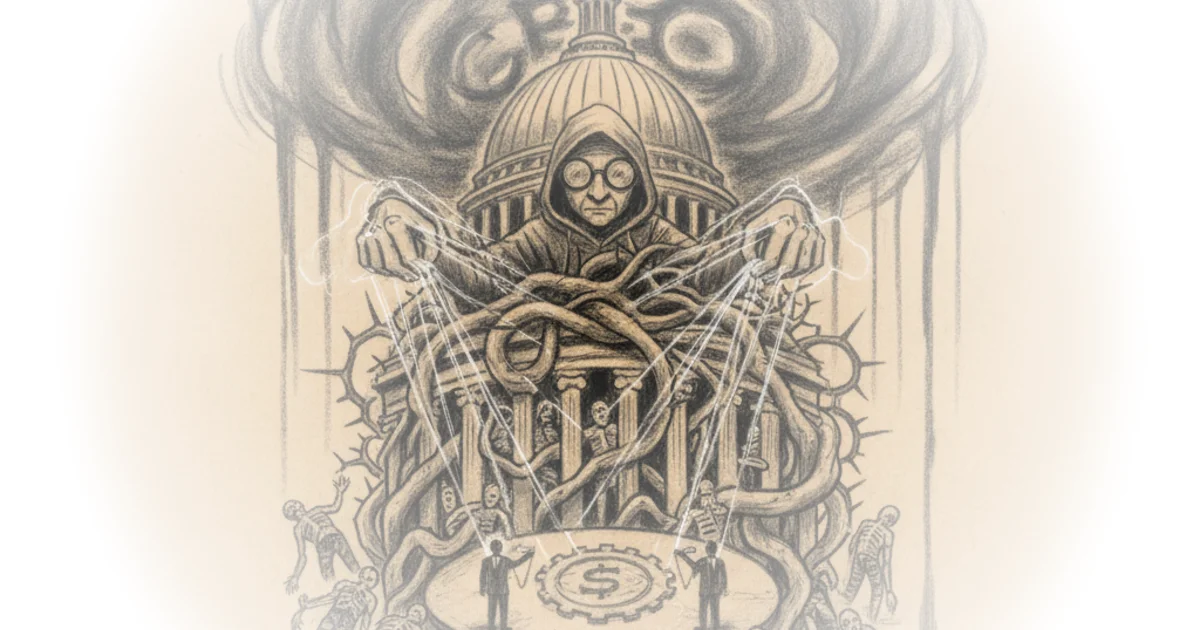
The core of Stoller's argument is that this system is not an accident but a feature of a specific economic ideology. He traces the rise of "prior authorization" to 1960s economists who feared a "moral hazard" where patients would overuse care like an "all-you-can-eat buffet." Stoller argues that the solution—inserting financiers between doctors and patients—has created a "bureaucratic system organized around rent-seeking" that actually increases costs. This is a powerful reframing of a technical policy issue into a story of corporate empire building.
"Essentially, prior authorization is pure corporate empire building, and there's no evidence it's even good for Wall Street."
Critics might argue that some level of oversight is necessary to prevent fraud and abuse, but Stoller counters that the current system is so opaque and punitive that it harms legitimate care. He points out that traditional Medicare, which lacks this layer of prior authorization, is significantly cheaper and more efficient than private alternatives like Medicare Advantage.
The Algorithmic Gatekeeper
The piece takes a sharp turn into the mechanics of how legislation is blocked. Stoller reveals that politicians cannot pass bills to ban prior authorization because the CBO scores them as cost-prohibitive. This is a paradox: a bill that would reduce health care costs is deemed to increase the federal deficit. Stoller explains the CBO's logic: "By placing additional requirements on plans that use prior authorization, we expect H.R. 3173 would result in a greater use of services." The agency assumes that without these barriers, doctors and patients will act irresponsibly and overspend.
This reliance on opaque models is where the institutional failure becomes most apparent. Stoller notes that the CBO has historically "vastly overstated the costs of government spending," such as assuming interest rates would hit 6% when they stayed near zero, simply by copying the assumptions of Wall Street firms like JP Morgan. The lack of transparency is staggering; as one staffer admitted regarding financial collapse risks, "oh well we don't know how to calculate the costs of a financial collapse so we score it at zero."
The author then exposes the revolving door that influences these models. He lists the CBO's health care advisors, noting that six of the fifteen have direct corporate affiliations with entities like Cigna, CVS, and Eli Lilly. "Three of them represent monopolies or near-monopolies profiting from higher spending, and there is no one who represents the interests of employers, consumers, patients, or labor," Stoller writes. This conflict of interest suggests that the "independent" scores are actually reflections of the industries they are supposed to regulate.
"It looked like pushback against Nixon, but was in fact the erection of a chokepoint for economists to veto legislative proposals they didn't like in both the executive and legislative branches of government."
Stoller's description of a 2016 advisory session is particularly damning, where economists pontificated on trade policy while congressional staff were silenced in the back of the room. This historical context, linking the CBO's creation in 1975 to the broader elevation of neoliberal economics, adds necessary depth. It mirrors the "independence" of the Federal Reserve, creating a self-contained network that insulates policy from democratic will.
The Chokepoint of Democracy
The final section of the commentary focuses on the procedural stranglehold the CBO holds. Stoller explains that committees often refuse to vote on bills "until there's a CBO score," giving the agency the power to kill legislation before it even reaches a floor. The requirement for "budget neutrality" means that if the CBO decides a reform costs money, it must be offset by something else the CBO deems profitable—a circular logic that favors the status quo.
Stoller's critique is that the CBO has transformed from a tool for Congress into a veto-wielding entity that serves corporate interests. He observes that "most members of Congress tend to accept the word of the CBO as gospel," unable to challenge the "fake models making political claims about the future." This dynamic explains why the "Improving Seniors' Timely Access to Care Act," with 290 co-sponsors, has failed repeatedly since 2019.
A counterargument worth considering is that the CBO provides a necessary discipline to prevent runaway spending, but Stoller's evidence suggests this discipline is applied selectively to protect specific industries. The CBO's refusal to model the cost-savings of ending prior authorization, despite real-world evidence from traditional Medicare, reveals a bias baked into the methodology.
"The CBO was founded in 1975, as part of a broad institutional elevation of neoliberal economists... Congress ended up creating a self-contained and self-interested network of budget experts who passed back and forth between OMB and CBO."
The piece concludes by highlighting the surreal nature of a democracy where unelected experts can determine the fate of life-saving legislation based on models that assume patients are inherently irresponsible. This is not just a technical glitch; it is a fundamental failure of the democratic process.
Bottom Line
Matt Stoller's most compelling contribution is exposing the CBO not as a neutral arbiter, but as an active enforcer of a corporate-friendly ideology that prioritizes profit over patient survival. While the piece relies heavily on anecdotal evidence and specific insider accounts, its structural analysis of how "independent" agencies can become captured by the industries they regulate is difficult to refute. The biggest vulnerability for reformers is the sheer opacity of the CBO's models, which allows them to claim objectivity while embedding political assumptions that block progress.