In a world where surveillance is often dismissed as a necessary evil of modern security, this piece argues that Australia has crossed a threshold into something far more ominous: a functioning police state. The Hated One does not merely list new laws; they weave a narrative of institutional decay, showing how emergency powers, once temporary, have been cemented into a permanent architecture of control. For busy listeners tracking the erosion of civil liberties globally, this is a critical case study in how quickly a liberal democracy can dismantle its own safeguards.
The Cost of Oil and the Silence of Oversight
The piece opens with a jarring historical precedent that reframes Australia's intelligence capabilities not as defensive, but as aggressively offensive. The Hated One writes, "Australia prevented a witness from attending an international trial and destroyed an office of an attorney all for the sake of grabbing cheap oil from an impoverished nation." This is a bold claim, rooted in the 2004 East Timor spying scandal where the Australian Secret Intelligence Service bugged the cabinet of a negotiating partner. The author details how, when a whistleblower named Witness K prepared to testify, the government raided his home and that of his lawyer, Bernard Clary, using anti-terrorism laws despite no terrorism charges ever being filed.
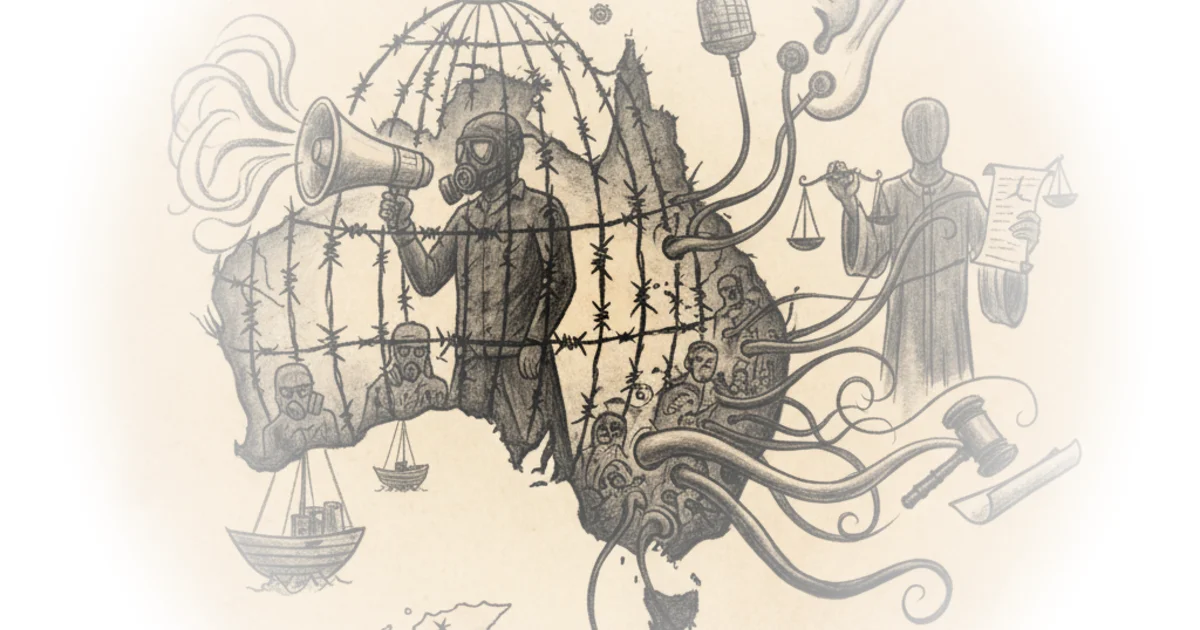
The argument here is that the legal system has been weaponized to protect state secrets rather than uphold justice. The Hated One notes, "The government has spent 3.7 million dollars to prosecute the lawyer and witness Kay," highlighting the disproportionate state effort to silence a single truth-teller. This is a powerful illustration of the imbalance of power, but it also sets the stage for the broader argument: that Australia's intelligence agencies operate with a level of secrecy unmatched in the democratic world. The author points out that unlike their counterparts in the US, UK, or Canada, Australian oversight committees cannot review ongoing operations. "Spies are entrusted to review themselves," The Hated One observes, a phrase that cuts to the core of the institutional failure. Critics might argue that national security always requires some opacity, but the lack of any mechanism to audit current operations suggests a system designed to evade accountability entirely.
Nobody has more power with less oversight than Australian intelligence.
The Pandemic as a Catalyst for Total Control
The commentary then shifts to the pandemic era, arguing that the crisis was not just a challenge to be managed, but an opportunity seized to expand state authority. The Hated One writes, "The state of disaster puts the ministry of police in charge of directing and coordinating activities of all government bodies." This was not a temporary measure in Victoria; the author details how the entire state was declared a disaster zone, allowing police to suspend laws, impose indefinite curfews, and bypass parliament. The text describes a scenario where "the government to announce an indefinite curfew and handle quarantined restrictions with no public or political scrutiny."
Perhaps the most chilling detail provided is the introduction of facial recognition home quarantine software. The Hated One describes it as a system where "people have to respond to random check-in requests by taking a selfie at their address and send the image embedded with precise location data to the police." The author's framing is sharp: "Who needs KGB agents when you have people willingly spending their own money to buy advanced tracking devices." This captures the insidious nature of the policy—surveillance that is outsourced to the citizenry. While public health officials would argue these measures were necessary to save lives, the author effectively counters that the scale and permanence of these powers far exceeded the immediate health threat, setting a dangerous precedent for future emergencies.
The Architecture of the Digital Panopticon
The final and most extensive section of the piece tackles the digital realm, arguing that Australia has built a surveillance infrastructure that threatens global internet security. The Hated One writes, "Australian spies can now legally access modify and delete files install malware gain higher privileges and monitor or impersonate people on any device connected to the internet anywhere in the world." This refers to laws that allow a single warrant to wiretap the entire internet, treating every connected device as part of a target's network. The author describes the "anti-encryption law" as a mechanism that forces technology companies to build backdoors, stating, "Any encryption backdoor intended for targeted individuals would be a backdoor on everyone else using that service."
The argument here is that Australia is not just compromising its own citizens but posing a "global security threat to the entire internet." The Hated One highlights the extreme nature of the legislation, which allows agencies to issue notices to individual employees of tech companies, barring them from discussing these requests under threat of jail. "The law bars them from disclosing or discussing these requests with others under threat of five years in jail," the author notes, creating a situation where a company's own staff could be coerced into compromising their employer's security without management's knowledge. This is a profound shift in the relationship between the state and the private sector. A counterargument might suggest that these powers are strictly for national security and foreign interference, but the broad definitions and lack of judicial oversight make the potential for abuse undeniable. The author concludes that the "systemic weakness" clause is a legal fiction, as the definition of technology is so broad it encompasses everything from software updates to the phones themselves.
Bottom Line
The strongest part of this argument is the seamless connection drawn between historical espionage, pandemic-era emergency powers, and the digital erosion of privacy, presenting a cohesive picture of a state that has abandoned the rule of law for total control. Its biggest vulnerability lies in the reliance on specific legal interpretations that, while alarming, may face challenges in practice or be limited by international pressure. Readers should watch for how the Five Eyes alliance leverages these Australian capabilities, as the author rightly notes that data shared here flows to the US, UK, and Canada, making this a global issue, not just a local one.