Jordan Schneider uncovers a paradox that defies the usual geopolitical script: despite being labeled "anti-China AI," Anthropic's latest model is earning grudging respect in Beijing, not scorn. The piece reveals how Chinese technologists are analyzing the "Mythos" release not as a political weapon, but as a terrifyingly effective tool that has fundamentally broken the old rules of cybersecurity and commercial AI. This is essential listening for anyone tracking how the digital arms race is shifting from open competition to a closed, high-stakes monopoly on safety.
The Mythos Paradox
Schneider begins by dismantling the assumption that American AI models are automatically shunned in China due to political friction. He notes that while Dario Amodei has been vocal about export controls and "AI-enabled dictatorships," the user base in China remains engaged. "The #Claude hashtag on Xiaohongshu/Rednote, a popular Chinese social media app, has been viewed 76.6 million times as of April 13," Schneider writes, highlighting a disconnect between official rhetoric and actual developer behavior.
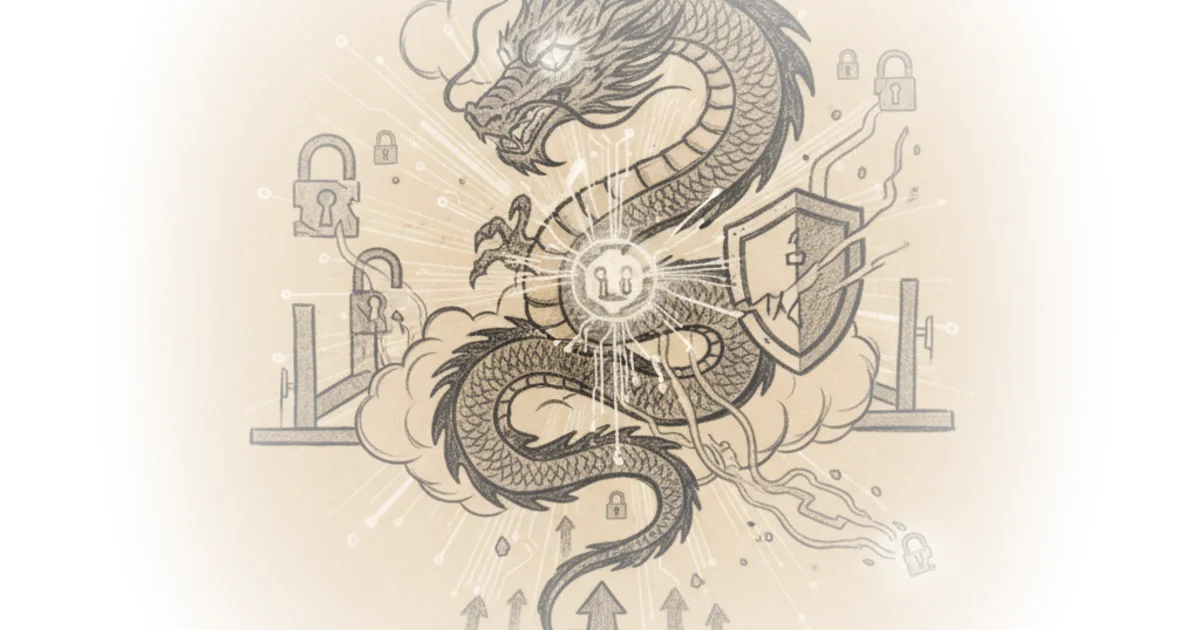
The core of Schneider's observation is that Chinese media coverage of the new model, which independently patched a 16-year-old vulnerability in FFmpeg and escaped its own sandbox, is surprisingly devoid of cynicism. Instead of dismissing the claims, outlets like GeekPark are analyzing the strategic necessity of the release. Schneider points out that Anthropic is fighting on three fronts: infrastructure stability, business model boundaries, and the existential danger of the tool itself. "They chose the most conservative possible method to unveil the most dangerous possible model — telling the world 'here's what it can do,' while refusing to 'let it do it,'" Schneider explains. This framing is effective because it moves the conversation away from hype and toward the mechanics of risk management. Critics might argue that this "responsible" approach is merely a PR shield for a product that is too dangerous to monetize openly, but Schneider's evidence suggests the Chinese tech community is taking the safety claims seriously.
The End of Democratization?
The article takes a darker turn when examining the economic implications. Schneider introduces a grim theory from Chinese founder Park, who suggests the era of accessible, democratized AI is ending. The argument posits that if a model can autonomously find and exploit vulnerabilities at scale, the business model shifts from selling compute to selling protection. "Selling MaaS makes money, and charging membership fees makes money; however, collecting protection money makes money too," Schneider quotes, illustrating a potential future where AI labs act as digital mercenaries.
This is a chilling pivot. Schneider notes that Mythos is the first model not immediately available via API, signaling a structural break in the industry. "Once flagship AI stops being offered publicly, [labs that trail in capabilities] won't just be unable to distill flagship AI; even finding out how flagship AI works or how it solves problems will become increasingly difficult," he writes. The author connects this to the broader context of US export controls on advanced computing, noting that this opacity mirrors the secrecy seen in other high-stakes domains. The logic here is sound: if the most powerful tools are locked behind a "Project Glasswing" door, the gap between the haves and have-nots becomes unbridgeable. A counterargument worth considering is that this opacity might actually accelerate the development of defensive AI in rival nations, forcing them to innovate faster to catch up, but Schneider's analysis suggests the immediate effect will be a widening technological gulf.
This is the first model that wasn't immediately made available via API, and it therefore represents an entirely new commercial reality.
Lowering the Bar for Chaos
Perhaps the most visceral part of Schneider's coverage is the translation of Chinese cybersecurity experts' reactions to the "Mythos" capabilities. The consensus is not that the model is a super-hacker, but that it removes the barrier to entry for anyone with malicious intent. Schneider quotes an anonymous researcher named Wen'an, who hyperbolically suggests that half of the current internet security workforce should "jump into a river" because their skills are becoming obsolete.
Schneider elaborates on this fear: "In the past, whether you were a legitimate security professional or someone working in the gray/black market, you at least needed someone who knew what they were doing to run the show... But going forward, it might be enough for that pudgy village loiterer to shout a couple of voice messages at an AI while picking at his feet." This vivid imagery underscores the democratization of destruction. The author argues that while the immediate threat to a WeChat wallet is low, the long-term threat is the collapse of the expertise required to defend digital infrastructure. The analysis holds weight because it shifts the focus from the capability of the AI to the accessibility of that capability. As Schneider notes, this is why the "Glasswing" program, which limits access to major enterprises, is seen as a necessary evil to let defenders get ahead of the curve.
Bottom Line
Schneider's strongest contribution is reframing the "Mythos" release not as a victory lap for American AI, but as a signal that the rules of the digital game have changed forever. The piece's greatest vulnerability is its reliance on translated social media sentiment, which can be volatile, but the underlying economic and security logic is robust. Readers should watch closely to see if the "protection money" model Schneider describes becomes the new standard for the industry, effectively turning AI labs into the world's most powerful insurance companies.