This piece from Reason doesn't just recount the history of post-9/11 security; it exposes a terrifying psychological shift where fear became the primary architect of American liberty. The article's most striking claim is that the surveillance state didn't grow because of a sudden, inevitable technological evolution, but because citizens willingly surrendered their privacy in a panic that never truly subsided. For busy readers trying to understand why their daily lives feel so scrutinized, this analysis connects the dots between a single day of terror and the permanent, ratcheting expansion of government power that defines our current era.
The Ratchet Effect of Fear
The editors at Reason anchor their argument in the work of economist Robert Higgs, using his "ratchet effect" to explain why government size rarely shrinks after a crisis. The piece argues that "fear generated by the 9/11 attacks drew citizens toward the government," creating a dynamic where the public accepted measures they would have previously rejected as violations of freedom. This framing is crucial because it shifts the blame from a shadowy conspiracy to a collective, albeit fearful, societal choice.
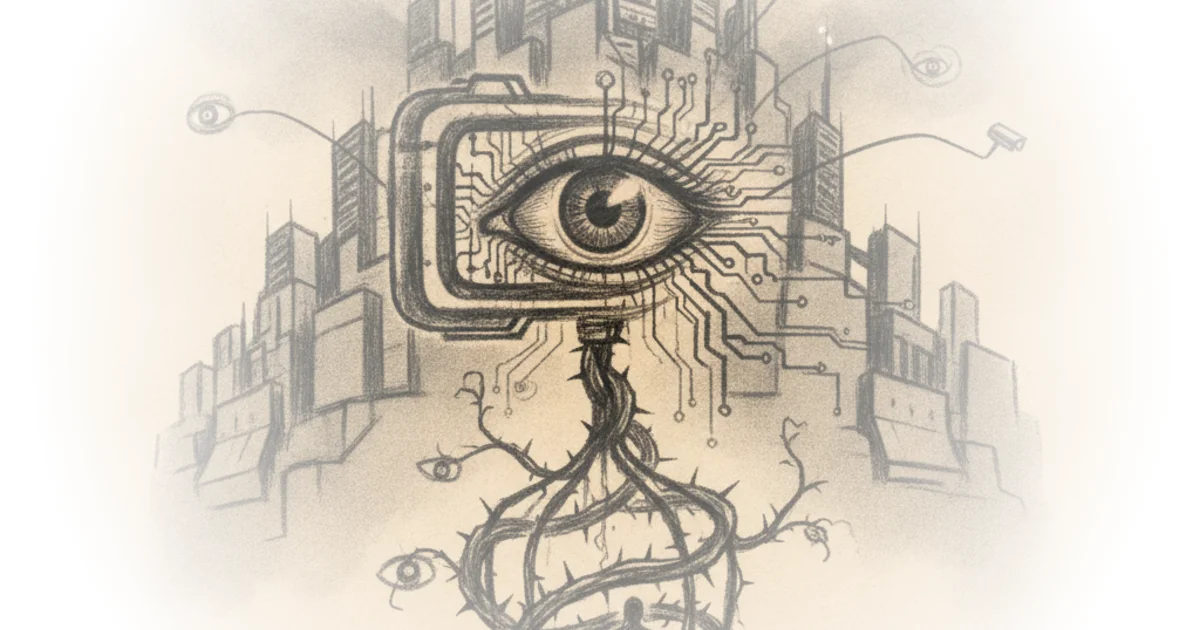
The article details how this fear manifested in the rapid passage of the USA PATRIOT Act, which fundamentally altered the legal landscape for surveillance. "The law made significant changes to the Foreign Intelligence Surveillance Act (FISA) of 1978," Reason reports, noting that it permitted "roving" wiretaps and lowered the bar for officials to acquire data on citizens. This expansion wasn't limited to federal agencies; it trickled down to local law enforcement, integrating surveillance into community policing. The piece notes that today, "90 percent of U.S. sheriff's offices with 500-plus deputies use automatic license plate readers," a statistic that illustrates how deeply these tools have become embedded in the fabric of daily life.
Fear is the privacy-killer, and once the door is opened, it is nearly impossible to close.
Critics might argue that some of these measures were necessary to prevent a second wave of attacks, and that the alternative—unmonitored travel and communication—carried its own unacceptable risks. However, the article counters this by highlighting that many specific crisis programs, like the DHS's passenger risk-scoring system, were eventually scrapped, yet the broader infrastructure of surveillance remained. The argument holds weight because it distinguishes between temporary emergency powers and the permanent institutional changes that survived the immediate crisis.
The New Normal for Travelers
The commentary takes a particularly human turn when describing the airport experience, framing the modern checkpoint not as a security measure but as a generational shift in expectation. The piece opens with a poignant scene of a preschooler asking about body scanners, noting that for this child, "facial scans, physical searches of your person and property, and so on are not part of some organic evolution. They are a direct response to the terror attacks on September 11, 2001."
This perspective is vital for understanding the scope of the change. The article reminds readers that "older backscatter X-ray machines could, and did, provide the TSA with images of naked bodies," a stark contrast to the sanitized assurances given to children today. Yet, the underlying intrusion remains. The editors point out that the government underwent its "largest restructuring since 1947" with the creation of the Department of Homeland Security, uniting 22 agencies under one security apparatus. This bureaucratic consolidation has created a massive, permanent machine dedicated to monitoring movement.
The financial cost of this expansion is staggering. "Estimates from 2020 suggest that the broader war on terror will cost U.S. taxpayers more than $8 trillion by 2050," Reason reports. This figure underscores that the price of security is not just paid in privacy, but in resources that could be allocated elsewhere. The article suggests that the "disarming effect" of fear has made Americans accept these costs without fully questioning the efficacy or necessity of the surveillance state.
Reclaiming Liberty
The piece concludes with a call to action rooted in ideology rather than policy tweaks. It argues that formal constraints like whistleblowers or the courts are likely "woefully inadequate" to reverse the trend. Instead, the editors suggest that "ideology may prove the key for preventing future ratchets and possibly undoing previous ones." The core message is that the expansion of government relies on the "ideological acceptance of larger government" by the citizenry.
This is a challenging but necessary point. The article notes that "pushback from the citizenry" was what ultimately led to the cessation of some intrusive policies, implying that future resistance must come from a similar shift in public consciousness. The editors warn that without this ideological shift, the surveillance state will continue to grow, regardless of whether the immediate threat of terrorism fades.
It's up to us as individuals to defend liberty and reject the overbearing 'protection' the government is offering.
Bottom Line
The strongest part of this argument is its ability to link the abstract concept of government growth to the tangible, daily experiences of travelers and the specific mechanics of laws like the PATRIOT Act. Its biggest vulnerability is the assumption that a shift in public ideology can easily reverse decades of entrenched bureaucratic power. Readers should watch for how local law enforcement continues to adopt federal surveillance tools, as this is where the "ratchet effect" is most visibly tightening its grip on civil liberties.