This piece cuts through the noise of parenting advice to expose a painful truth: the ubiquitous instruction to "sleep when the baby sleeps" is less about rest and more about a societal failure to support new mothers. Two Truths leverages a massive dataset of 4,800 reader responses to argue that this well-meaning platitude often functions as a form of "culturally accepted gaslighting," masking a systemic lack of childcare, paid leave, and community support. For busy professionals navigating their own burnout or caring for aging parents, the analysis offers a startling parallel: how we blame individuals for exhaustion that is actually a structural design flaw.
The Burden of the Platitude
The editors at Two Truths begin by acknowledging the duality of the advice. On one hand, it offers a "whisper of permission to rest in a world that rarely grants mothers any." The data shows that 19% of respondents love the advice, while 41% wish they could follow it more often. Yet, for the other 41%, the phrase is a source of deep frustration. The piece argues that the advice ignores the reality that "there is no other form of support," forcing mothers to internalize their exhaustion as a personal failure rather than a systemic issue.
"This is how we show mothers they are all on their own, disguised by offering the shallowest of advice. It's culturally accepted gaslighting—'supporting' mothers while putting everything on their shoulders."
This framing is powerful because it shifts the blame from the individual to the culture. By citing the statistic that 87% of new mothers experience clinically significant sleep disturbances, the article grounds the emotional reaction in medical reality. Sleep deprivation impairs decision-making and heightens anxiety, yet the prevailing narrative suggests that if a mother just tried harder to nap, she would be fine. This overlooks the fact that many mothers have other children to care for, or simply cannot sleep due to the physiological demands of postpartum recovery.
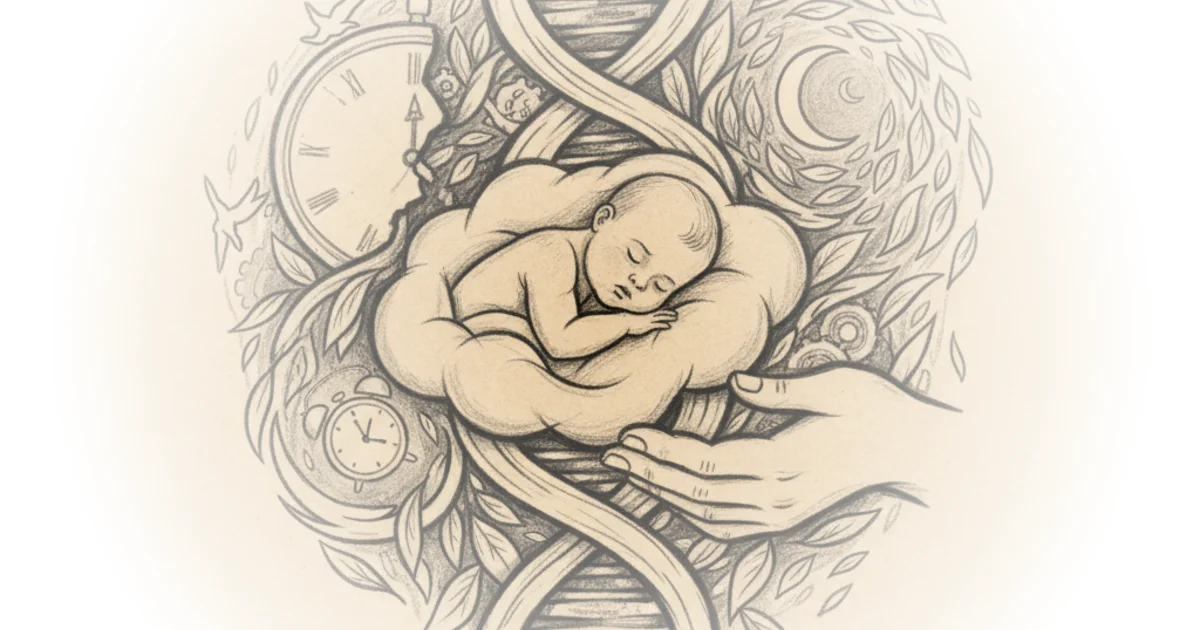
Critics might argue that dismissing the advice entirely throws out a useful tool for those who can rest, potentially creating a binary where rest is either perfect or impossible. However, the piece navigates this by suggesting the problem isn't the desire for sleep, but the expectation that it must be self-generated without external aid.
The Privilege of Rest
The commentary takes a sharper turn when it addresses the class dimensions of the advice. Two Truths notes that for many, the ability to "sleep when the baby sleeps" is a luxury. The piece highlights that help in motherhood was historically a communal given, not a privilege reserved for those who can afford a night nurse or a postpartum doula. The editors point out that the current isolation of motherhood is a relatively recent phenomenon, exacerbated by the pandemic and a lack of federal policy.
"It feels like 'advice to give mothers without any action or help, without our village.'"
This observation is crucial. It reframes the conversation from individual time management to public policy. The article notes that the U.S. lacks affordable childcare and a federally protected paid leave policy, making the advice to self-soothe via napping a cruel joke for those without a safety net. The piece connects this lack of support to the maternal health crisis, where treatable mental health conditions remain a leading cause of postpartum death. By linking the inability to sleep to broader policy failures, the editors elevate a parenting tip into a matter of public health.
Two Truths Can Be True
Rather than declaring the advice entirely toxic, the piece embraces its complexity. It argues that the truth lies in the middle: the advice contains a kernel of wisdom—rest is vital—but the delivery is flawed because it ignores the context of isolation. The editors suggest a reframe: "Do whatever you need to take care of yourself while the baby sleeps," shifting the focus from sleep specifically to the broader need for self-preservation.
"The truth is both: We desperately need rest in the postpartum period, and we need to comprehensively and systemically fix the broken support structures for parents in this country to ensure that rest."
This synthesis is the piece's strongest contribution. It avoids the trap of telling mothers they are wrong for wanting to sleep, while simultaneously refusing to let society off the hook for failing to provide the conditions that make sleep possible. The article cites psychiatrist Pooja Lakshmin, M.D., on the concept of "anchor sleep"—a consistent four-hour block of rest—as a more realistic goal than sporadic napping. This practical advice, coupled with the call for systemic change, offers a path forward that acknowledges human limits.
"A lack of help and support in motherhood is all too common. And if you lack help and support, that's not your fault; it's not a problem for you to fix on your own."
Bottom Line
Two Truths successfully dismantles a pervasive myth by revealing the structural violence embedded in "good advice." Its greatest strength is the use of reader data to validate the feeling of isolation, proving that the problem is not individual incompetence but a collective failure of support. The piece's vulnerability lies in its reliance on cultural shifts that may take decades to materialize, leaving the immediate reader with the heavy burden of navigating a broken system. The ultimate takeaway is clear: rest is not a personal achievement to be won through discipline, but a fundamental right that requires a functional community to sustain.